Tri-fold pocket mailers are self-mailing brochures that fold into three panels with a built-in pocket, so a printed
piece can carry a card, a sample or a reply slip without a separate envelope. We print them to your finished size in runs
from 100, with the pocket depth and fold sequence built into the die.
What a tri-fold pocket mailer actually is
Three panels, folded twice, with one panel cut and glued into a pocket. It posts as a flat mailer and opens into a
of card.
The pocket is the part people get wrong. It is a die-cut and glued structure, not a slit — so its depth is fixed at
tooling, and changing your mind about what goes in it means a new die.
Specifications
Tri-fold mailers against the alternatives
Buyers often arrive looking for one format and leave with another, so it is worth being clear about the neighbours.
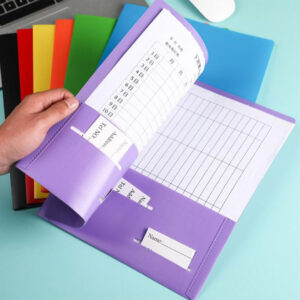
- Pocket folders are the presentation version — same idea, but built to be handed over or filed rather than posted, usually 9 by 12 inches with a business card slit.
- Coupon mailers carry a perforated coupon panel rather than a glued pocket. If the point of the piece is a redeemable offer, a coupon mailer does that job better than a pocket does.
- Kraft mailers in the same tri-fold structure give you an uncoated, natural finish that takes one-color print cleanly and reads as inexpensive without looking cheap.
Design for the fold
A tri-fold is read in sequence, and the sequence is decided by the fold rather than by the page order in your design
file. Work out what appears on the outside first — that is what the recipient sees in the mail — then what is revealed as
each panel opens. Getting this wrong produces a mailer that opens to a blank inside cover.
Keep heavy ink away from fold lines. Solid dark coverage cracks along every crease, and on a three-fold piece there are
two creases running the full height. If the artwork depends on a full-bleed dark field, add an aqueous or matte coat to
hold it.
Pocket depth and what goes in it
Measure the insert at its thickest, not its flattest. A reply card with a pen, or a sample sachet, needs depth the
arithmetic misses. A pocket that is too shallow lets the insert slide out in transit; one that is too deep lets it rattle.
Tell us what the pocket carries and we will cut to it.
Wholesale pricing, custom printing and turnaround
Minimum order is 100 pieces, and wholesale pricing starts there. Production runs 14 to 16 business days from artwork
approval, plus shipping. Price is driven by finished size, board caliper, color count, finish and whether the piece needs
a wafer seal. Dielines and 3D mockups are free, and there are no die or plate charges.
Tri-fold pocket mailer questions
Can it post without an envelope?
Yes, with a wafer seal and a stock heavy enough to stay flat. Confirm the postal size and weight limits for your carrier
before you finalise dimensions.
Can the pocket hold a physical sample?
If the sample is flat. A sachet works; anything with real thickness needs a deeper pocket and a heavier board, and both
are decided at the die.
How many panels can I have printed outside?
One full face of the folded piece, plus the back. Plan it as an envelope: front for the address panel, back for return
details.
Can I change the pocket size later?
Only by cutting a new die. That is why we ask what the pocket carries before quoting.
What is the difference between this and a pocket folder?
A pocket folder is handed over or filed; a tri-fold mailer is posted. The board, the closure and the fold sequence all
follow from that one difference.
Request a quote with the finished size, the insert thickness and the quantity. Related
formats sit in marketing print, and
pocket folders covers the presentation version of the same idea. If the piece needs
to sit inside packaging rather than post, sell sheets is the closer format.