It is monocarpic, meaning that it blooms only once in its lifetime before dying, similar to the majority of agaves.
It may take 10–15 years or more for a plant to flower.
Although uncommon in cultivation, blooms produce tall stalks with greenish-yellow flowers.
Needs for Light
Inside:
Requires strong, indirect lighting
Accepts some direct sunshine, especially in the mornings
Put it close to windows that face south or west.
Outside:
likes full sun more than partial shade
To avoid leaf scorching in extremely hot areas, shield from the midday sun.
The white borders of leaf variegation are highlighted by sunlight, which improves the contrast.
Humidity and temperature
Temperature:
Best range: 18–30°C (65–85°F)
If kept dry, it can tolerate temperatures as low as -3°C (26°F) for a short period of time, but it is ideally protected from frost.
Perfect for USDA zones 9-11
Humidity:
Performs well in moderate to low humidity
Stay away from humid environments since they can promote rot.
💧 Watering Schedule
From Spring to Autumn (Active Growth):
When the upper two inches of soil are completely dry, water it thoroughly.
Normally, it depends on the environment, but every two to three weeks.
Use the “soak and dry” method — completely saturate with water, then allow the soil to dry completely.
Winter (Dormancy):
Use water sparingly—only once every four to six weeks.
To prevent root rot, keep the area almost dry if the temperature is low.
The most frequent reason for failure is overwatering, which causes root and crown rot.
Requirements for soil
Genre:
Needs soil that drains very well.
Perfect combination:
50% blend of cactus or succulent
25% perlite or pumice
25% grit or rough sand
pH ranges from somewhat acidic to neutral (6.0–7.0).
Using pots with drainage holes or elevated beds is a great way to avoid water accumulation.
Fertilizing 🌾
During the growth season (spring to summer), apply fertilizer:
Use a well-balanced, diluted cactus/succulent fertilizer every 6–8 weeks.
Low nitrogen compositions aid in promoting dense, robust growth.
No food in the winter.
Excessive fertilization might result in leggy, fragile development and could also make variegation less vibrant.
✂️ Upkeep & Pruning
Little upkeep
Take away:
Dead or broken leaves at the base
The plant’s flower stalks will be spent if it blooms.
Since the spines might be sharp, use gloves while handling.
🌿 Reproduction
Offsets (Pups):
At maturity, it may give birth to pups at the base.
Gently dislodge offsets with a few roots still attached.
Before replanting, let the sliced pieces callus for two to three days.
Seeds:
Uncommon and challenging because blooming is uncommon in cultivation
Problems Encountered Frequently
Overwatering: Results in root or crown rot
Insufficient watering: Can result in leaf wilting
Pests: Typically resistant but occasionally susceptible to:
mealybugs
Scaling
On uncommon flower stalks, aphids can be found.
Sunburn: Brown or white patches if exposed to harsh, unfiltered sun
If pests appear, use neem oil or insecticidal soap after checking them regularly.
⚠️ Toxicity
Sap from agaves can irritate the skin upon contact.
Use gloves when handling or pruning.
Avoid youngsters and pets.
🎍 Decorative Use
Ideal for:
planting in containers
Landscapes with a desert motif
contemporary interior design
rock gardens and patios
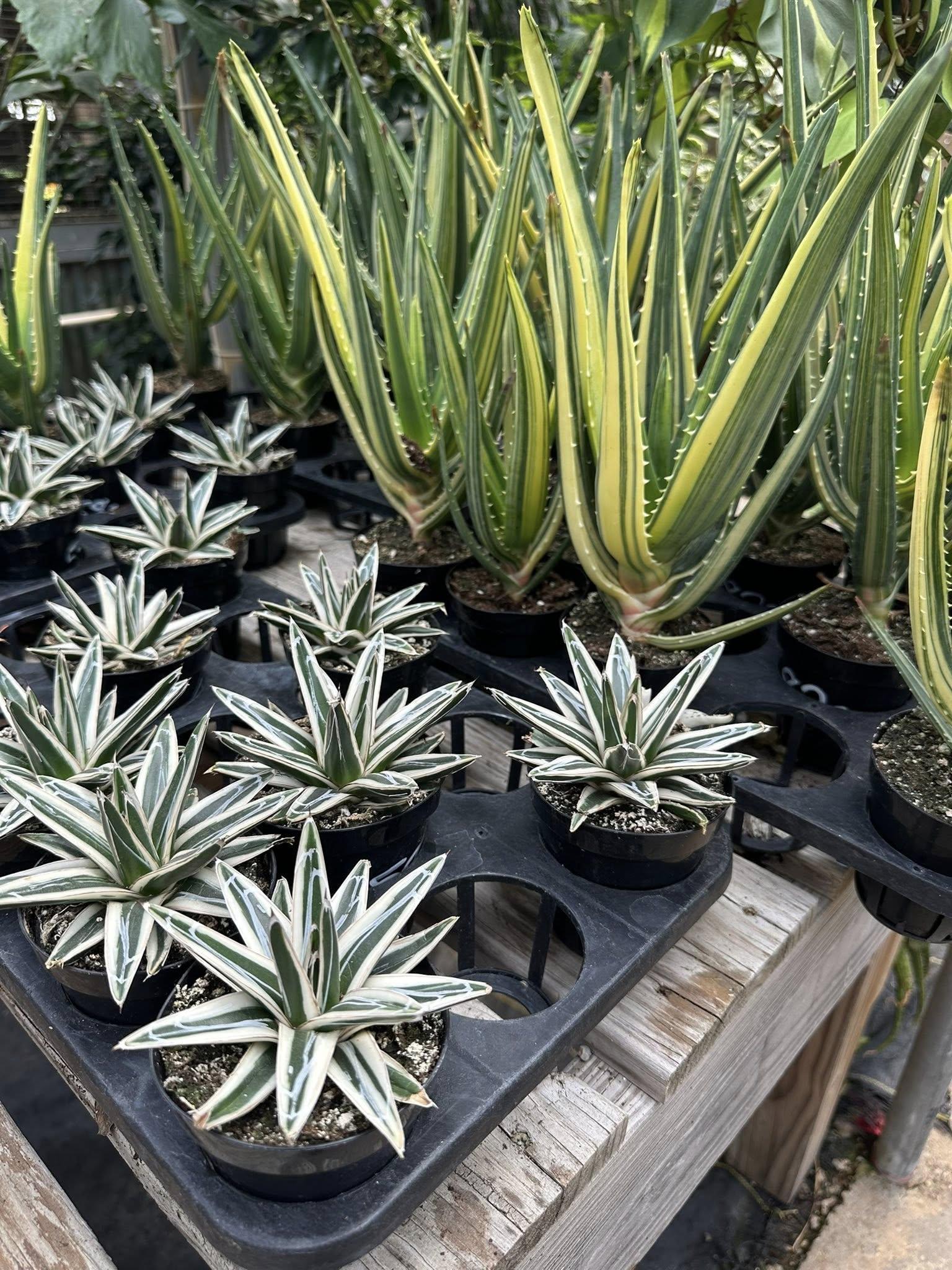
With its striking variegation, dramatic spines, and architectural shape, Agave ‘White Rhino’ is a stunning focal point in any environment.
The outcome is that:
The ‘White Rhino’ agave is a rare and visually stunning cultivar that rewards patience with its gradual but remarkable growth. With the correct care—bright light, careful watering, and good drainage—this plant will thrive for many years and frequently become the focal point of any succulent collection.