Bloom phase triggers pup production (offsets)
☀️ Light Requirements
Indoors:
Prefers bright, indirect light
A spot near an east or west-facing window is ideal
Avoid prolonged direct afternoon sun, which can scorch the leaves
Artificial grow lights work well if natural light is insufficient
Outdoors:
Thrives in filtered sunlight or partial shade
Avoid full, direct sun, especially in hot climates
Proper lighting is essential to maintain the plant’s healthy color and compact shape.
🌡️ Temperature & Humidity
Temperature:
Optimal range: 15–32°C (60–90°F)
Cannot tolerate freezing temperatures — keep above 10°C (50°F)
Ideal for warm, tropical, or indoor environments
Humidity:
Prefers 50–70% humidity
In dry indoor conditions, especially with air conditioning or heating, increase humidity via:
Occasional misting
Placement near a humidifier
Grouping with other plants
💧 Watering Routine
General Rule: Water thoroughly 2–3 times per week in warm months; reduce to once a week in winter or cooler environments.
Methods:
Soaking: Submerge the entire plant in room-temperature water for 20–30 minutes once a week.
Misting: Light misting between soakings, especially in low-humidity conditions.
Drying: Always allow the plant to fully dry within 4 hours of watering to prevent rot. Place the plant upside down or in an airy location to prevent water from sitting in the base.
🚫 Warning: Never let water sit in the central rosette, as it may cause rot.
🌱 Fertilizing
Frequency: Once a month during spring and summer
Type: Use a bromeliad or air plant-specific fertilizer, diluted to 1/4 strength
Application: Add to your soaking water or spray lightly
Fertilizing encourages vibrant growth, healthy pups, and blooming.
✂️ Maintenance
Pruning:
Remove dried or dead leaves by gently pulling them off
Trim any browned tips with sterilized scissors
Cleaning: Occasionally rinse or soak to remove dust and debris.
Pups/Offsets:
After blooming, the Druid Air Plant will produce pups (baby plants)
Allow pups to grow to at least 1/3 the size of the parent before separating
To propagate, gently twist or cut pups from the base and treat them as new plants
🛡️ Common Problems & Solutions
Rot: Caused by water sitting too long in the rosette — ensure complete drying
Crispy Leaves: Indicates underwatering or excessively dry air — increase watering or humidity
Faded Color: May result from insufficient light — move to a brighter location
Pests: Rare but can include mealybugs or scale — treat with diluted insecticidal soap or neem oil spray
🎍 Decorative Use
Can be displayed:
In glass terrariums with open ventilation
Mounted on driftwood, cork bark, or shells
In hanging displays or minimalist wire holders
As part of living wall art
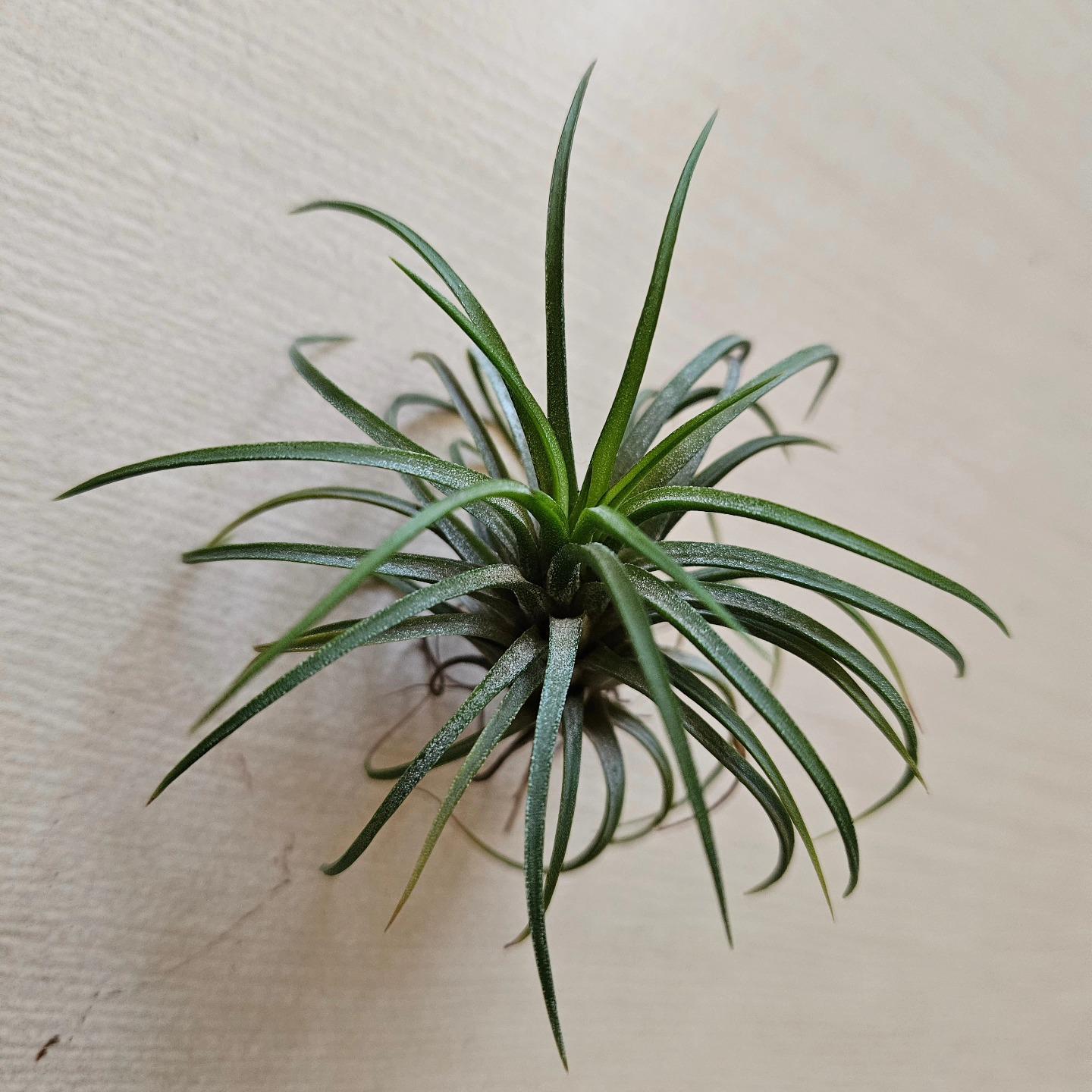
Its soft tones and creamy-white flowers make Druid Air Plant a sophisticated, subtle accent in home decor.
✅ Conclusion
The Druid Air Plant is a unique, beautiful, and low-maintenance air plant variety perfect for indoor gardeners. Its rare coloring, creamy flowers, and easy care make it a delightful addition to any plant collection or decor scheme. With proper light, watering, and occasional feeding, you can enjoy this charming, soil-free plant and its future generations of pups.