Related Doctor Note: —–
Why Might You Need a Doctor’s Note for Ulcerative Colitis?
Ulcerative colitis symptoms can vary considerably from one person to another. During a flare-up, frequent bowel movements, abdominal discomfort, fatigue, or an urgent need to use a restroom may make normal work or school activities difficult.
You may need medical documentation if:
- You need an excused absence from work or school.
- Your symptoms prevent you from completing normal duties.
- You need temporary workplace accommodations.
- You require frequent or easier access to restroom facilities.
- You need modified work duties during a flare-up.
- You are recovering from a medical procedure or treatment.
- You need documentation for an absence related to a medical appointment.
- Your employer or educational institution requires medical documentation.
The purpose of the note is to communicate medically appropriate limitations or leave recommendations without unnecessarily disclosing private health information.
Common Ulcerative Colitis Symptoms That May Affect Work or School
Ulcerative colitis can affect people differently, and symptoms may range from mild to severe. Common symptoms include:
- Frequent Diarrhea Repeated bowel movements can make it difficult to remain away from a restroom for extended periods and may interfere with work, school, commuting, or travel.
- Abdominal Pain and Cramping Abdominal discomfort or cramping may make sitting, standing, concentrating, or completing physical tasks more difficult.
- Rectal Bleeding Blood in the stool can occur with ulcerative colitis and should be discussed with a healthcare professional, particularly if it is persistent or significant.
- Urgent Bowel Movements Sudden and difficult-to-delay bowel urgency may affect a person’s ability to attend meetings, classes, travel, or perform duties without convenient restroom access.
- Fatigue Ongoing inflammation, disrupted sleep, nutritional issues, or anemia associated with inflammatory bowel disease can contribute to significant fatigue.
- Loss of Appetite or Weight Changes Ulcerative colitis may affect appetite and nutritional status, particularly during periods of active disease.
- Flare-Ups Symptoms may become more active during an ulcerative colitis flare-up, potentially requiring medical evaluation, treatment adjustments, rest, or temporary changes to normal activities.
When Ulcerative Colitis May Affect Your Ability to Work
People with ulcerative colitis may experience challenges depending on their symptoms and job requirements. A healthcare provider may consider functional limitations when deciding whether medical leave or workplace restrictions are appropriate.
Examples include:
- Frequent restroom needs
- Difficulty commuting long distances
- Fatigue affecting concentration
- Abdominal pain interfering with physical tasks
- Difficulty with prolonged standing
- Difficulty completing physically demanding work
- Need for convenient restroom access
- Need for temporary schedule adjustments
- Recovery following a procedure or treatment
A provider determines whether restrictions or leave are medically appropriate based on the individual’s condition rather than simply the diagnosis itself.
Ulcerative Colitis and Workplace Accommodations
Some people with ulcerative colitis may require temporary or ongoing workplace adjustments depending on their symptoms and applicable workplace policies or laws.
Potential accommodations may include:
- Easier access to restroom facilities
- Flexible restroom breaks
- Modified work schedules
- Temporary changes to physically demanding duties
- Remote or hybrid work where appropriate and available
- Additional rest periods when medically necessary
- Time away from work for medical appointments
The appropriate accommodation depends on the person’s medical needs, job responsibilities, employer policies, and applicable laws.
If you require workplace accommodations, discuss your needs with a licensed healthcare professional and your employer or HR department.
When Should You Seek Medical Attention for Ulcerative Colitis?
Ulcerative colitis symptoms should be medically evaluated when they are persistent, worsening, or interfering significantly with daily activities.
Contact a healthcare professional if you experience:
- Persistent diarrhea
- Increasing abdominal pain
- Frequent or worsening rectal bleeding
- Significant fatigue or weakness
- Unexplained weight loss
- Symptoms that are becoming more difficult to manage
- Signs of dehydration
- A significant change from your usual symptoms
When Is Ulcerative Colitis an Emergency?
Seek urgent or emergency medical care if you experience severe symptoms such as:
- Heavy or persistent rectal bleeding
- Severe abdominal pain or swelling
- Fainting or severe weakness
- Signs of severe dehydration
- High fever with significant worsening of symptoms
- Rapidly worsening illness
- Other symptoms that feel severe or life-threatening
Do not rely on an online doctor’s note service for emergency medical care.
How to Get a Doctor’s Note for Ulcerative Colitis Online
If online healthcare services are available in your location, you may be able to schedule a telehealth consultation to discuss your symptoms and documentation needs.
Step 1: Choose an Online Healthcare Service
Select a healthcare platform that provides access to licensed healthcare professionals and offers online medical consultations where permitted.
Step 2: Register or Log In
Create an account or sign in using the information requested by the platform.
Step 3: Book an Appointment
Choose an available appointment time that works for your schedule.
Step 4: Explain Your Symptoms
During the consultation, provide accurate information about your ulcerative colitis symptoms, when they started, how severe they are, and how they affect your ability to work, attend school, or perform normal activities.
Step 5: Discuss Your Documentation Needs
Tell the healthcare provider why you need documentation and explain any workplace, school, or activity limitations you are experiencing.
Step 6: Complete the Medical Evaluation
The healthcare provider will determine whether your symptoms can be appropriately assessed through telehealth or whether an in-person examination or additional testing is necessary.
Step 7: Receive Documentation if Medically Appropriate
If the provider determines that medical documentation is appropriate, they may issue a doctor’s note based on their clinical assessment and applicable requirements.
A doctor’s note is not guaranteed simply because it is requested. It should only be issued when a healthcare professional determines that it is medically justified.
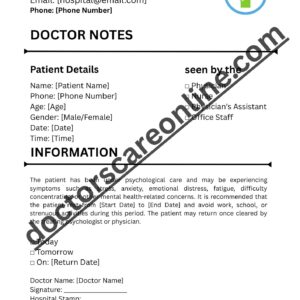
What Information Should a Doctor’s Note for Ulcerative Colitis Include?
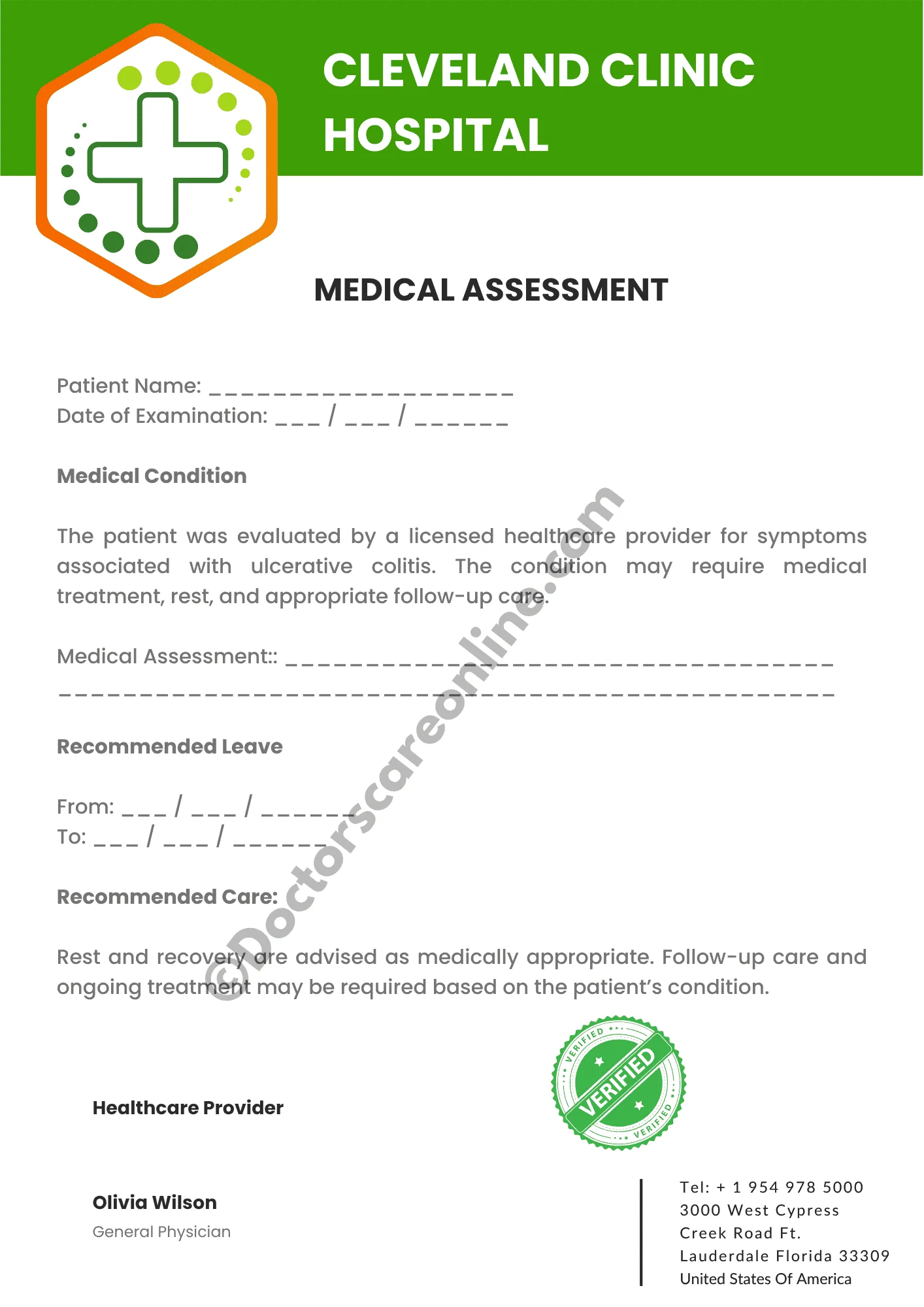
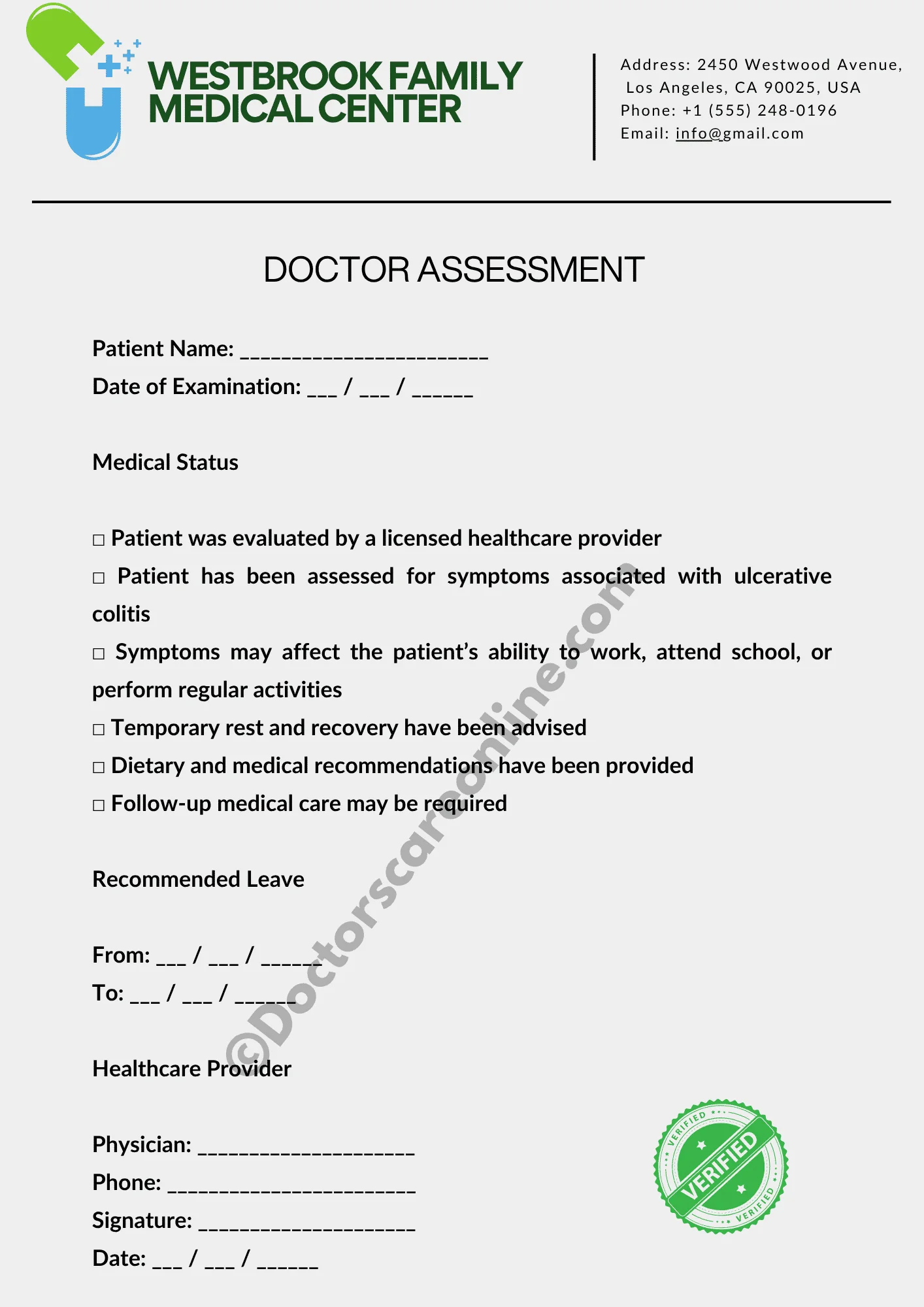
The exact contents vary, but a medical note may include:
- Patient’s name
- Date of examination
- Date of medical evaluation
- Confirmation of medical evaluation
- Recommended absence period, if necessary
- Work or activity restrictions
- Recommended return date
- Follow-up instructions
- Healthcare provider’s name and professional information
- Clinic or practice information
- Provider signature or other required verification
A note does not necessarily need to disclose detailed medical information. The appropriate level of information depends on the provider, organization requesting the documentation, and applicable privacy and documentation requirements.
How Long Can a Doctor Excuse You From Work for Ulcerative Colitis?
There is no universal number of days that applies to everyone with ulcerative colitis.
The appropriate period of medical leave may depend on:
- Severity of symptoms
- Current disease activity
- Frequency of bowel movements
- Abdominal pain or other symptoms
- Fatigue and functional limitations
- Response to treatment
- Type of work performed
- Need for medical procedures or follow-up care
A healthcare provider determines whether time away from work is appropriate and, when necessary, how long the recommended leave should last.
If symptoms continue beyond the original leave period, a follow-up evaluation may be needed.
Can You Work During an Ulcerative Colitis Flare-Up?
Some people may be able to continue working during a mild flare-up, while others may need temporary leave or modified duties.
Your ability to work may depend on:
- Symptom severity
- Access to a restroom
- Work environment
- Physical demands of your job
- Fatigue level
- Treatment requirements
- Ability to safely perform essential duties
If symptoms are interfering with your work, speak with a healthcare professional about whether temporary restrictions, modified duties, or medical leave may be appropriate.
Can You Get a Doctor’s Note for Ulcerative Colitis After an Online Appointment?
In many locations, healthcare providers can evaluate certain medical concerns through telehealth. Whether an online appointment is sufficient depends on the symptoms, medical history, clinical situation, local requirements, and the provider’s professional judgment.
If the provider determines that an in-person examination, laboratory testing, imaging, or specialist evaluation is necessary, they may recommend additional care rather than issuing documentation based solely on an online consultation.
What to Prepare Before Your Online Ulcerative Colitis Appointment
Preparing relevant information can make your consultation more useful.
Consider having the following information available:
- Date your symptoms began or changed
- Presence of blood or mucus in stool
- Abdominal pain or cramping
- Urgency to use the restroom
- Fatigue or weakness
- Recent changes in symptoms
- Current medications and treatments
- Previous ulcerative colitis diagnosis or medical history
- Previous procedures or hospital visits
- Any known triggers
- Your work or school requirements
- The type of documentation you need
Be honest and accurate when describing your symptoms. The healthcare provider uses this information to determine the appropriate next steps.
How Our Online Service Can Be Useful
When you need medical documentation related to ulcerative colitis, navigating appointments and documentation requirements can sometimes feel stressful. Our online service is designed to make the process more convenient by providing a straightforward way to begin a healthcare consultation online where services are available.
You can use the platform to:
- Start the appointment-booking process online
- Provide information about your symptoms
- Discuss your documentation needs with a healthcare provider
- Complete an online medical consultation where appropriate
- Receive medical documentation if the provider determines it is appropriate
- Get guidance on next steps if an in-person evaluation is necessary
Our goal is to make access to the consultation process simple and convenient while keeping the medical decision with the licensed healthcare professional.
We do not promise or guarantee that every user will receive a doctor’s note. Documentation is provided only when a healthcare provider determines that it is medically appropriate.
Having Trouble With Registration, Login, Payment, or Your Order?
If you are trying to book an appointment and experience a problem with registration, login, payment, appointment booking, or another website-related issue, you can contact our support team through the chatbox available on the website.
You can use the chatbox to ask questions about: