- Doctors Note for Medication on Flight
Why You Might Need a Doctor’s Note for Vertigo or Dizziness
Vertigo and dizziness can interfere with activities that require balance, concentration, movement, or safe operation of equipment. A healthcare provider may recommend temporary leave or restrictions when symptoms make normal responsibilities difficult or unsafe.
You may need medical documentation if:
- Vertigo prevents you from safely performing your job.
- Dizziness makes commuting or traveling difficult.
- You need temporary leave from work or school.
- Your job requires climbing, operating machinery, driving, or working at heights.
- You need temporary restrictions on physically demanding activities.
- Your school or employer requires documentation for a medical absence.
- You are recovering from an episode of severe dizziness or vertigo.
- Your healthcare provider recommends follow-up evaluation before returning to normal activities.
A doctor’s note can help communicate medically recommended limitations without requiring unnecessary disclosure of private health information.
Common Symptoms of Vertigo & Dizziness
Vertigo and dizziness can occur in different ways. Common symptoms may include:
- Spinning or room-spinning sensation
- Feeling lightheaded or faint
- Loss of balance
- Unsteadiness while walking
- Nausea or vomiting
- Difficulty concentrating
- Blurred or unusual visual sensations
- Head movement making symptoms worse
- Feeling as though the surroundings are moving
- Difficulty standing or walking normally
- Ringing in the ears in some conditions
- Hearing changes in some cases
Symptoms can have many possible causes, so persistent, severe, or recurring dizziness should be medically evaluated.
Common Causes of Vertigo and Dizziness
Vertigo and dizziness are symptoms rather than a single diagnosis. A healthcare provider may consider several possible causes based on the individual’s symptoms and medical history.
Common causes may include:
- Benign Paroxysmal Positional Vertigo (BPPV) BPPV is a common inner-ear condition that can cause brief episodes of spinning triggered by changes in head position, such as turning over in bed or looking upward.
- Vestibular Disorders Problems affecting the vestibular system, which helps control balance and spatial orientation, can contribute to dizziness or vertigo.
- Inner Ear Conditions Certain inner-ear disorders can cause vertigo, imbalance, hearing changes, or ringing in the ears.
- Vestibular Migraine Some people experience dizziness or vertigo as part of migraine-related symptoms, sometimes with or without a typical headache.
- Dehydration Insufficient fluid intake or fluid loss can contribute to lightheadedness and dizziness.
- Medication Effects Some medications can cause dizziness or balance problems as a side effect. Do not stop prescribed medication without discussing it with a healthcare professional.
- Low Blood Pressure A drop in blood pressure, particularly when standing, can sometimes cause lightheadedness or an unsteady feeling.
- Other Medical Conditions Dizziness can also be associated with neurological, cardiovascular, metabolic, or other medical conditions. A healthcare professional can help determine whether further testing or an in-person assessment is needed.
When Should You See a Doctor for Vertigo or Dizziness?
Occasional mild dizziness may resolve on its own, but medical evaluation is important when symptoms are severe, persistent, recurrent, or interfering with normal activities.
Consider contacting a healthcare professional if you experience:
- Repeated episodes of vertigo
- Dizziness that does not improve
- Difficulty walking or maintaining balance
- Frequent nausea or vomiting
- New hearing changes
- Persistent ringing in the ears
- Symptoms that interfere with work or school
- Dizziness after starting a medication
- Vertigo following an injury
- Symptoms that are becoming more frequent or severe
A healthcare provider can determine whether your symptoms can be evaluated through telehealth or whether an in-person examination is more appropriate.
Vertigo and Dizziness Warning Signs: When to Seek Emergency Care
Some symptoms associated with dizziness or vertigo can indicate a medical emergency. Seek immediate emergency medical care if dizziness or vertigo occurs with symptoms such as:
- Sudden weakness or numbness, especially on one side of the body
- Difficulty speaking or understanding speech
- New severe difficulty walking or coordination problems
- Sudden severe headache unlike your usual headaches
- Fainting or loss of consciousness
- Chest pain
- Severe shortness of breath
- New severe vision problems
- Sudden neurological changes
- Vertigo following significant head trauma
Do not rely on an online doctor’s note or telehealth consultation when emergency symptoms are present. Emergency evaluation should take priority.
Can You Get a Doctor’s Note for Vertigo Online?
In many locations, you may be able to discuss vertigo or dizziness with a licensed healthcare professional through a telehealth appointment.
During an online consultation, the provider may ask about:
- When your symptoms began
- What the dizziness or vertigo feels like
- How long each episode lasts
- Whether movement triggers the symptoms
- Hearing or vision changes
- Headaches
- Medications and supplements
- Previous episodes
- Existing medical conditions
- Recent injuries or illnesses
- How the symptoms affect your work or school activities
The healthcare provider will determine whether your condition can be appropriately assessed remotely. If an in-person examination, testing, or urgent care is necessary, the provider may recommend that instead.
If medical leave or restrictions are clinically appropriate, the provider may issue documentation in accordance with applicable laws, regulations, professional standards, and their clinical judgment.
How to Get a Doctor’s Note for Vertigo & Dizziness Online
Getting evaluated online can be convenient when your symptoms are suitable for telehealth.
Step 1: Choose a Healthcare Provider
Select a legitimate healthcare service that connects patients with appropriately licensed healthcare professionals.
Step 2: Create or Access Your Account
Register for an account or log in using the information requested by the healthcare service.
Step 3: Book an Online Consultation
Choose an available appointment and provide the required information about your symptoms.
Step 4: Describe Your Symptoms Clearly
Tell the healthcare provider when your symptoms started, how frequently they occur, what triggers them, and how they affect your normal activities.
Step 5: Complete the Medical Evaluation
Answer the provider’s questions accurately and provide relevant medical history.
Step 6: Follow the Provider’s Recommendation
The provider may recommend treatment, monitoring, an activity restriction, an in-person visit, or additional testing depending on the evaluation.
Step 7: Receive Documentation if Medically Appropriate
If the healthcare provider determines that a doctor’s note is appropriate, the documentation may specify recommended leave, restrictions, or a return date.
Important A doctor’s note should never be guaranteed in advance. The decision to issue medical documentation belongs to the licensed healthcare professional after evaluation.
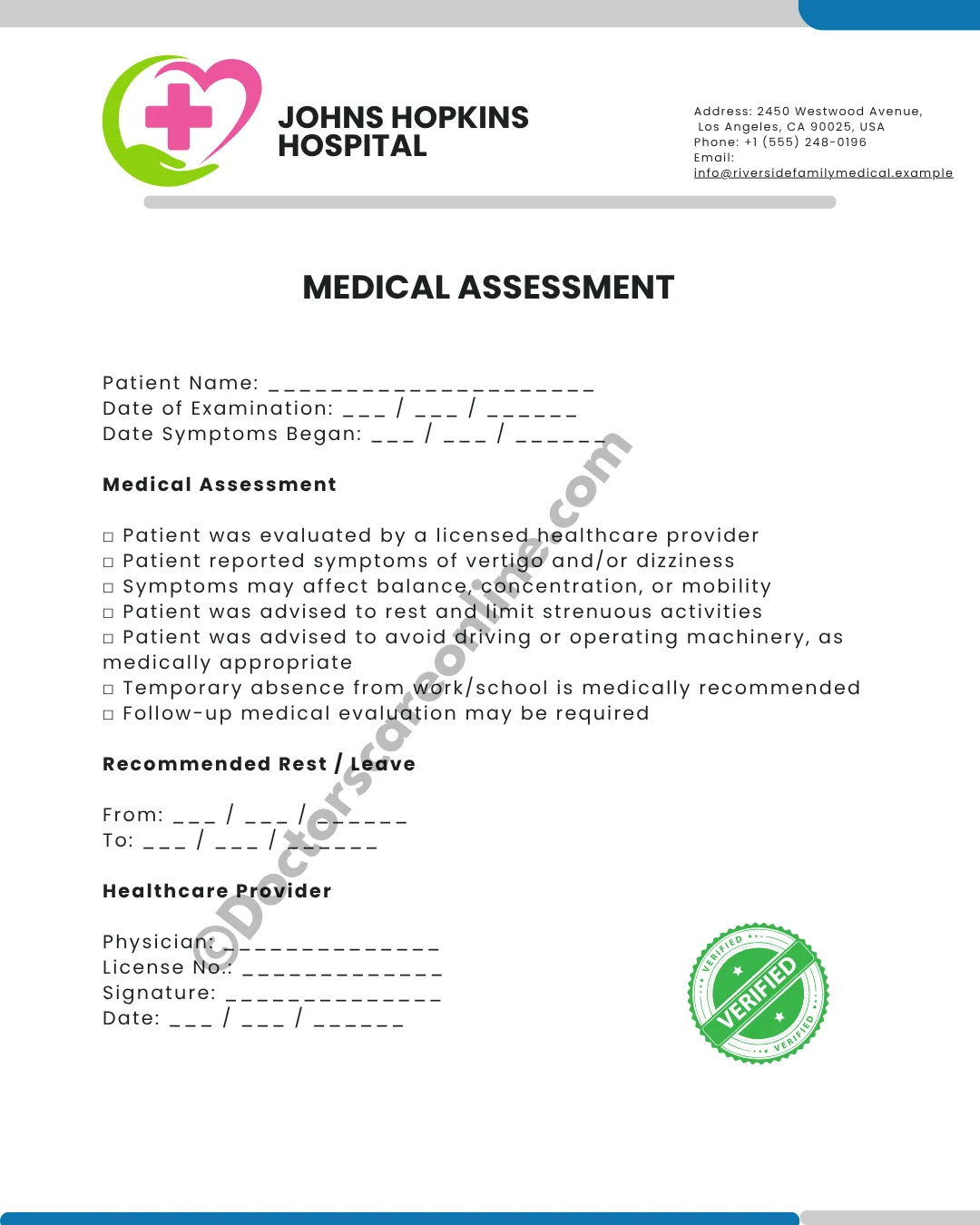
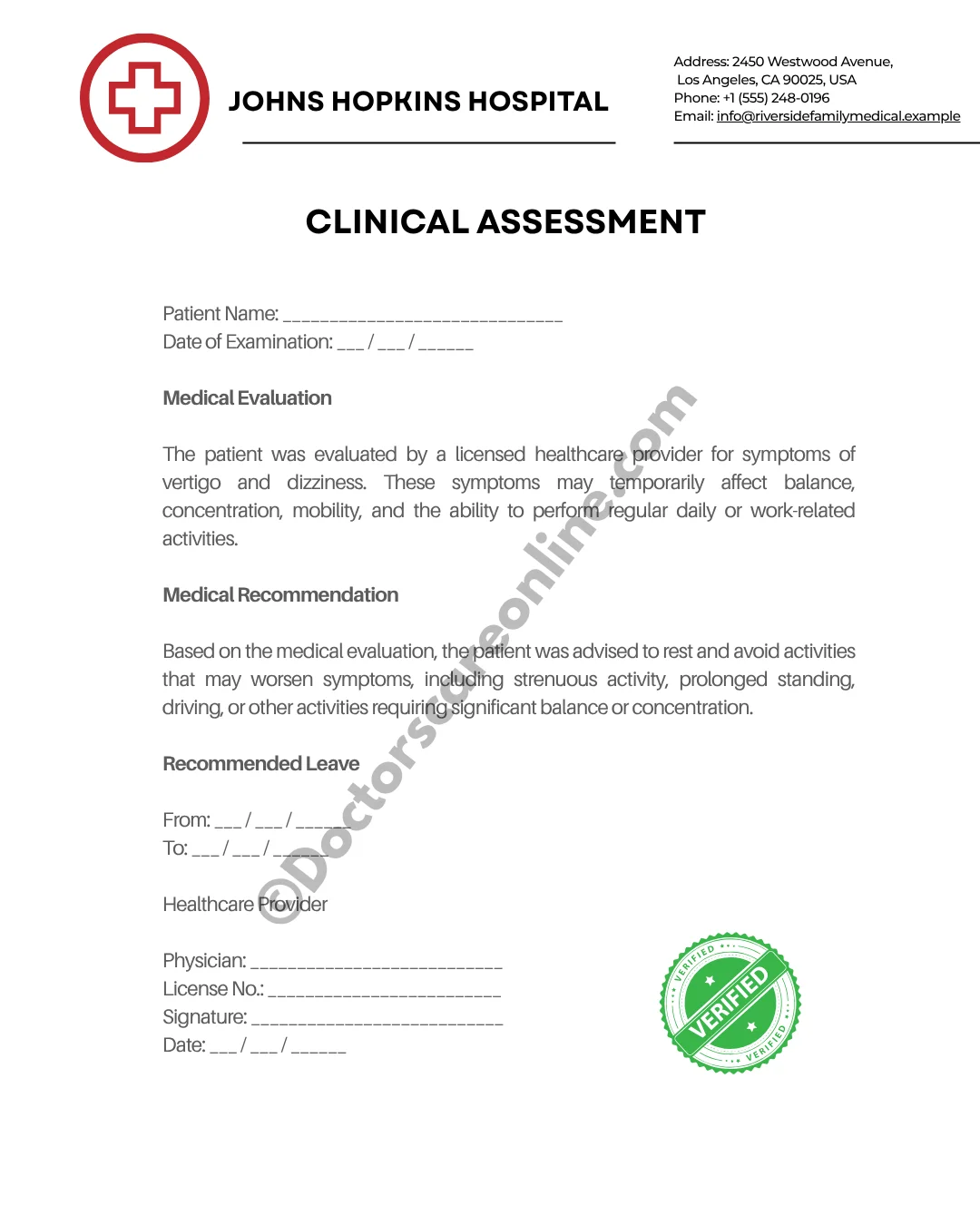
What May Be Included in a Doctor’s Note for Vertigo and Dizziness?
The contents vary depending on the provider and the purpose of the documentation. A note may include:
A doctor’s note does not necessarily need to disclose a detailed diagnosis. The provider determines what information is appropriate to include.
Can a Doctor Recommend Work Restrictions for Vertigo?
Yes. Depending on the symptoms and job requirements, a healthcare provider may recommend temporary restrictions when dizziness or vertigo creates a safety concern.
Possible restrictions may include:
- Avoiding driving for work
- Avoiding ladders or elevated work areas
- Avoiding machinery or hazardous equipment
- Limiting strenuous physical activity
- Reducing activities that worsen symptoms
- Taking additional breaks
- Temporary light-duty assignments
- Modified work responsibilities
Restrictions should be individualized according to the patient’s medical condition and the requirements of the job.
Vertigo, Dizziness, and Work: When May Time Off Be Necessary?
Some occupations become particularly difficult or unsafe when balance or spatial orientation is impaired.
Examples include jobs involving:
- Driving
- Operating machinery
- Construction
- Working at heights
- Heavy physical labor
- Climbing ladders
- Patient handling
- Safety-sensitive equipment
- Rapid movement or frequent changes in position
If symptoms interfere with essential job duties, a healthcare provider can assess whether temporary leave or modified duties may be appropriate.
How Is Vertigo Diagnosed?
The diagnostic process depends on the symptoms and suspected cause. A healthcare professional may review:
- Medical history
- Symptom duration and frequency
- Triggers
- Medication history
- Balance and coordination
- Eye movements
- Hearing symptoms
- Neurological symptoms
- Blood pressure or other vital signs when appropriate
Depending on the findings, additional evaluation may include hearing tests, vestibular testing, imaging, blood tests, or an in-person neurological or ear examination.
Not every person with dizziness needs imaging or laboratory testing. The appropriate evaluation depends on the individual clinical situation.
Treatment Options for Vertigo and Dizziness
Treatment depends on the underlying cause.
Depending on the diagnosis, a healthcare professional may recommend:
- Hydration when appropriate
- Activity modification
- Vestibular rehabilitation
- Specific repositioning maneuvers for certain types of positional vertigo
- Treatment of an underlying medical condition
- Medication when clinically appropriate
- Management of migraine-related symptoms
- Evaluation of medication side effects
- Referral to an appropriate specialist
Do not begin, stop, or change prescription medication based solely on online information. Follow the recommendations of your healthcare professional.