About this product
The PMA Transmitter shall comply with the electrical specifications defined in IEEE Std 802.3™-2022, Compliance must be verified under two test conditions for 1000Base-T:
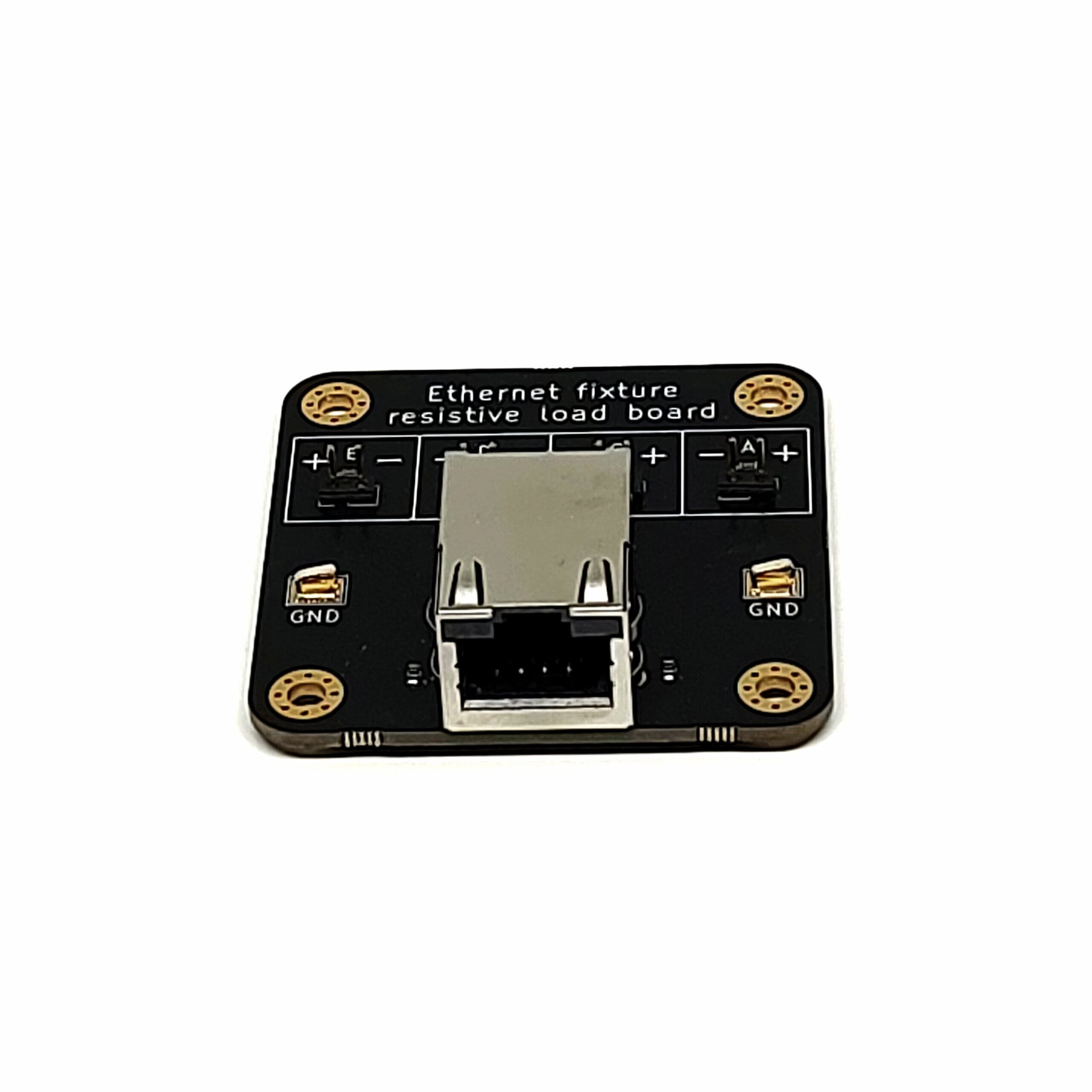
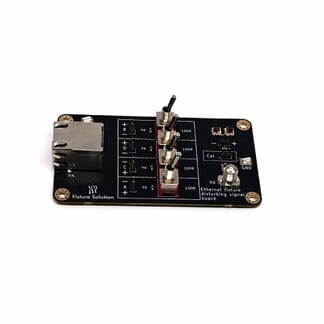
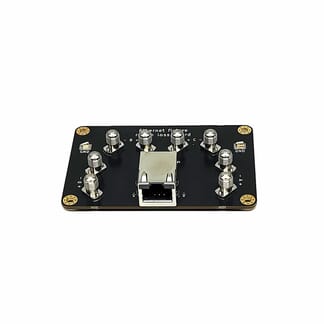
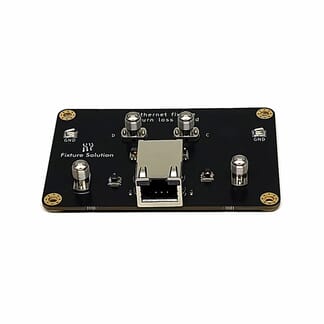
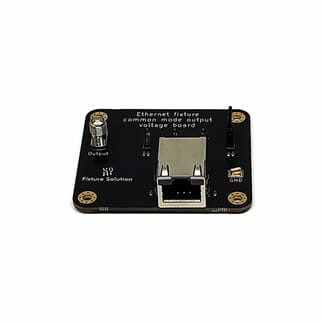
- Clean Signal Condition: The transmitted signal is measured using this Ethernet Fixture Resistive Load Board in a low-noise environment to establish baseline compliance.
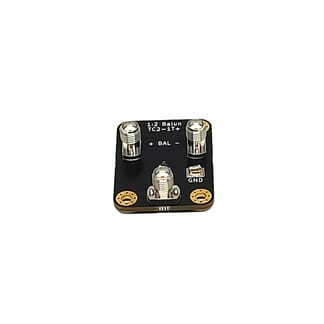
- Disturbed Signal Condition: The transmitted signal is subjected to an externally introduced disturbance, emulated by a sine wave injection in conjunction with a 1000BASE-T Ethernet Disturber. This simulates realistic interference conditions for stress testing transmitter performance.
Measurements should confirm that the transmitter maintains specification-compliant signaling in both conditions.
Beside the 1000Base-T is it also possible to use this fixture for 2.5G/5G/10GBase-T Maximum output Droop measurements.
Can be used by any brand of oscilloscope with enough bandwidth such as Rohde & Schwarz, Tektronix, Keysight / Agilent, Teledyne Lecroy, Yokogawa, Siglent, Rigol, Micsig, GW Instek, UNI-T, …
Used for 1000Base-T – 2.5G/5G/10GBase-T
#sirv-gallery-8777247196 { min-width: 200px; }.sirv-mv-caption.sirv-gallery-8777247196{} 1000BaseT
- Peak differential output voltage (IEEE Std 802.3™‐2022 – 40.6.1.2.1)
- Maximum Output Droop (IEEE Std 802.3™‐2022 – 40.6.1.2.2)
Show allShow less
- Differential output templates (IEEE Std 802.3™‐2022 – 40.6.1.2.3)
- Transmitter Distortion (IEEE Std 802.3™‐2022 – 40.6.1.2.4)
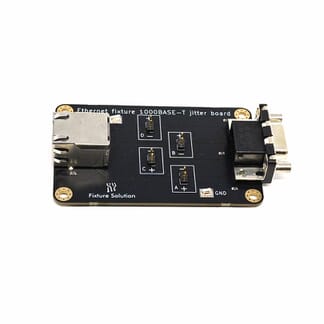
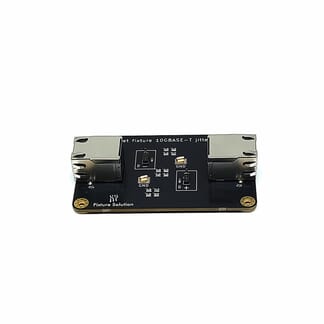
- Jitter Master & Slave Mode (IEEE Std 802.3™‐2022 – 40.6.1.2.5)
- Clock Frequency (IEEE Std 802.3™‐2022 – 40.6.1.2.6)
Testing shall be done on all 4 Pairs A, B, C and D.
Beside a suitable oscilloscope a suitable differential probe is required for the following measurements.
1000BaseT Test Mode 1
1000BaseT Test Mode 4
2.5GBaseT
- Maximum output Droop (IEEE Std 802.3™‐2022 – 126.5.3.1)
5GBaseT
10GBaseT
- Maximum output Droop (IEEE Std 802.3™‐2022 – 55.5.3.1)
In Fixturesolution's own words. See it at Fixturesolution