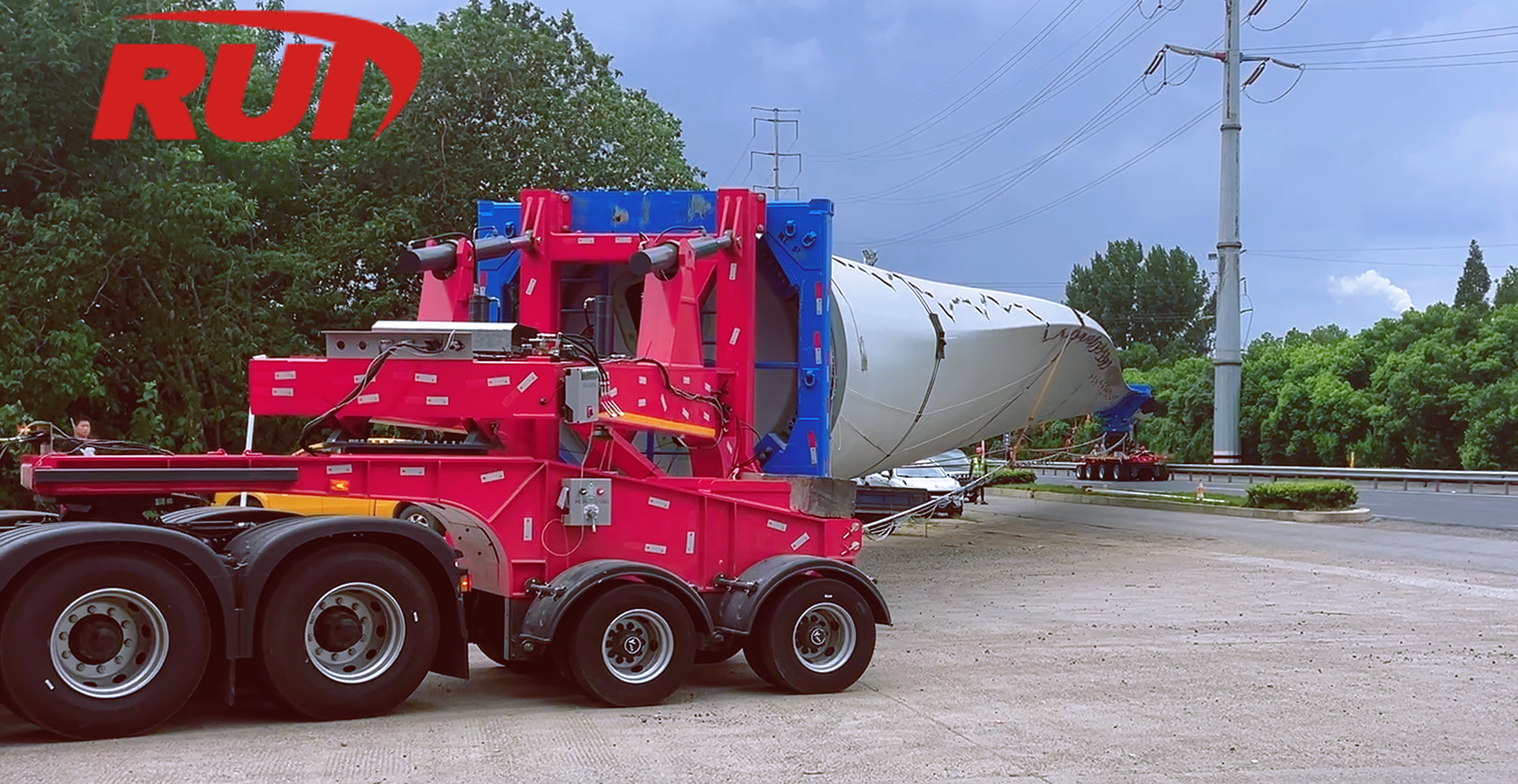
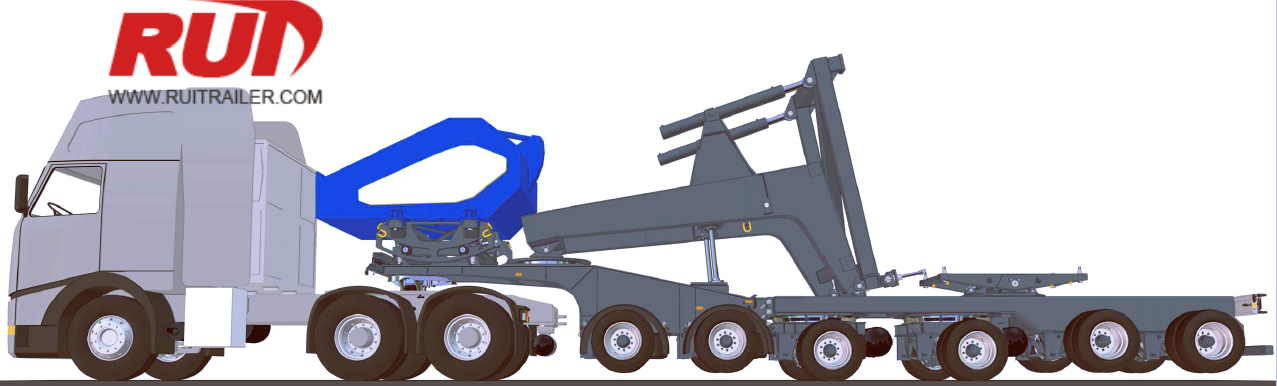
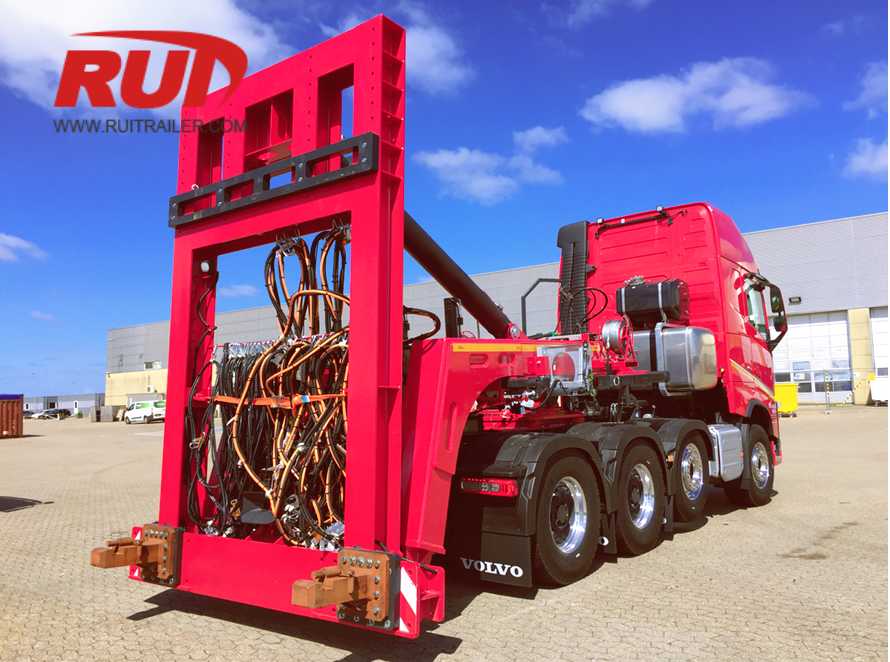
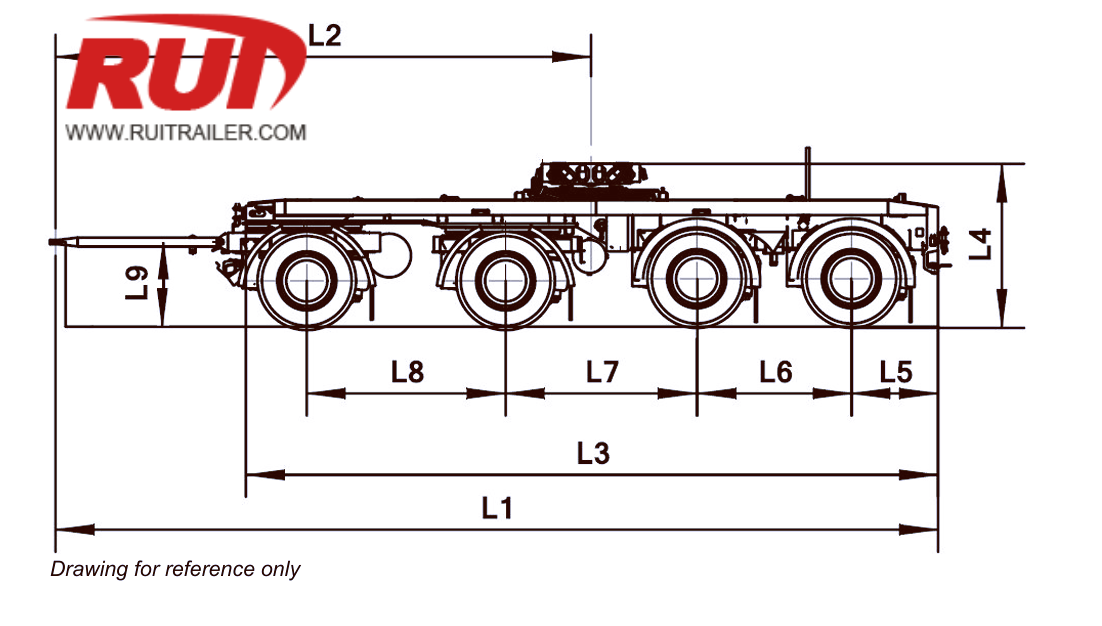
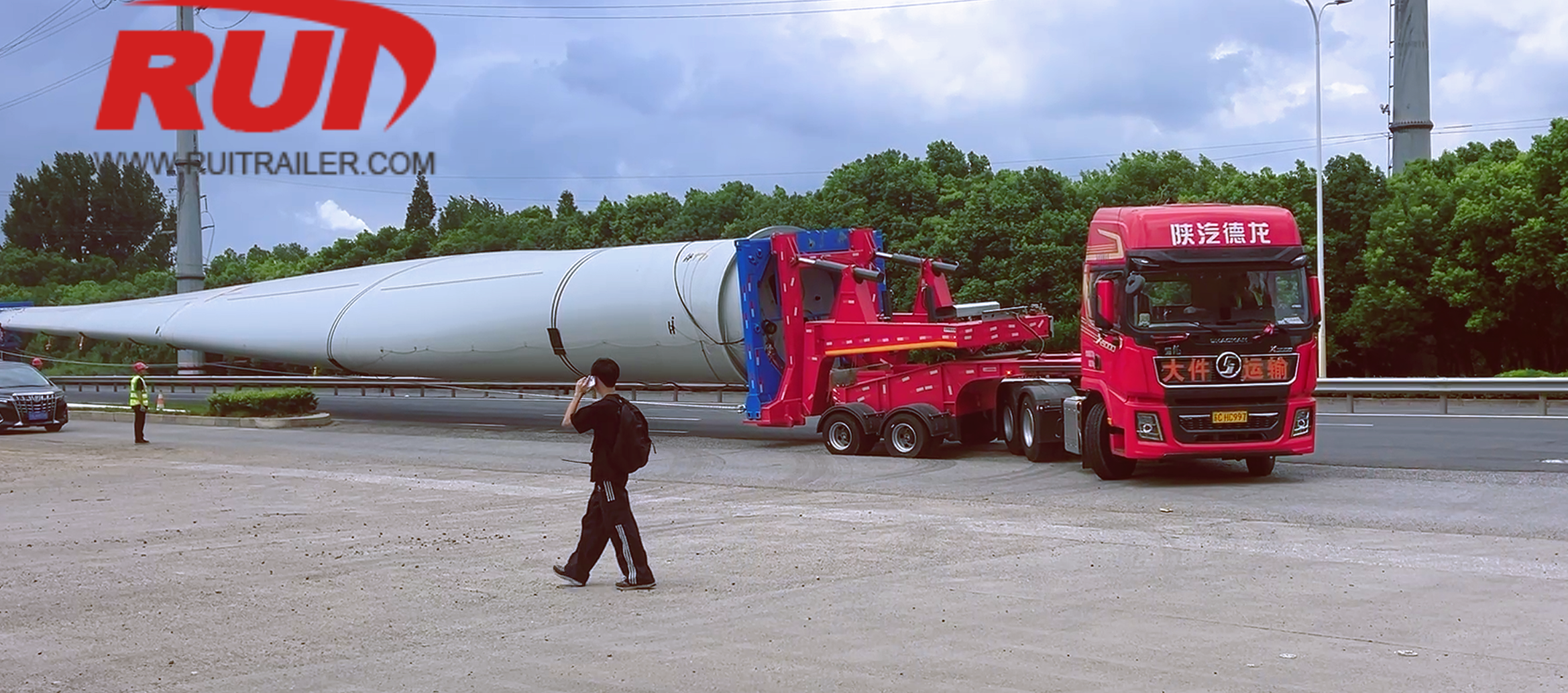
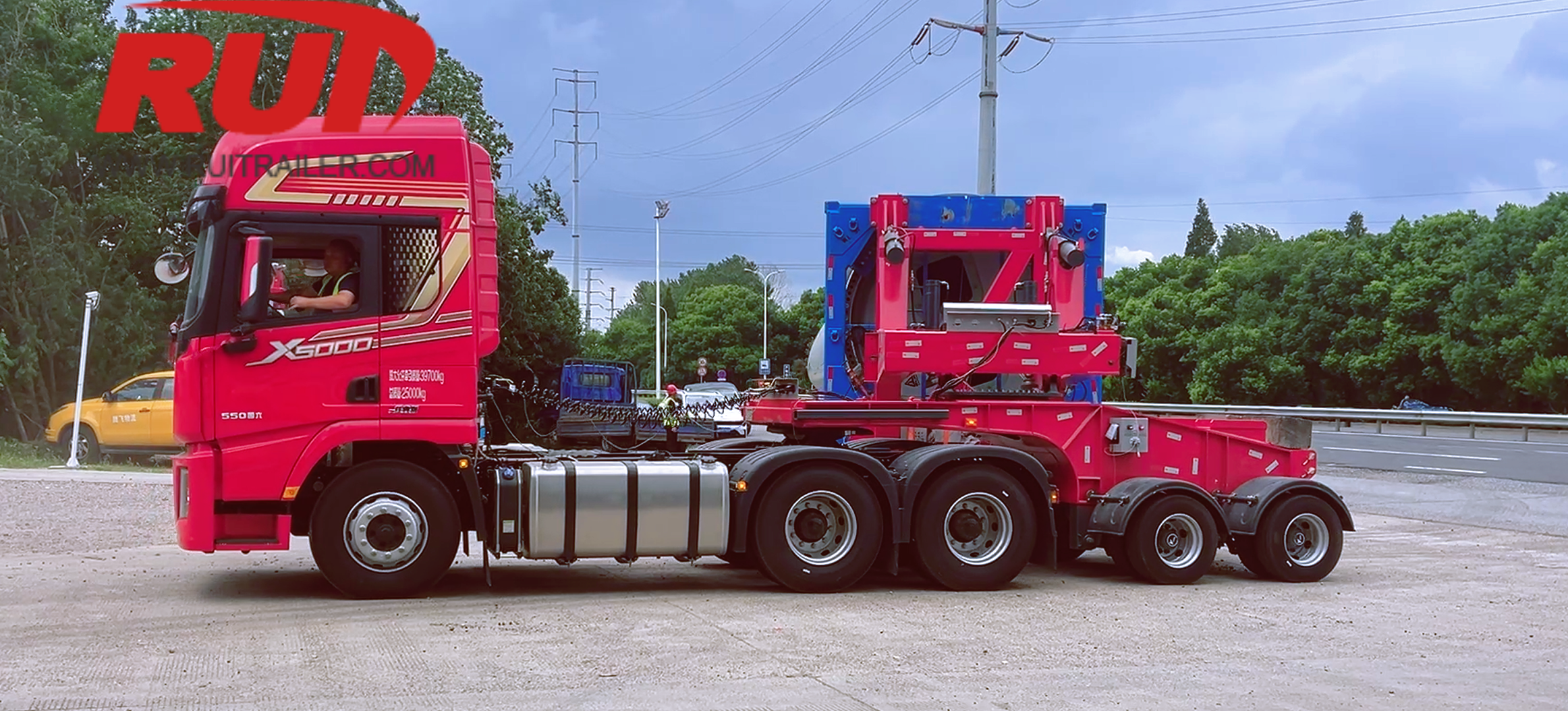
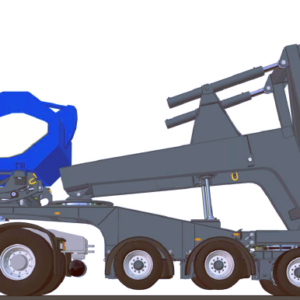
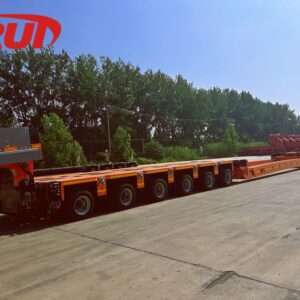
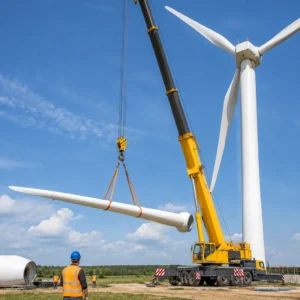
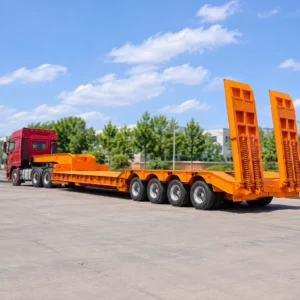
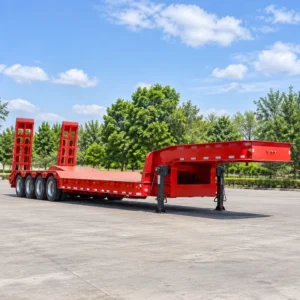
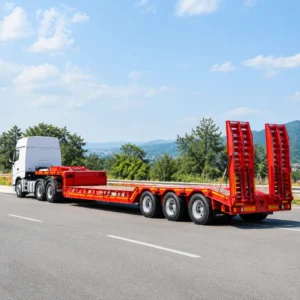
- Hydraulic Root Adapter A heavy-duty mounting frame with quick-clamping fixtures and hydraulic lifting functions to secure the blade root and adjust clearance over obstacles.
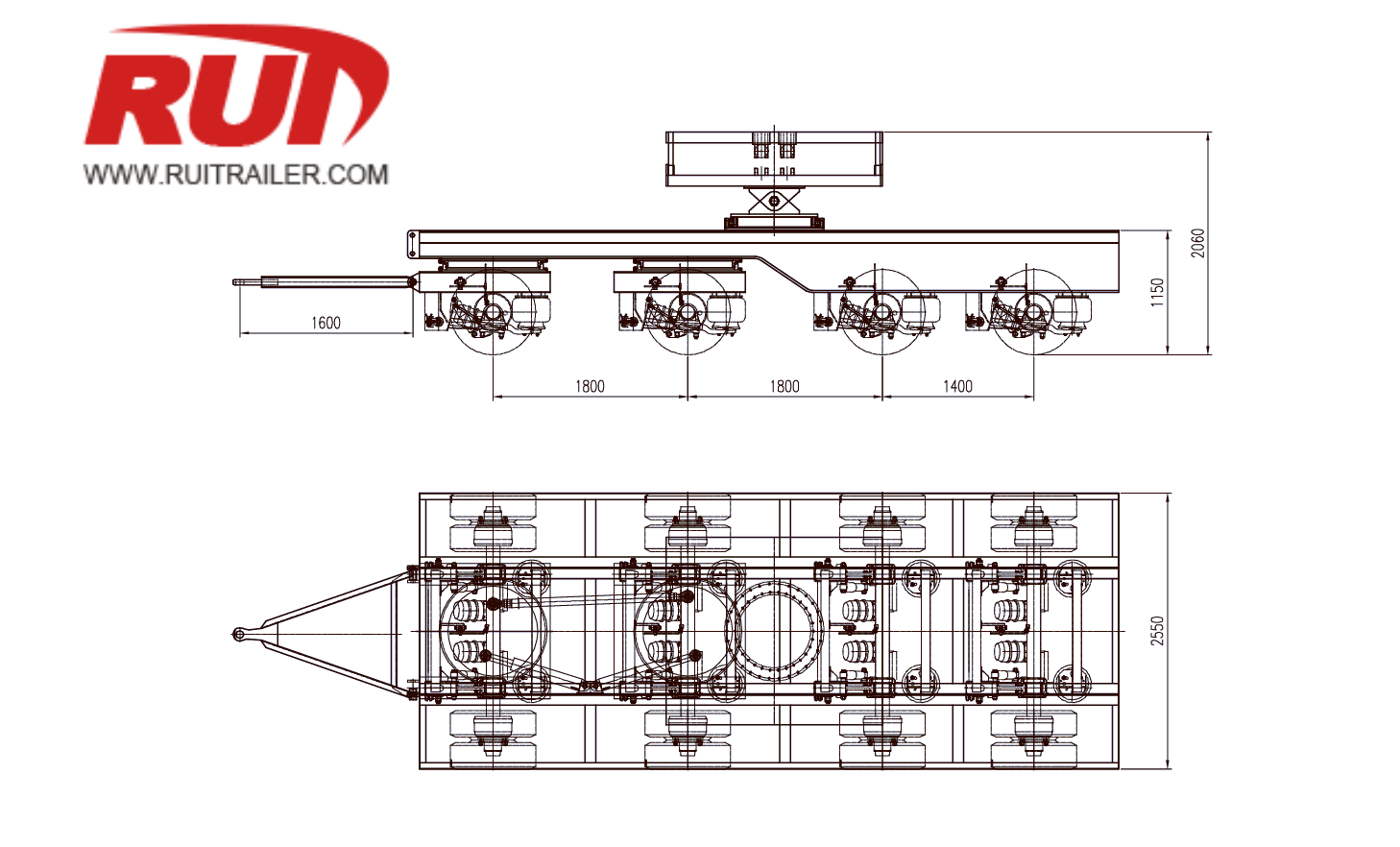
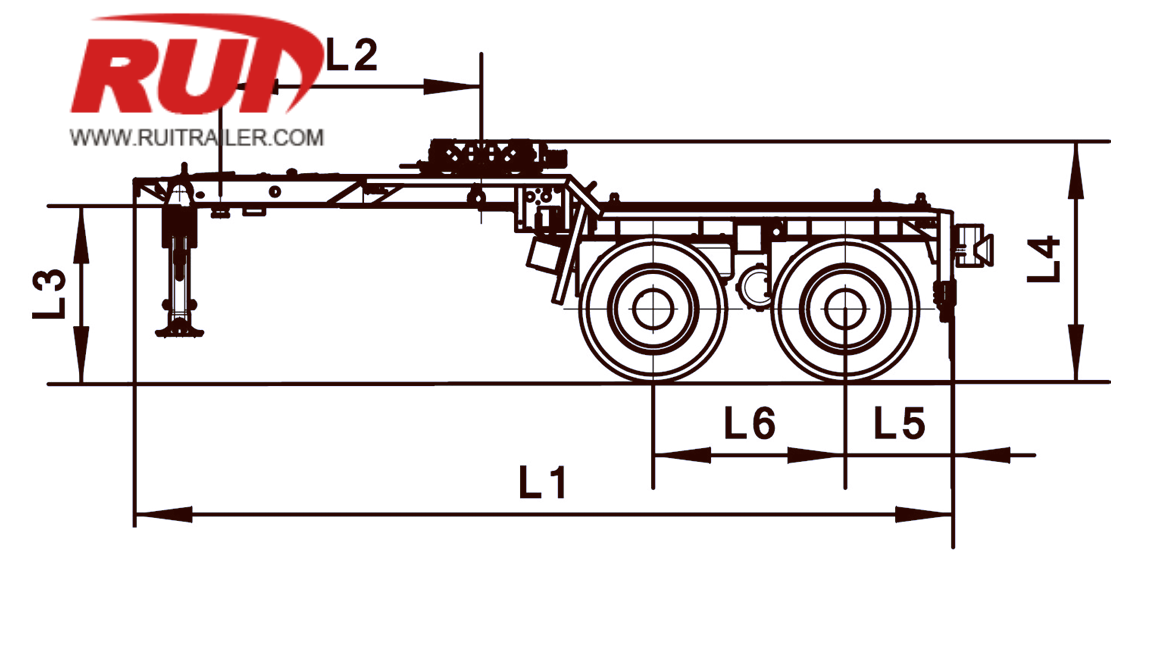
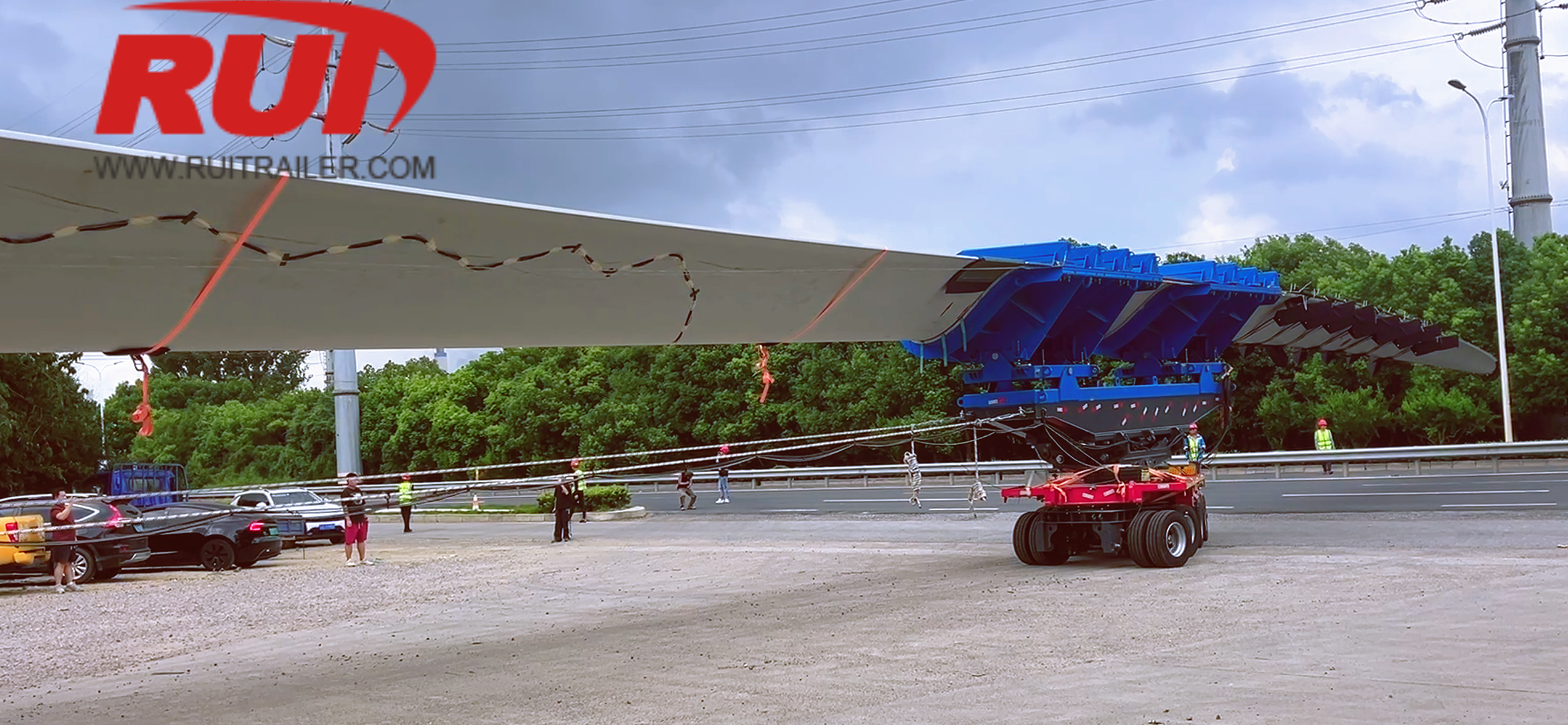
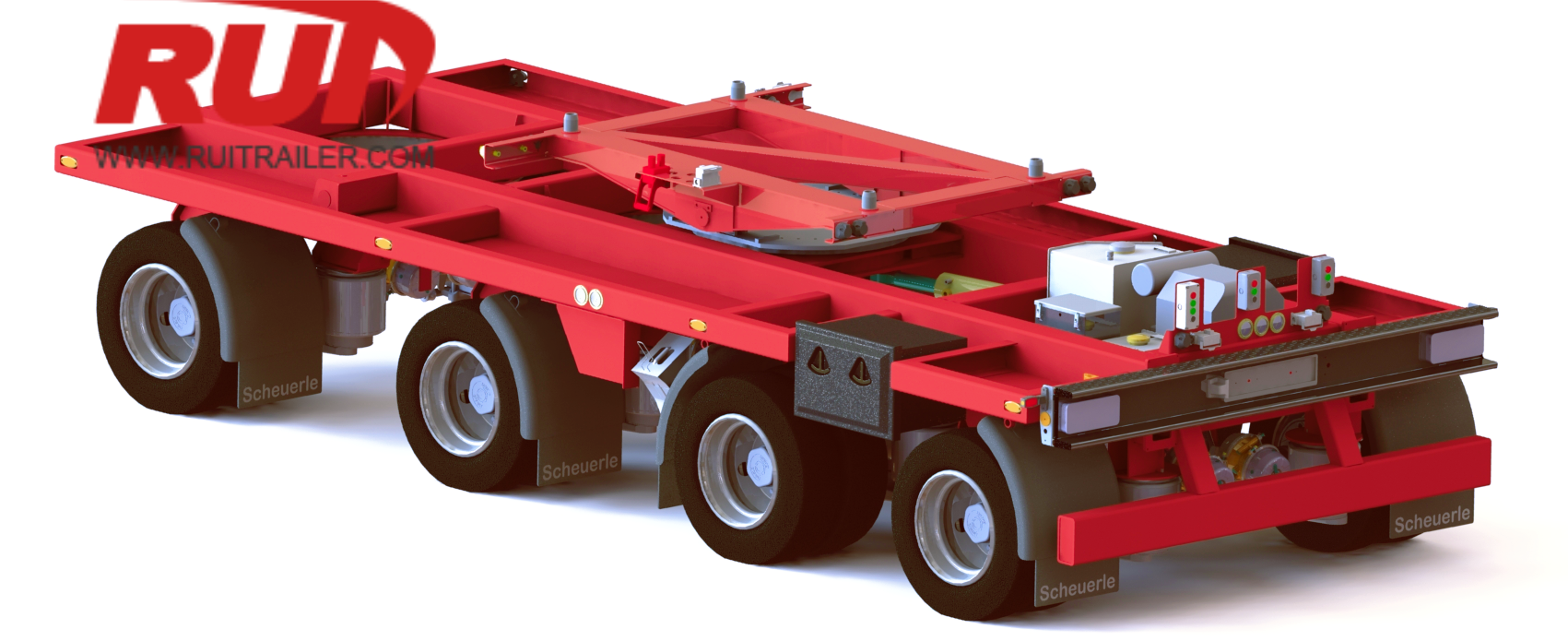
- Multi-Axle Steered Trailing Dolly A hydraulic trailing unit supporting the blade tip with active forced steering to navigate tight bends and complex roundabouts.
System Architecture and Core Subsystems of Our Wind Blade Transport System
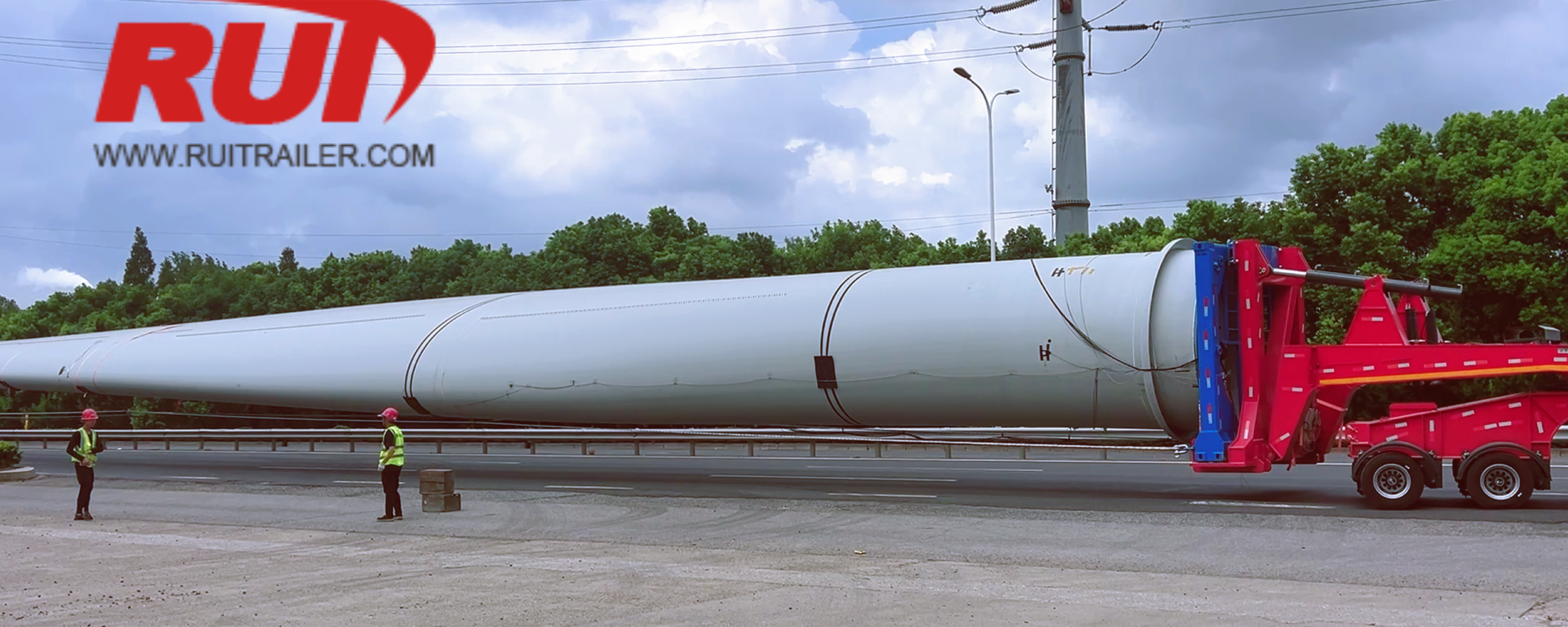
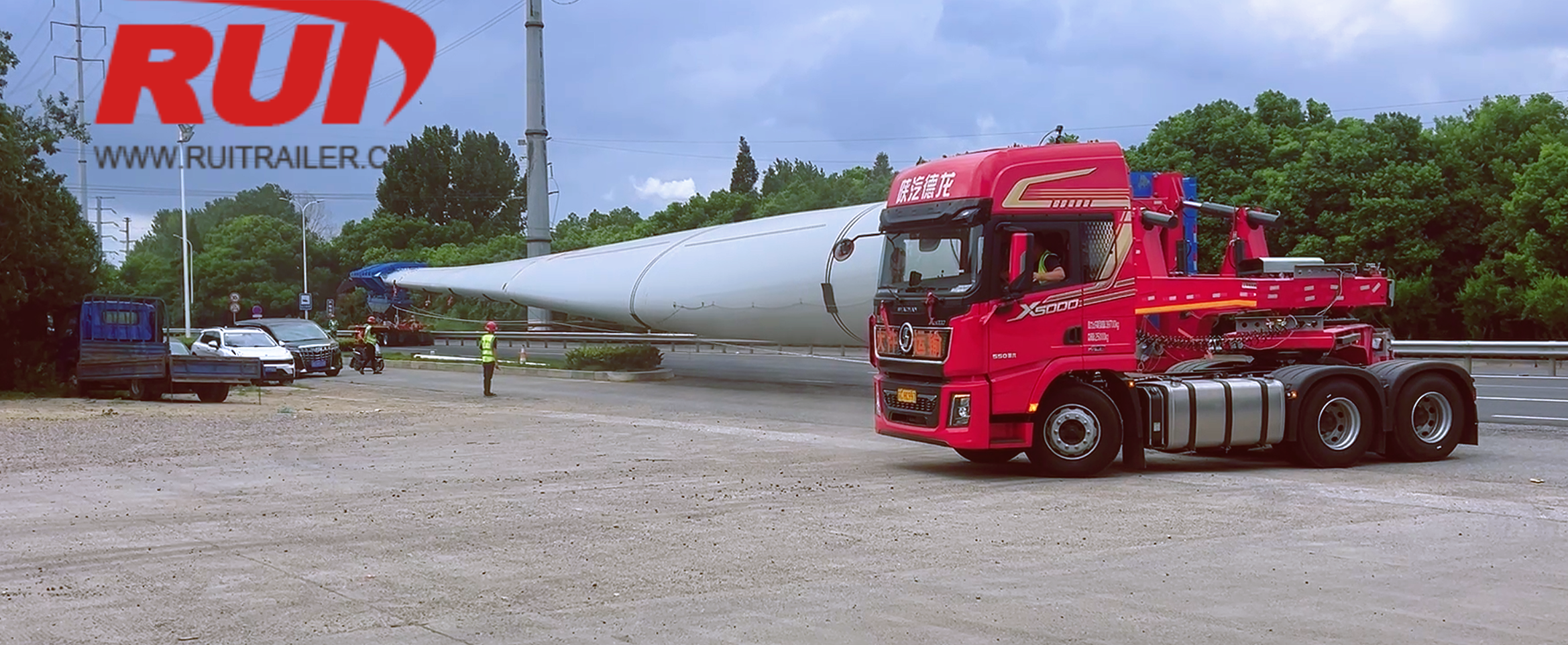
When moving oversized wind turbine blades on public roads or steep mountain access tracks, weak structural links and uneven axle loads can stall a project fast. We engineer our wind blade transport system around two synchronized modules that use the blade itself as the central load-bearing span, eliminating heavy extendable trailer beams while maintaining strict control at both ends.
Front Heavy-Duty Hydraulic Root Adapter
At the front of the combination, our heavy-duty root frame mounts securely to standard 3-axle, 4-axle, or 5-axle prime movers, as well as self-propelled modular transporter (SPMT) platforms. This flexibility lets fleet operators match tractor traction to local grade requirements without reconfiguring the core carrier.
- Multi-OEM Bolt Circle Compatibility Standardized and custom adapter rings bolt directly to major turbine blade roots, including Vestas, Siemens Gamesa, GE, Goldwind, and Envision models, using quick-clamping fixtures for fast yard turnaround.
- Integrated Pitch and Tilt Hydraulics Heavy-duty hydraulic cylinders adjust the vertical angle and elevation of the blade root on the move, giving drivers instant ground clearance over roundabouts, guardrails, bridge approaches, and steep incline crests.
Multi-Axle Steered Trailing Dolly
Supporting the rear tip section is our multi-axle trailing dolly—commonly referred to in heavy haulage as a Nachläufer unit—built to distribute weight evenly across uneven road surfaces and tight rural turns.
- 4-Axle or 5-Axle Pendulum Suspension Equipped with heavy-duty hydraulic axles, the trailing unit equalizes ground pressure across every tire, preventing axle overloads on soft wind farm access roads.
- Auxiliary Forced-Steering with Radio Remote An active hydraulic steering system tracks the prime mover automatically while allowing a banksman to override and steer the rear axles continuously via wireless remote control through tight village chokepoints.
- Non-Destructive Blade Tip Clamping A variable support cradle lined with high-elasticity polyurethane padding grips the fragile composite blade tip securely without causing surface abrasion or structural point stress.
Autonomous Onboard Hydraulic Powerpacks (HPU)
To ensure reliable response regardless of the prime mover’s PTO output, our wind turbine blade transport setup runs on independent onboard diesel or electro-hydraulic powerpacks.
- Load-Sensing Hydraulics and Pressure Monitoring Real-time gauges and load-sensing valves deliver smooth, proportional lifting and steering response under varying blade weights.
- Dual-Circuit Safety Relief Valves Redundant hydraulic safety circuits lock cylinder positions immediately in the event of pressure loss, protecting both the crew and high-value composite blades during critical maneuvers.
Operational Efficiencies and Road Navigation Advantages
Moving modern wind turbine blades through tight village roads, steep mountain switchbacks, and narrow roundabouts tests the limits of any heavy-haul fleet. We engineer our wind blade transport system to solve these exact route bottlenecks while cutting down your non-revenue return expenses.
Precision Steering and Wireless Manual Override
- Tight Turning Geometry Our multi-axle trailing dolly features active hydraulic forced steering, achieving steering angles up to 60 degrees. This extreme articulation lets the rear unit track tightly through narrow village passes and complex roundabouts without sweeping wide into roadside obstacles.
- Real-Time Remote Control When navigating critical urban chokepoints or steep hairpins, an operator can take over with an independent wireless remote control. Integrating a responsive <a href=” https://heavydutymodule.com/trailer-steering-system-guide-benefits-types-and https://heavydutymodule.com/trailer-steering-system-guide-benefits-types-and-uses/”>trailer steering system gives your crew direct manual override to guide the blade tip safely past buildings, trees, and signs.
Hydraulic Clearance Management at Both Ends
- Dual-End Lift and Pitch Both the front root adapter and the rear trailing unit feature integrated hydraulic lifting and lowering functions.
- Obstacle Avoidance Operators can adjust ground clearance and blade pitch on the fly to lift the cargo cleanly over highway guardrails, high curbs, rock embankments, and sharp incline crests without risking composite shell damage.
Piggyback Empty Return Mode
- Rapid Mechanical Coupling Unladen return trips often drain project budgets through wasted time and escort fees. Once the blade is offloaded at the wind farm, our system converts into a compact piggyback configuration by coupling the rear trailing dolly directly behind the front adapter unit.
- Lower Return-Trip Overhead This coupled setup shrinks the rig down to a standard semi-trailer footprint. Running at standard dimensions eliminates the need for special oversized permits, escort vehicles, and extra road tolls on the drive back, keeping your https://heavydutymodule.com/specialized-vehicles-https://heavydutymodule.com/specialized-vehicles-and-equipment-for-wind-turbine-blade-transportation/”>specialized wind turbine blade transport equipment profitable across every mile.
Technical Specifications and Dimension Matrix for Our Rotor Blade Transport System
When you are planning permits and route surveys for oversized wind turbine blade transport, exact numbers matter. We engineer our two-piece rotor blade transport system to handle the growing length and weight of modern blades while keeping axle loads low and road compliance straightforward.
Unlike a traditional extendable https://heavydutymodule.com/product/low-loader-guide-types-capacity-useshttps://heavydutymodule.com/product/low-loader-guide-types-capacity-uses-and-safety-tips/”>low loader trailer, our self-supporting setup removes heavy center chassis beams. The matrix below breaks down the core structural capacities, hydraulic steering metrics, and dimensional profiles you need for fleet planning:
Key Configuration Highlights for Route Planning
- Axle Load Optimization Eliminating the telescopic trailer bridge cuts dead weight, helping your fleet meet strict bridge and road axle-weight limits.
- Active Clearance Adjustment Both the front root frame mount and the rear blade tip clamping fixture raise and lower hydraulically to clear roundabouts, guardrails, and steep incline crests.
- Permit-Free Return Footprint Once unloaded, coupling the trailing unit directly to the front adapter reduces overall length to standard tractor-trailer dimensions, eliminating special return permits and escort vehicles.
Specialized Applications and Operating Scenarios
Moving oversized turbine components rarely happens on wide, flat highways. Our wind blade transport system is built for the toughest last-mile terrain where conventional extendable flatbed trailers fail. By eliminating the rigid central chassis bridge, we give fleet operators the flexibility to tackle high-risk routes safely.
Mountain Wind Farms and Steep Access Roads
High-altitude wind projects feature tight switchbacks, steep grades, and loose gravel surfaces that stop rigid trailers cold.
- Switchback Navigation Our hydraulically steered trailing dolly tracks cleanly through tight hairpin bends without dragging the blade tip into rock walls or embankments.
- Ground Clearance Control Hydraulic lifting and lowering at both the front root adapter and rear trailing unit let operators clear abrupt crest transitions and uneven road crowns.
- Reduced Axle Loads Cutting out the heavy telescopic frame keeps tare weight low, preserving traction on steep unpaved inclines.
Rural and Municipal Chokepoints
Getting a long blade through older towns and rural corridors means dealing with narrow streets, stone walls, and tight roundabouts.
- Active Rear Steering Operators use remote-controlled auxiliary steering on the rear dolly to thread the blade over low barriers, guardrails, and street furniture.
- Compact Footprint Because the blade spans freely between two short units, you need far less civil roadwork or tree clearing than with a continuous low-bed trailer.
Port-to-Site Wind Energy Logistics
Transferring blades from marine docks to inland construction pads demands fast turnaround and multi-modal compatibility. Our front adapter connects directly to standard prime movers or Self-Propelled Modular Transporters (SPMTs), allowing crews to roll straight off port quays and onto public highways without re-rigging the blade. When evaluating heavy-haul setups alongside a https://heavydutymodule.com/modular-trailer-manufacthttps://heavydutymodule.com/modular-trailer-manufacturers-guide-types-features-and-specs/”>modular trailer manufacturers guide, this two-piece wind turbine blade transport configuration cuts staging delays and keeps port-to-pad schedules on track.
Engineering Precision and Manufacturing Standards for Our Wind Blade Transport System
When the rotor blade itself acts as the structural bridge between the front adapter and rear trailing unit, every ounce of tare weight and every weld point matters. If a frame flexes unpredictably or carries unnecessary steel deadweight, you lose payload margin and risk damaging high-value turbine components on rough access roads.
We build every wind blade transport system to handle severe torsional loads and years of demanding heavy-haul use:
- High-Tensile Structural Steel We fabricate our front root adapter frames and multi-axle trailing dollies from high-yield structural steel, utilizing Q690, HG785 equivalent plates. This keeps deadweight to a minimum while preserving maximum structural rigidity and fatigue resistance under heavy axle loads.
- FEM Stress Analysis and Dynamic Validation Before steel is cut, our engineers run finite element method (FEM) simulations across every load-bearing joint and clamping fixture. Completed units undergo dynamic testing to verify performance under real-world torsional stress, uneven gravel grades, and continuous highway vibration—matching the structural reliability operators expect from a https://heavydutymodule.com/product/selfhttps://heavydutymodule.com/product/self-propelled-trailer-spt-features-uses-and-buying-guide/”>self-propelled modular transporter.
- Multi-Stage Anti-Corrosion Protection Wind energy logistics frequently move between salty coastal ports and muddy inland construction sites. Every chassis goes through abrasive grit blasting, followed by a zinc-rich epoxy primer and an industrial polyurethane topcoat to prevent rust and protect hydraulic lines over decades of service.
Customization, OEM Engineering, and Turnkey Support for Your Wind Blade Transport System
Every wind farm route and turbine model brings different clearance limits, axle-load rules, and root bolt patterns. A standard off-the-shelf setup rarely fits every project without compromise. We engineer each wind blade transport system around your exact fleet hardware, regional road regulations, and turbine blade specs—whether you are hauling on a prime mover or integrating with https://heavydutymodule.com/product/spmt-trailer-https://heavydutymodule.com/product/spmt-trailer-guide-types-features-uses-and-top-brands/”>self-propelled modular transporters.
Application-Specific Engineering Options
We configure the mechanical and hydraulic layout of our wind blade handling system before fabrication begins so your crew does not waste time modifying gear on site:
- Tailored Root Adapter Plates Custom bolt circle interfaces machined to match specific turbine OEM root rings, plus quick-clamping fixtures for fast mounting and dismounting.
- Variable Axle Spacings & Multi-Axle Layouts Trailing dolly configurations adjusted to meet local bridge formulas and axle-weight limits.
- Custom Hydraulic & Power Packages Choice of autonomous onboard diesel or electro-hydraulic powerpacks (HPU), auxiliary forced-steering setups, and steerable trailer control interfaces tailored to your prime movers.
Factory Testing, Commissioning, and Lifecycle Support
Before any unit leaves our facility, we run full functional checks and set up your team for smooth field operations from day one.
Frequently Asked Questions About Wind Blade Transport Systems
How does a two-piece wind blade transport system compare to an extendable telescopic trailer for 80m–120m+ blades?
A traditional telescopic trailer relies on a heavy steel spine running underneath the entire length of the blade. Once blades reach 80 meters and beyond, that extendable beam adds massive dead weight, eats into your legal axle limits, and struggles on tight corners.
Our two-piece wind blade transport system eliminates the continuous chassis bridge altogether. Instead, the blade itself acts as the structural link between a front root adapter and an independent, hydraulically steered trailing dolly (Nachläufer). By removing the long central frame, we cut overall tare weight and give you far sharper steering geometry for navigating narrow roundabouts, mountain hairpins, and rough wind farm access roads. If your routes involve mixed heavy-haul operations where a continuous deck is required, you can compare setups by reviewing standard https://heavydutymodule.com/extendablehttps://heavydutymodule.com/extendable-trailer-dimensions-for-heavy-duty-transport/”>extendable trailer dimensions for heavy-duty transport.
Which wind turbine OEM root bolt circles are compatible with the front hydraulic root adapter?
We build our front root frame adapters to fit standardized and custom bolt circle patterns across all major global turbine OEMs. Whether you are hauling blades for Vestas, Siemens Gamesa, GE, Goldwind, or Envision, our quick-clamping interface bolts directly onto the blade root ring without requiring structural modifications to the main carrier. When a new blade model enters your fleet, you simply swap out the bolt-on adapter plate rather than buying a new trailer. For fleets that also require full rotational positioning to clear overhead obstacles or steep embankments, our dedicated https://heavydutymodule.com/rotor-blade-adapter-4https://heavydutymodule.com/rotor-blade-adapter-40-ton-lift-360-degree-rotation/”>rotor blade adapter with 360-degree rotation offers expanded pitch and roll control.
How does the piggyback return configuration reduce empty-run transport permits and escort costs?
Empty return trips are one of the biggest profit drains in wind energy logistics. With a conventional long trailer, you still have to retract and haul an oversized rig back to the port or factory—often triggering escort vehicle rules and special route permits on the way back.
Our system solves this with a straightforward piggyback return mode:
Direct Coupling Once the blade is offloaded at the wind farm, the rear trailing dolly couples directly behind or onto the front root adapter unit.
Standard Footprint The combined rig shrinks down to a compact, standard semi-trailer length.
Lower Transit Overhead Because the unladen combination meets standard road dimensions, you bypass oversized transport permits, avoid extra highway toll surcharges, and eliminate the expense of pilot escort cars on every return leg.
What information is required to configure and quote a custom wind blade transport system?
Every wind corridor has different road grades, axle laws, and turbine specs, so we engineer each wind blade transport system around your exact project profile. To prepare an accurate technical configuration and quotation, our engineering team needs:
Blade Specifications Exact turbine blade model, total length, center of gravity, and total dead weight.
Root Connection Data Blade root flange diameter, bolt circle diameter (BCD), and bolt hole count/size.
Prime Mover Details Tractor unit configuration (3-axle, 4-axle, or 5-axle), fifth-wheel height, and kingpin load capacity.
Route & Terrain Conditions Maximum road gradients, tightest turning radii, overhead clearance limits, and local axle-load regulations.
Related Sources
- https://www.osti.gov/servlets/purl/1765605
- https://cleanpower.org/wp-content/uploads/2023/01/ACP_BladeRecycling_WhitePaper_230130.pdf
- https://www.nlr.gov/news/detail/press/2021/nrel-pinpoints-method-for