About this product
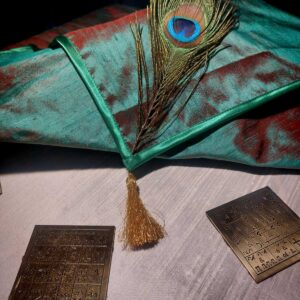
The ancient Egyptian Stelae (Wedj) were sacred objects of profound religious and ritual significance, acting as intermediaries between the divine and the human realms. Often placed in temples, tombs, or consecrated sites, these stelae bore inscriptions, hymns, and depictions of deities or kings, thus serving as vessels of divine protection, remembrance, and magical power (Heka).
To craft a Stele is, for the practitioner, to incarnate a Sacred Word into form – through wood and color – thereby activating a magical link between the visible and the invisible, aiming to eternalize a desire, invocation, or will within the Cosmic Mind (Nous).
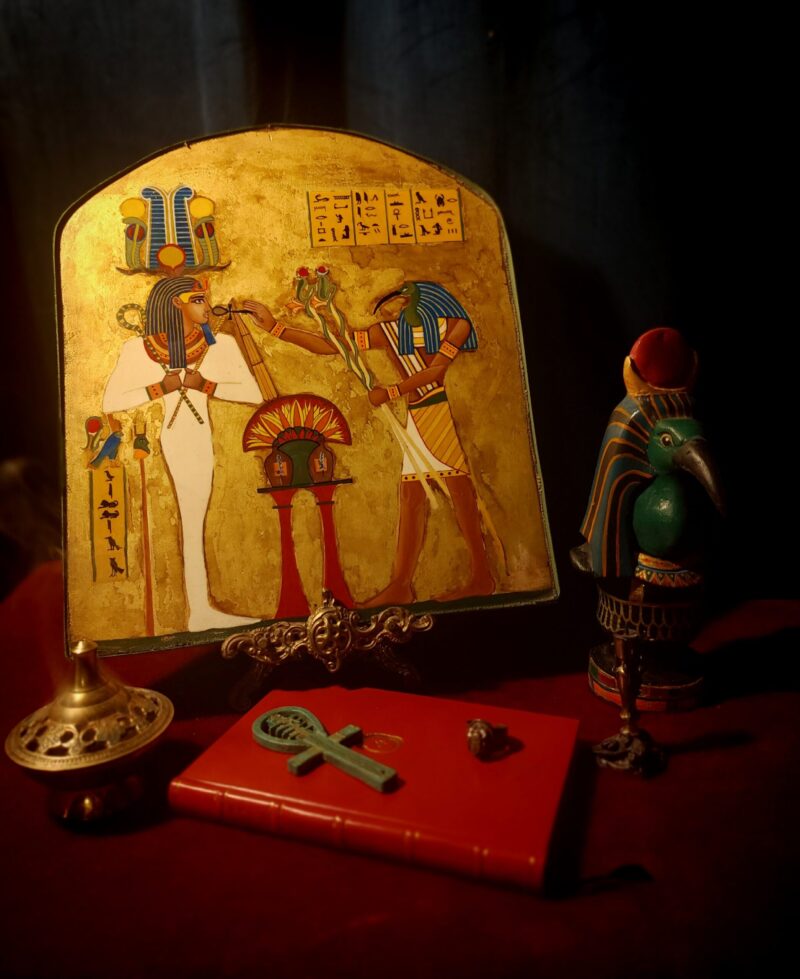
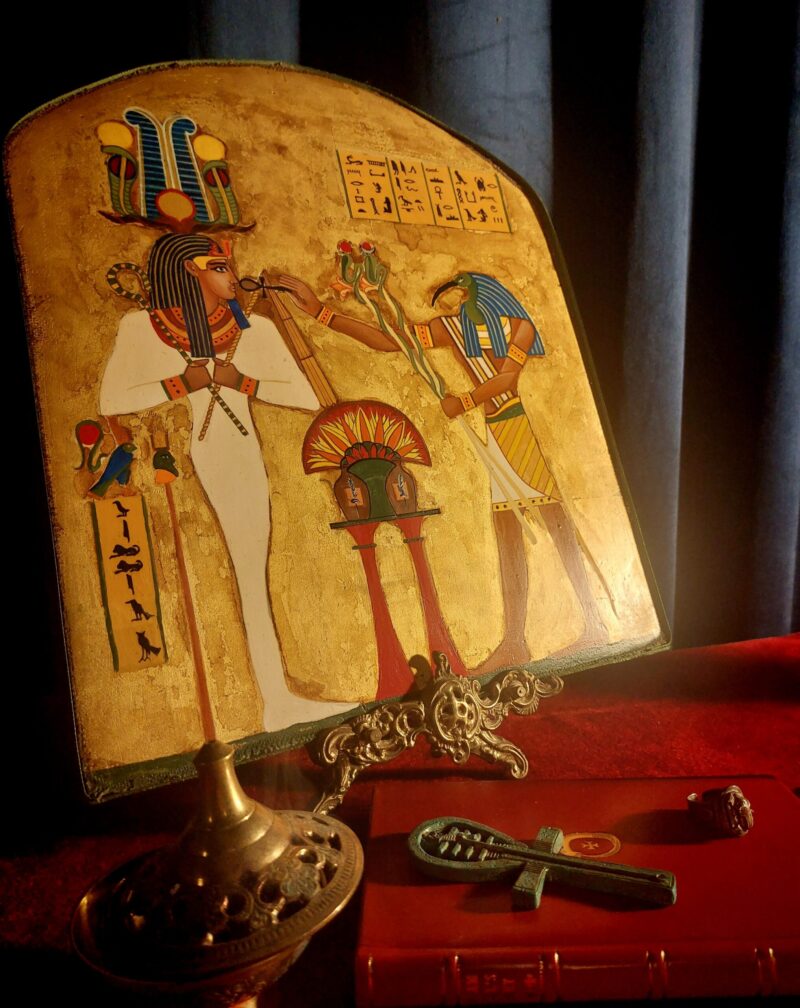
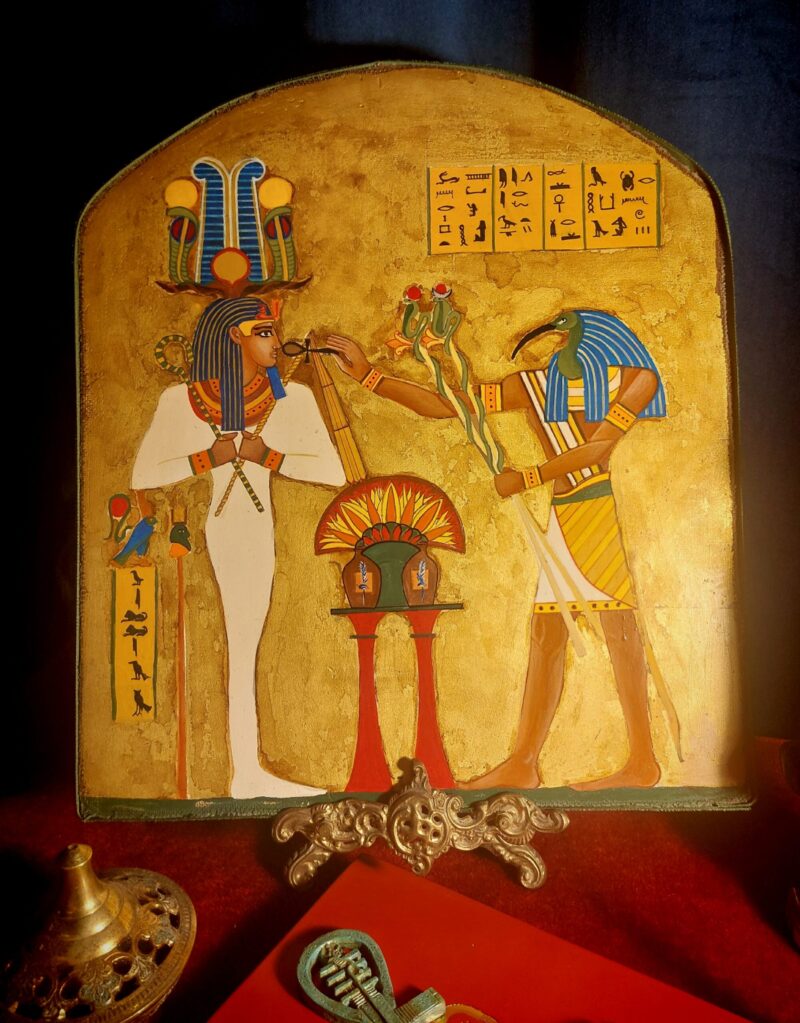
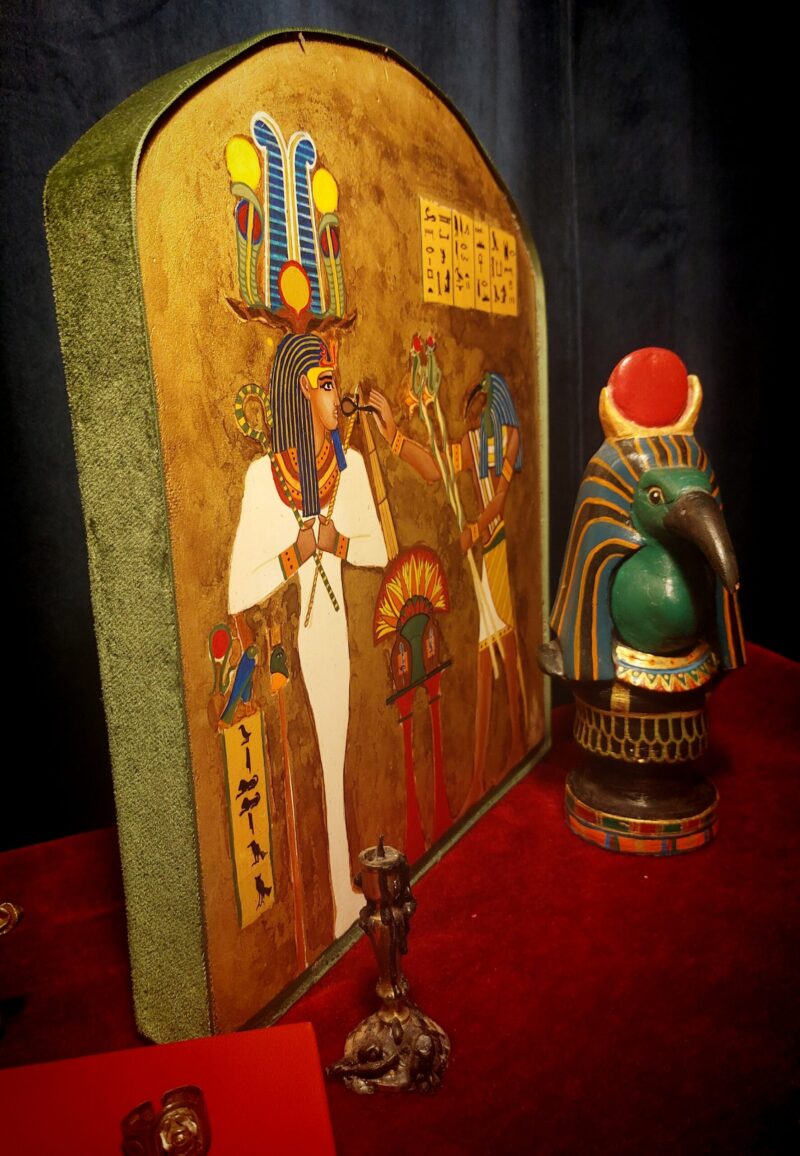
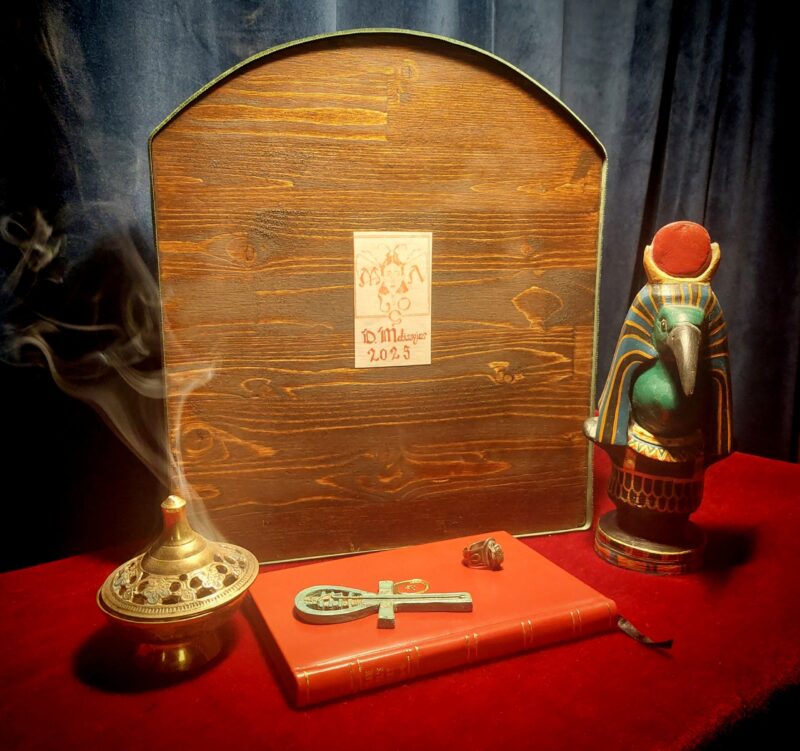
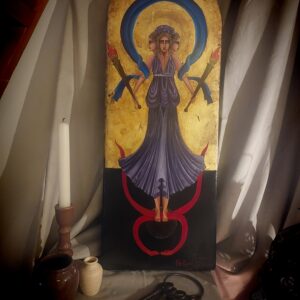
The artisan of the LOGOS 373 workshop, wishing to honor Thoth – the god of wisdom, writing, and the Hermetic mysteries – created this magical Stele according to the principles of ancient Egyptian magical art.
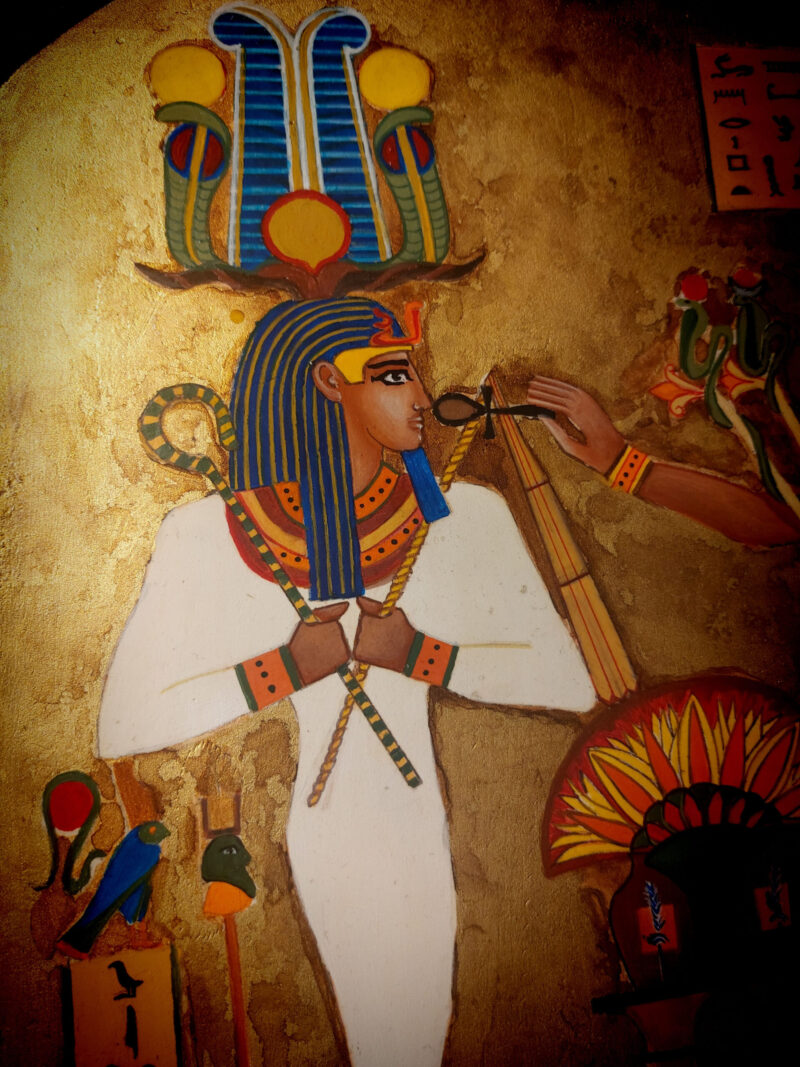
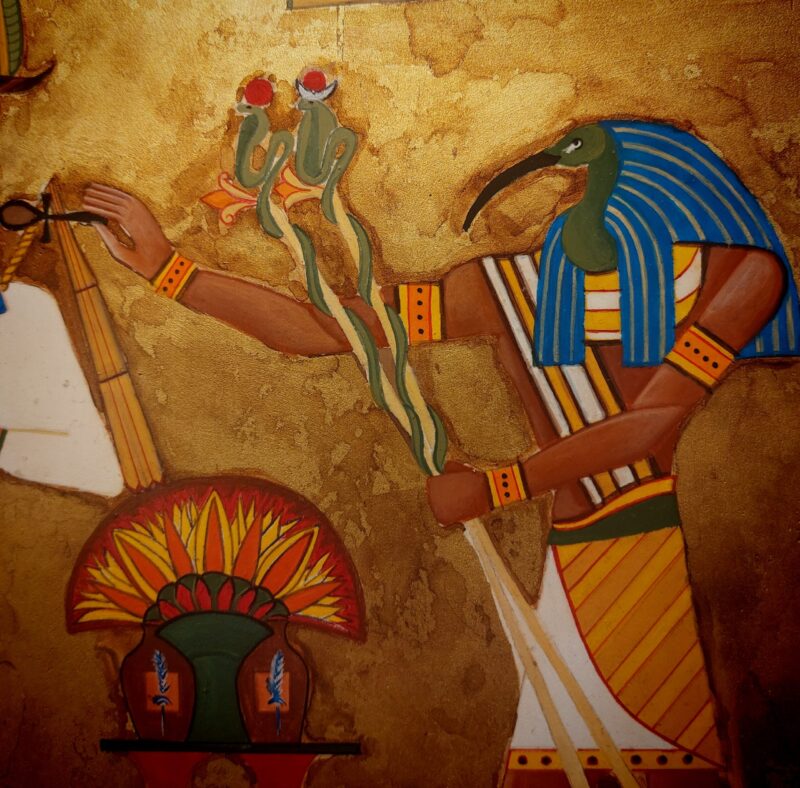
The artwork is based on a wall painting from the famed temple of Seti I (1290–1279 BCE) in Abydos. On the right stands the ibis-headed god, holding with his left hand two serpentine wands crowned with the sun and the moon -symbols of knowledge’s dominion over opposites- and with his right hand he offers the sacred Ankh to the lips of the left-hand figure, in a gesture evoking the ancient rite of the Opening of the Mouth.
The Opening of the Mouth ritual (Wepet-er) was a core element of the Egyptian mortuary tradition, in which a priest would touch various parts of the body with a sacred tool to “reopen” the senses needed for life in the Afterlife.
In Logos373's own words. See it at Logos373