An Italian Greyhound puppy can become a close family companion, provided it receives proper care, gentle training, a balanced diet, and regular attention.
Italian Greyhounds enjoy being around their owners. They often like sitting beside family members, relaxing under a blanket, or following their favourite people around the house.
Why Choose an Italian Greyhound Puppy?
There are several reasons why people choose this breed:
- Small size It is easier to accommodate in many homes compared with large dog breeds.
- Affectionate personality Italian Greyhounds often form strong bonds with their families.
- Elegant appearance Their slim body and long legs give them a distinctive look.
- Short coat Their grooming needs are generally manageable.
- Playful behaviour They enjoy suitable games and short activities.
- Indoor companionship They can adapt well to indoor living when their exercise and emotional needs are met.
- Every puppy has its own personality. Early socialisation, health, daily routine, and the way it is treated all influence its development.
Italian Greyhound Dog Breed: Size and Physical Appearance
The Italian Greyhound is the smallest member of the sighthound family. It shares some physical features with larger Greyhounds, but its body is much smaller and more delicate.
Italian Greyhound Puppy Size
An adult Italian Greyhound generally weighs around 3–6 kg and stands approximately 32–38 cm tall at the shoulder.
These measurements are typical breed ranges, not guaranteed measurements for every individual dog.
A puppy’s final size depends on genetics, development, nutrition, and overall health.
Italian Greyhounds have a slim build, but they should not appear unhealthy or excessively thin. A veterinarian can help you monitor your puppy’s weight and body condition as it grows.
Italian Greyhound Coat Colours
Italian Greyhounds can have several recognised coat colours and patterns. Common examples include:
- Black.
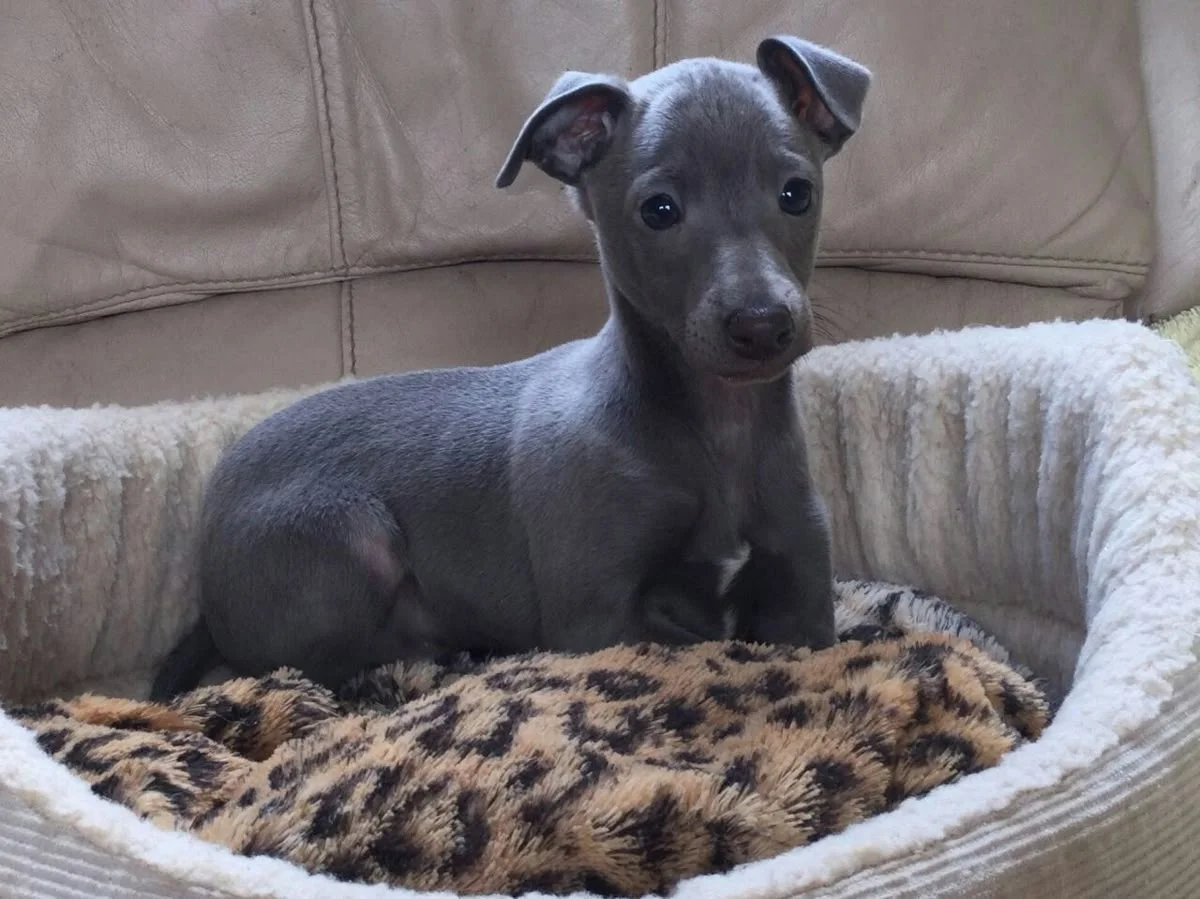
- Blue or grey.
- Fawn.
- Red.
- Cream.
- White markings combined with other colours.
- Their coat is short, smooth, and close to the body. This makes grooming relatively simple, although regular skin checks are still important.
What Makes the Italian Greyhound Different?
The Italian Greyhound has a delicate appearance, a narrow head, a long neck, and a deep chest. Its legs are long compared with its body size, giving it a graceful walking and running style.
Its fine coat and low body fat also mean it can become cold more easily than some other breeds. A comfortable sleeping area and suitable clothing in cold indoor conditions may help keep it warm.
Italian Greyhound Puppy Personality and Temperament
The Italian Greyhound is usually affectionate, sensitive, playful, and strongly attached to its family. It enjoys companionship and may become unhappy if left alone for long periods without suitable preparation.
Is an Italian Greyhound Puppy Friendly?
Many Italian Greyhounds are friendly with people they know. Some may be reserved around strangers at first, especially when they are young.
Allow your puppy to meet new people gradually. Use praise and rewards to create positive experiences instead of forcing interactions.
Is the Italian Greyhound Good with Children?
An Italian Greyhound can be a loving family pet, but its small and delicate body requires careful handling.
Children should learn to:
- Approach the puppy calmly.
- Avoid pulling its ears or tail.
- Never pick it up without adult supervision.
- Avoid disturbing it while eating or sleeping.
- Play gently without pushing or chasing it.
- Always supervise interactions between young children and puppies.
Can an Italian Greyhound Live with Other Pets?
Italian Greyhounds may live with other dogs and some cats when introductions are managed carefully.
However, they are sighthounds and may have an instinct to chase small moving animals. Their behaviour around birds, rabbits, and other small pets should never be assumed to be safe.
Introduce animals gradually and supervise their interactions.
How to Prepare Your Home for an Italian Greyhound Puppy
Before bringing your puppy home, prepare a safe and comfortable space. Italian Greyhounds are small, curious, and physically delicate, so preventing falls and accidents is particularly important.
Prepare a Comfortable Sleeping Area
Choose a quiet place where your puppy can rest without being disturbed.
You should prepare:
- A soft and supportive dog bed.
- A clean blanket.
- Fresh drinking water.
- Safe puppy toys.
- A comfortable indoor resting area.
- Italian Greyhounds often enjoy warm, soft sleeping spaces. Their short coat and low body fat make warmth especially important.
Make Your Home Safe
Check your home before the puppy arrives:
- Block access to stairs when necessary.
- Prevent access to high furniture from which the puppy could jump.
- Keep electrical cables out of reach.
- Store medicines and cleaning products securely.
- Remove small objects that could be swallowed.
- Keep balconies and windows secure.
- Remove poisonous plants from accessible areas.
- Keep doors and gates closed to prevent accidental escapes.
- Because Italian Greyhounds have fine bones, avoid allowing young puppies to jump from sofas, beds, or other high surfaces.
Prepare Food and Water Bowls
Choose suitable bowls that are easy for your puppy to reach and clean. Keep fresh water available throughout the day.
Ask about the food your puppy has been eating before bringing it home. Continuing with familiar food initially can make the transition easier.
How to Help Your Italian Greyhound Puppy Adjust to a New Home
Moving to a new home can be stressful for a young puppy. It must become familiar with new people, sounds, smells, sleeping arrangements, and daily routines.
Give your Italian Greyhound enough time to feel safe.
The First 24 Hours
During the first day:
- Bring your puppy into a quiet, prepared area.
- Allow it to explore at its own pace.
- Show it the food and water bowls.
- Introduce its sleeping area.
- Take it to the designated toilet area regularly.
- Avoid inviting many visitors.
- Give it time to rest and sleep.
- Do not force the puppy to play or interact with everyone immediately.
The First Week
During the first seven days, focus on building trust and establishing a routine.
- Feed your puppy at consistent times.
- Provide regular toilet breaks.
- Introduce family members calmly.
- Use its name in a friendly voice.
- Keep play sessions short.
- Reward positive behaviour.
- Avoid leaving it alone for long periods.
- Italian Greyhounds can become strongly attached to their owners. Start teaching short periods of independent rest gradually.
Weeks Two to Four
Once your puppy becomes more comfortable, you can introduce additional activities:
- Gentle indoor games.
- Short training sessions.
- Safe socialisation experiences.
- Supervised outdoor activities when vaccination and veterinary advice allow.
- Gentle grooming.
- Short periods of calm independent time.
- Keep each new experience positive and avoid overwhelming your puppy.
Italian Greyhound Puppy Feeding Schedule: What Should Your Puppy Eat?
Proper nutrition is essential for healthy growth. Italian Greyhound puppies need complete and balanced puppy food that provides suitable protein, fats, vitamins, and minerals.
Choose a high-quality food formulated for puppies and appropriate for the breed’s small size. Follow the feeding instructions on the packaging and ask your veterinarian to determine the correct daily amount.
The quantity depends on your puppy’s age, weight, activity, health, and the nutritional value of the food.
Weekly Italian Greyhound Puppy Feeding Schedule
The following table provides a general feeding routine according to age. It does not mean that you should change your puppy’s food every week. Keep using a suitable familiar food unless your veterinarian recommends a gradual change.
Very small or particularly active puppies may need individual adjustments. Follow your veterinarian’s advice rather than relying on a fixed amount for every puppy.
What Food Is Best for an Italian Greyhound Puppy?
A suitable diet should contain:
- High-quality protein to support muscle development.
- Healthy fats for energy and normal development.
- Appropriate vitamins and minerals.
- Calcium and phosphorus in balanced amounts.
- Digestible ingredients.
- Complete nutrition for the puppy’s growth stage.
- Always provide fresh drinking water.
Foods That Italian Greyhound Puppies Should Avoid
Some human foods are dangerous for dogs. Never feed your puppy:
- Chocolate.
- Grapes and raisins.
- Onion and garlic.
- Alcohol.
- Foods containing xylitol.
- Cooked bones that can splinter.
- Very salty or heavily seasoned foods.
- Avoid giving large amounts of fatty leftovers or sweets.
- If your puppy eats something potentially toxic, contact a veterinarian immediately.
How to Change Your Puppy’s Food
If you need to change your puppy’s food, introduce the new food gradually over approximately seven days, unless your veterinarian advises otherwise.
Monitor your puppy’s appetite and digestion during the transition. If diarrhoea, vomiting, or other concerning symptoms develop, contact your veterinarian.
Italian Greyhound Puppy Training: Basic Commands and Good Behaviour
Italian Greyhounds are intelligent dogs, but they can also be sensitive. They generally respond better to positive reinforcement than harsh correction.
Start with short training sessions and reward good behaviour immediately.
1. Teach Your Puppy Its Name
Choose a simple name and use it consistently.
Say the name in a friendly voice. When your puppy looks at you, reward it with praise or a small treat.
Repeat this exercise for a few minutes each day.
2. Toilet Training
Take your puppy to the designated toilet area:
- Immediately after waking up.
- After eating.
- After drinking.
- After playing.
- Before bedtime.
- Reward your puppy when it uses the correct area.
- Accidents are normal during training. Clean them calmly without shouting or punishment.
3. Teach the Sit Command
Hold a small treat near your puppy’s nose and move it slowly upwards. As the puppy follows the treat, it may naturally sit.
Say “Sit” and reward it when it acts.
Repeat the exercise in short sessions.