About this product
Key Characteristics and Species
The name “arborvitae,” which is Latin for “tree of life,” was given to Thuja occidentalis due to its medicinal properties, particularly its high vitamin C content, which was used to treat scurvy.
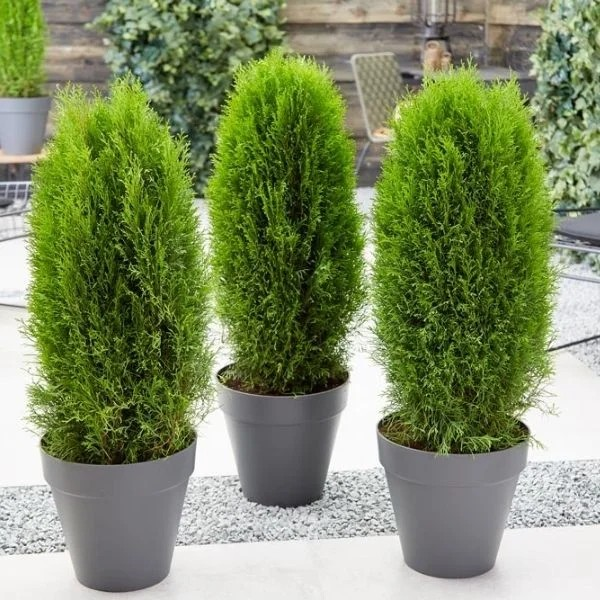
- Foliage The leaves of Thuja are a key identifier. They are small, scale-like, and are pressed against the flattened branchlets. This creates a soft, textured appearance. The foliage can be a vibrant green, but many cultivars exist with shades of gold, yellow, and even reddish-brown, particularly in colder months.
- Growth Habit Thuja plants are typically grown for their natural conical or pyramidal shape. They can range from small, compact shrubs to large trees over 100 feet tall in their native habitats. Their dense growth makes them an excellent choice for creating privacy screens, hedges, and windbreaks.
- Wood The wood is light, soft, and aromatic. It is known for being resistant to decay, making it useful for applications like fence posts, shingles, and even the soundboards of some guitars.
- Common Species:
- Thuja occidentalis (Eastern or Northern White Cedar) A popular and versatile species native to eastern Canada and the northeastern United States. It’s often used for hedges and has hundreds of cultivars with varying sizes and colors. The ‘Smaragd’ (also known as ‘Emerald Green’) is a particularly well-known cultivar.
Show allShow less
- Thuja plicata (Western Red Cedar) Native to the Pacific Northwest, this species is much larger than its eastern counterpart, growing into a massive tree in its natural range. It is prized for its rot-resistant wood.
Thuja, commonly known as arborvitae or false cedar, is a genus of evergreen coniferous trees and shrubs in the cypress family (Cupressaceae). These plants are highly valued in landscaping for their dense, scale-like foliage, which forms flat, fan-like sprays. They are native to North America and eastern Asia.
Add to Wishlist
In Theorganicroots's own words. See it at Theorganicroots