Attachment Style Worksheets and Abandonment WorkbookAttachment Style Worksheets and Abandonment Workbook, picture 2Attachment Style Worksheets and Abandonment Workbook, picture 3Attachment Style Worksheets and Abandonment Workbook, picture 4Attachment Style Worksheets and Abandonment Workbook, picture 5Attachment Style Worksheets and Abandonment Workbook, picture 6Attachment Style Worksheets and Abandonment Workbook, picture 7Attachment Style Worksheets and Abandonment Workbook, picture 8Attachment Style Worksheets and Abandonment Workbook, picture 9

Attachment Style Worksheets and Abandonment Workbook

No reviews at this store yet

£6.99 £18.00 −61%about $9.16

In stockLook twice · the crossed-out price was not its price

Delivery priced at checkout · no returnsDetails

0cean adds $0. You pay Therapytoolshub on its own site.

TherapytoolshubIndependent store · therapytoolshub.comStore page

Price and stock as Therapytoolshub showed them Nov 24, 10:14 PM UTC.

In the store under Relationships and Attachment

Ask about this product

Find it in other storesCheaper than £6.99In stock only

About this product

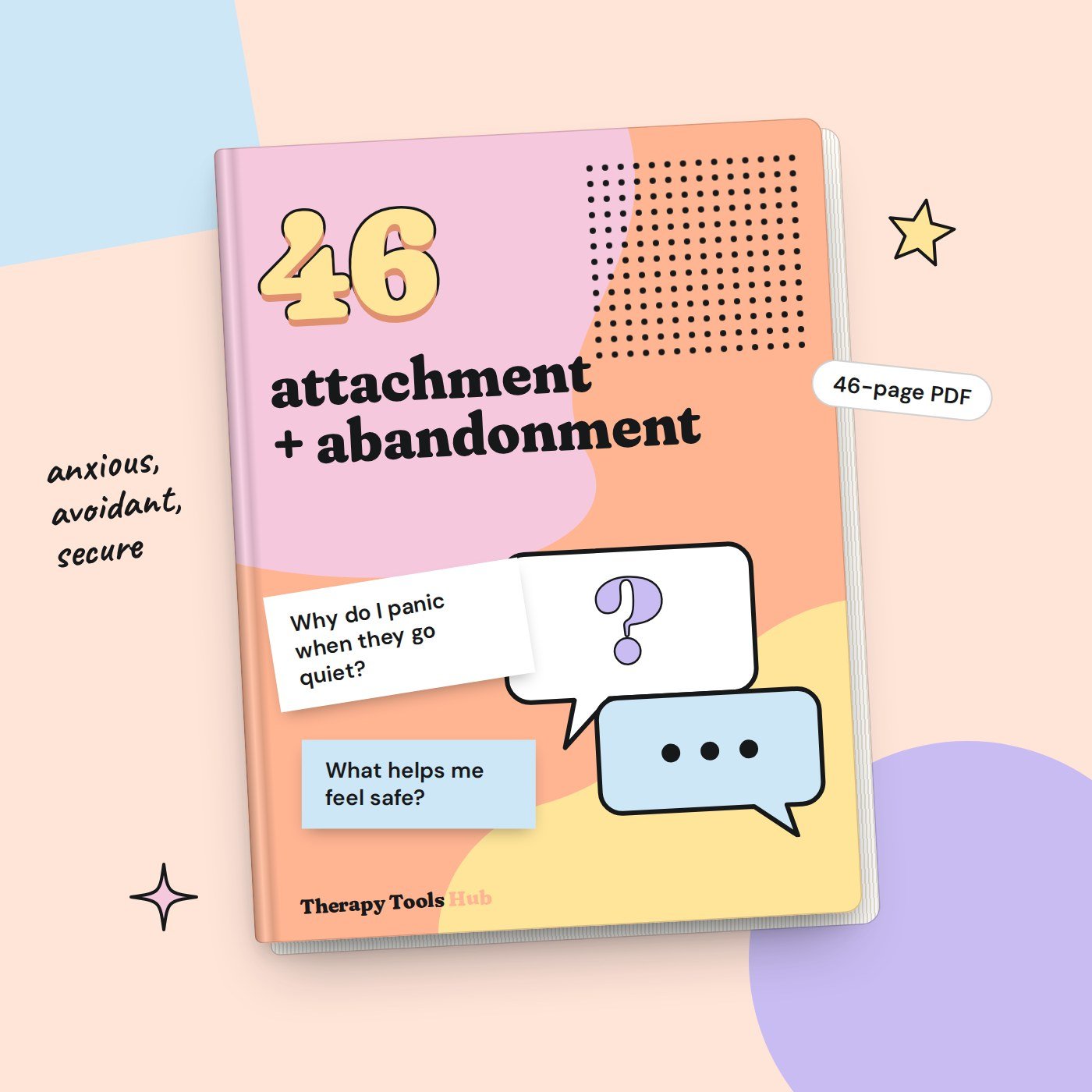
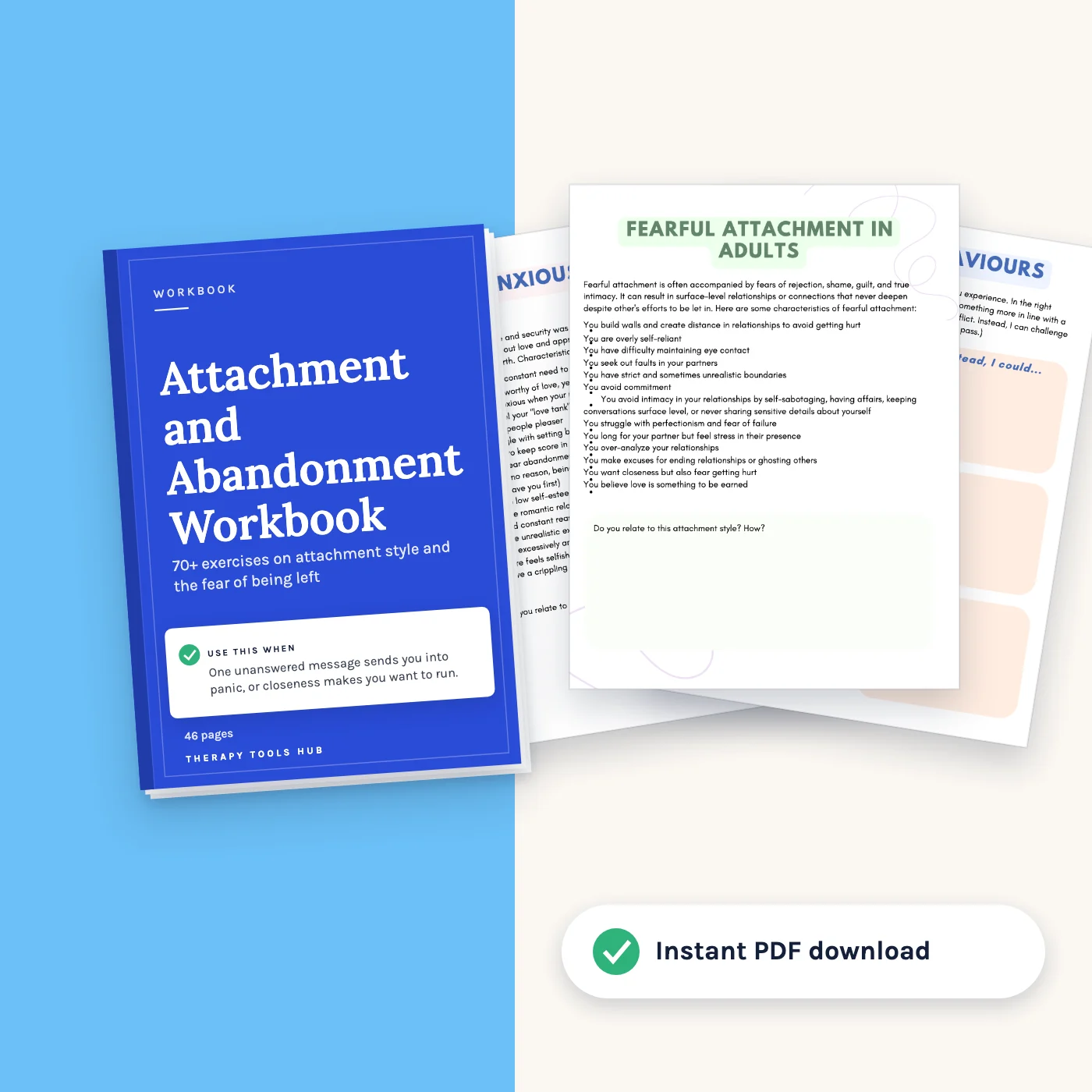
One unanswered text and your stomach drops. This attachment workbook gives you more than 70 exercises and worksheets on attachment style, fear of abandonment and the patterns you repeat in relationships.

Homework for the fear of being left

They take four hours to reply and by the second hour you have drafted the break-up in your head. Fear of abandonment reads silence as rejection, and the body reacts before you have checked the facts.

This workbook starts with what attachment is and the four adult styles, then gives each style its own healing pages. From there it moves to the fear itself: where it began, what it makes you do, and which parts sit inside your control. The final section looks at adverse childhood experiences and the child who learned those survival habits first.

Inside this workbook

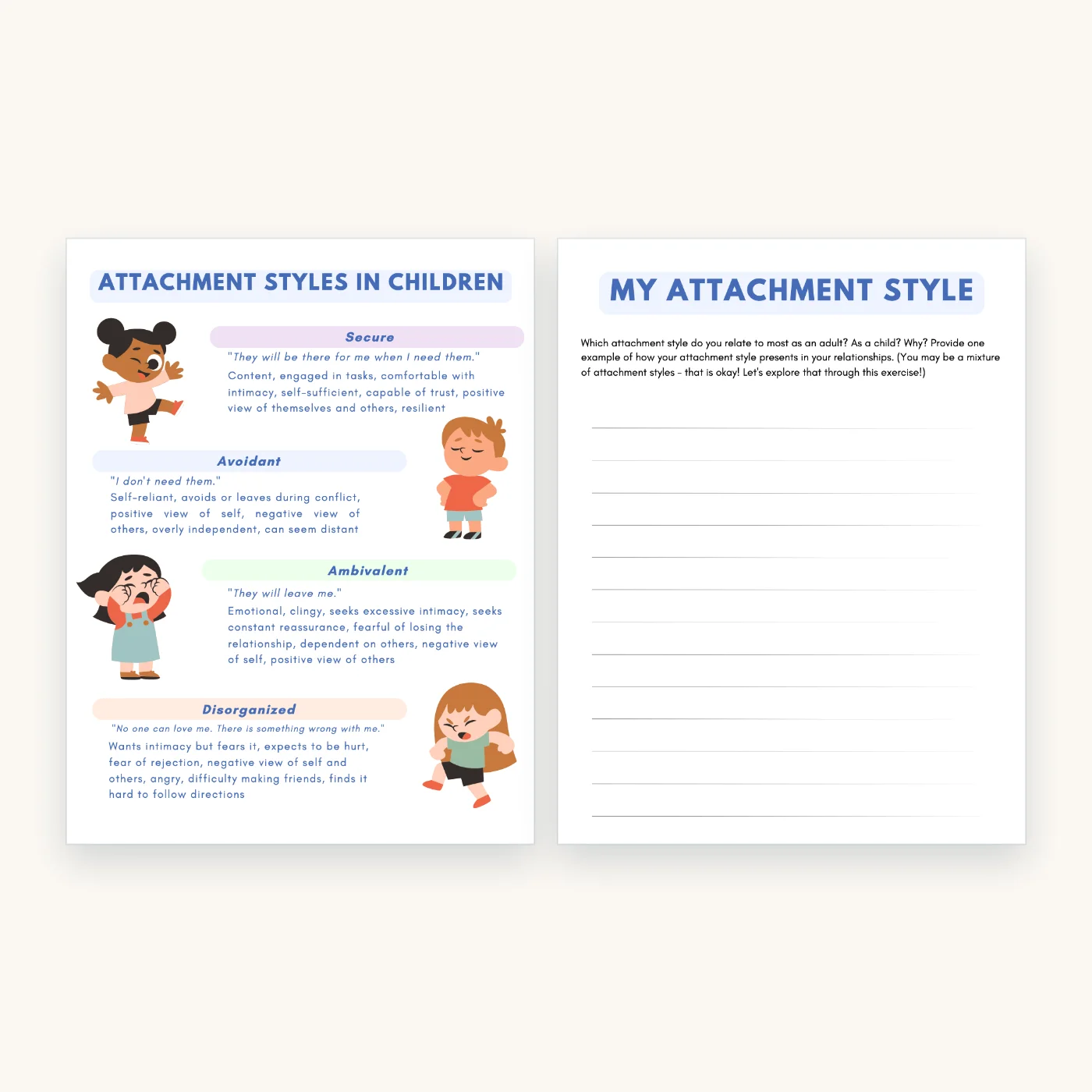
  • What is attachment, and the four adult styles
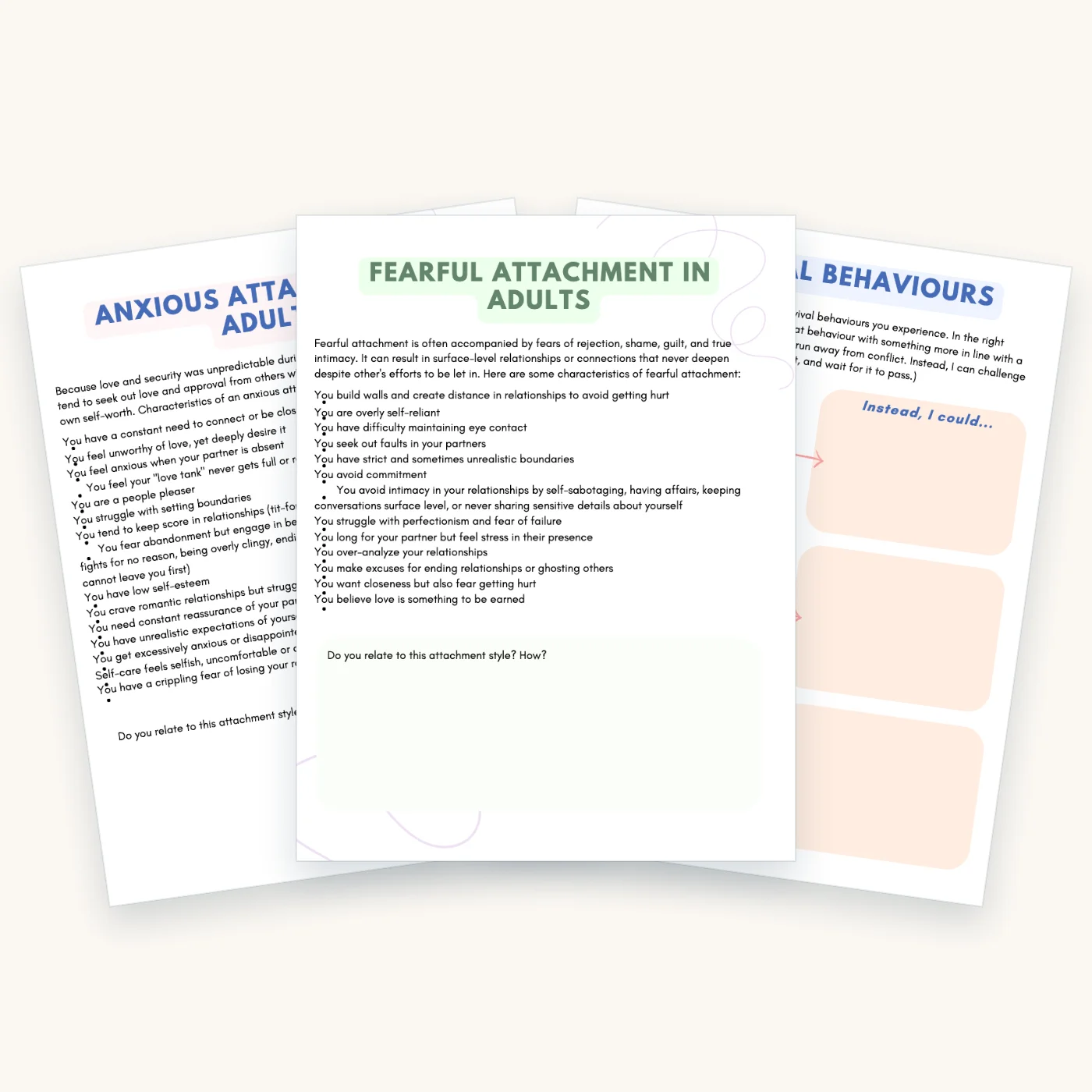
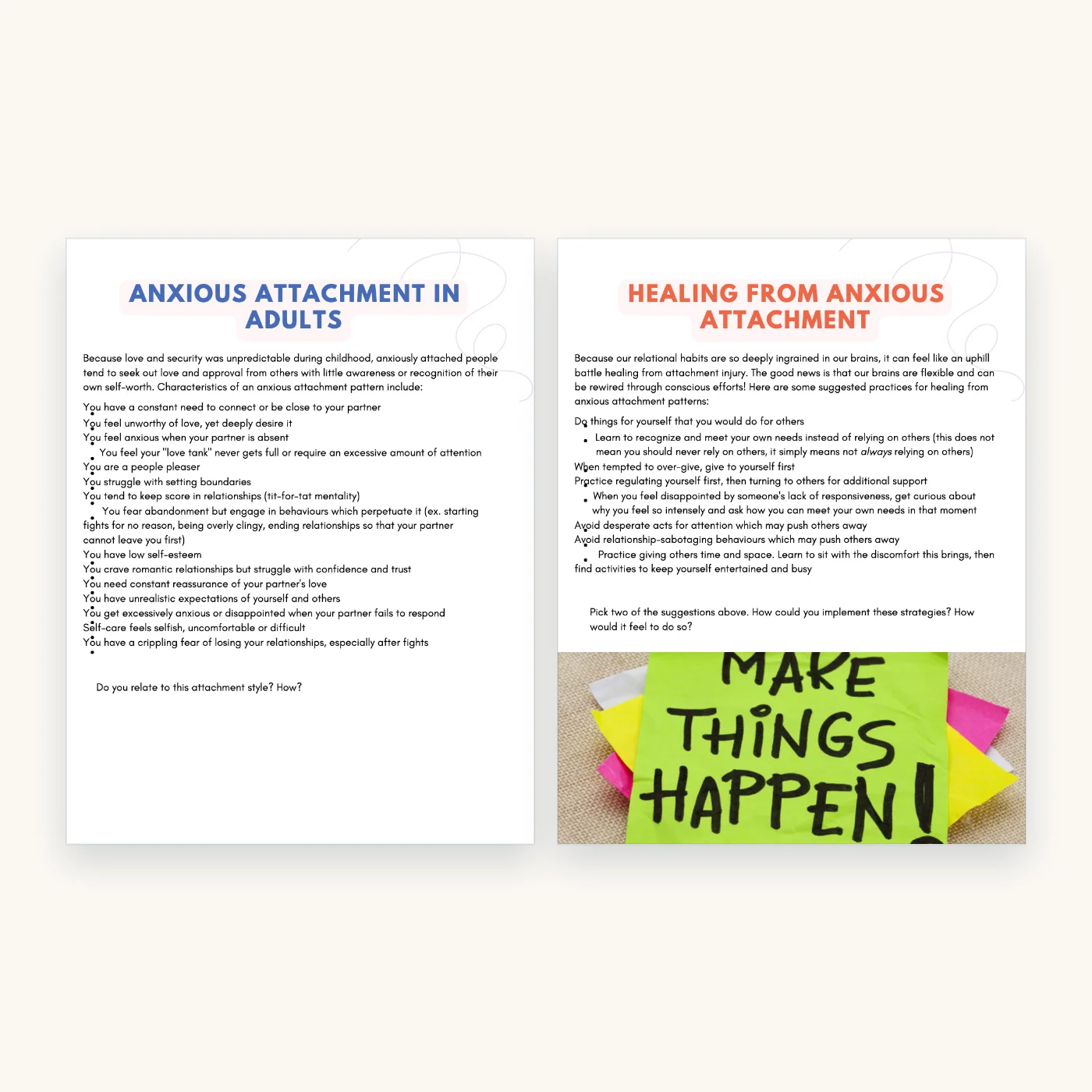
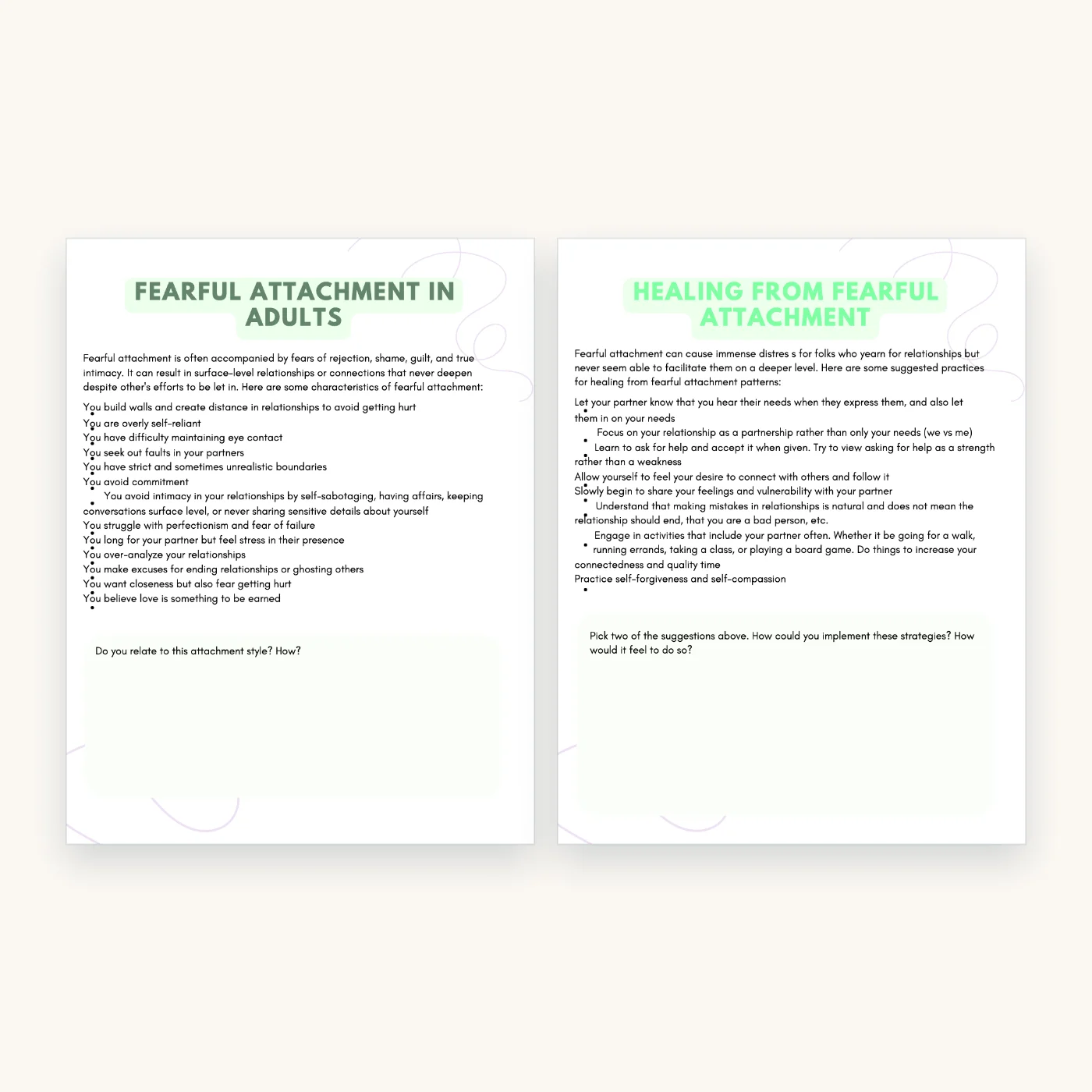
  • Secure, anxious, avoidant and fearful attachment in adults, each with a healing page
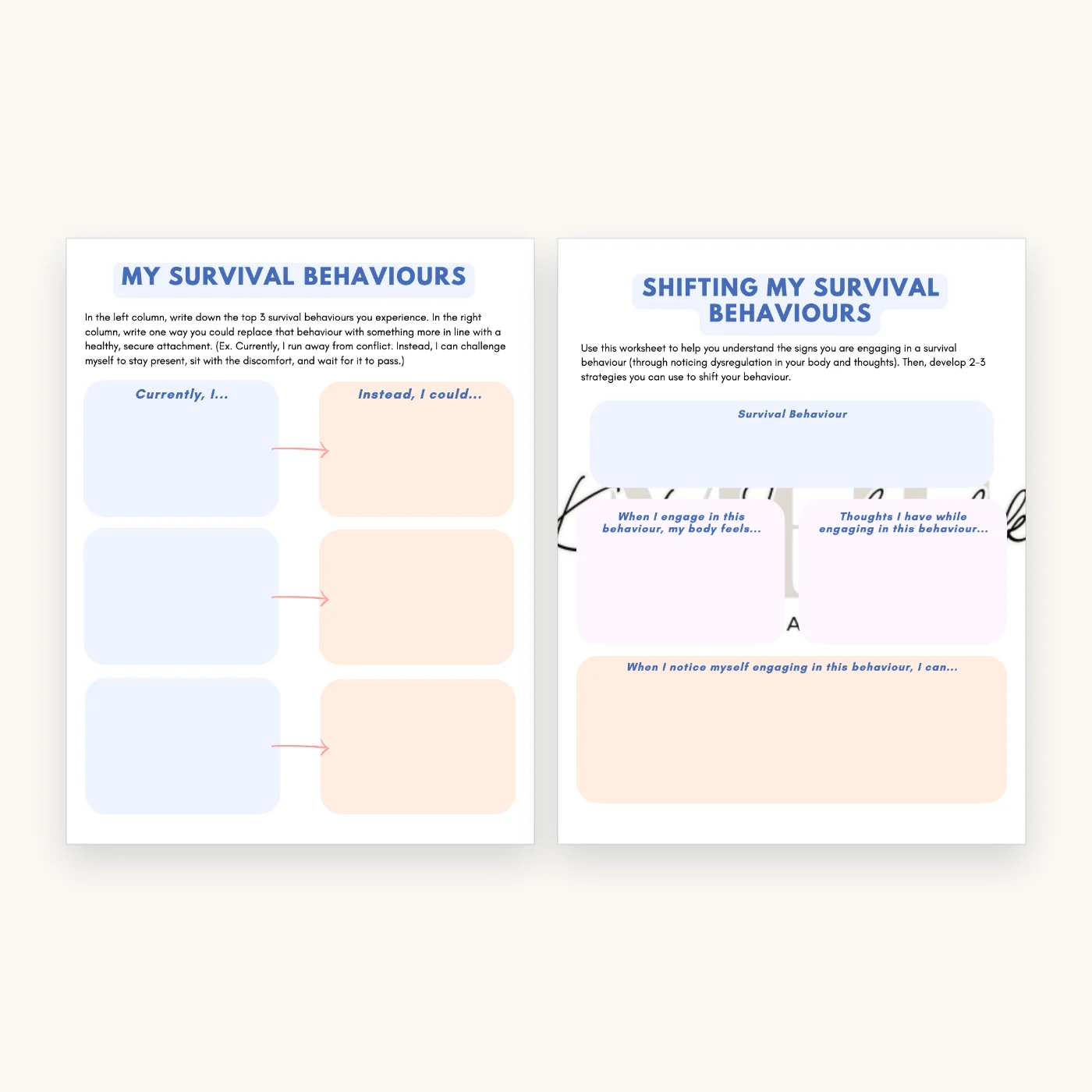
  • Attachment flashbacks and my survival behaviours
  • Attachment journal: what happened, how I reacted, why
  • Stages of attachment and childhood experiences
  • Fear of abandonment: sources of fear, circle of control, managing anxiety, practical steps
  • Self-abandonment
  • Relationship values and I am worthy
  • Adverse childhood experiences, safety at home, understanding caregivers
  • Thank you, little me
Show allShow less

Attachment style worksheets for the fear of being left

Your partner goes quiet after an argument. Within an hour you have sent four messages, apologised for things you did not do and checked whether they are online.

Attachment style describes the pattern you learned as a child for staying close to the people you depended on. If care felt unpredictable, you learned to watch closely and pursue. If closeness felt unsafe, you learned to pull away. These patterns run automatically in adult relationships. The worksheets slow them down so you see what set you off and which older relationship it echoes.

Who the abandonment worksheets suit

  • Adults with anxious attachment who panic when a message goes unanswered
  • People who pull away as soon as a relationship gets serious
  • Anyone whose fear of abandonment began with a parent who left or was unreliable
  • Therapists looking for attachment homework for individual clients

How to work through the attachment workbook

Start with the four adult attachment styles, choose the one closest to you and read its healing page. Keep the attachment journal for two weeks. Each time you react strongly, note what happened, how you reacted and why. At the end of the fortnight, look back over the entries for repeats.

Move to the fear of abandonment section next. The circle of control page separates what you control in a relationship from what you do not. Leave the adverse childhood experiences section until you feel steady, ideally with a therapist beside you. For the moment of waiting on a text, read anxious attachment and waiting for a reply. For wider trauma work, the trauma survivor’s workbook follows on.

Questions about the attachment workbook

What format is the attachment workbook?

It is an A4 PDF of 46 pages. Print it at home or fill it in on screen. It downloads straight after payment.

Does it cover anxious attachment?

Yes. It has a page on anxious attachment in adults and a page on healing from it, plus pages on avoidant, fearful and secure attachment.

Are there abandonment worksheets for adults?

Yes. The fear of abandonment section covers sources of fear, why you fear abandonment, managing anxiety, practical steps and self-abandonment.

Is it suitable for use with clients?

It is written or reviewed by a BACP registered therapist for use in sessions and for self-help at home. It supports therapy and does not replace it.

PDF, 46 pages, A4. Print at home or fill in on screen. Instant download after payment.

This workbook is an educational resource. It does not replace therapy, medical care or crisis support. If you feel unsafe, contact your GP, NHS 111 or your local emergency services.
In Therapytoolshub's own words. See it at Therapytoolshub

Delivery and returns

Delivery

Therapytoolshub shows the delivery cost and time at its checkout, before you pay. therapytoolshub.com

Returns

No returns, the store says

All sales are final and no refunds are available.

The store's returns policy

Payment

You pay Therapytoolshub directly

On the store's own checkout, with the ways to pay it offers. 0cean adds $0 to the price and never holds your money.

Similar from other independent stores

In the open order every answer uses: what is in stock and priced in your currency first. No store pays for a place.

More from Therapytoolshub

Everything Therapytoolshub sells