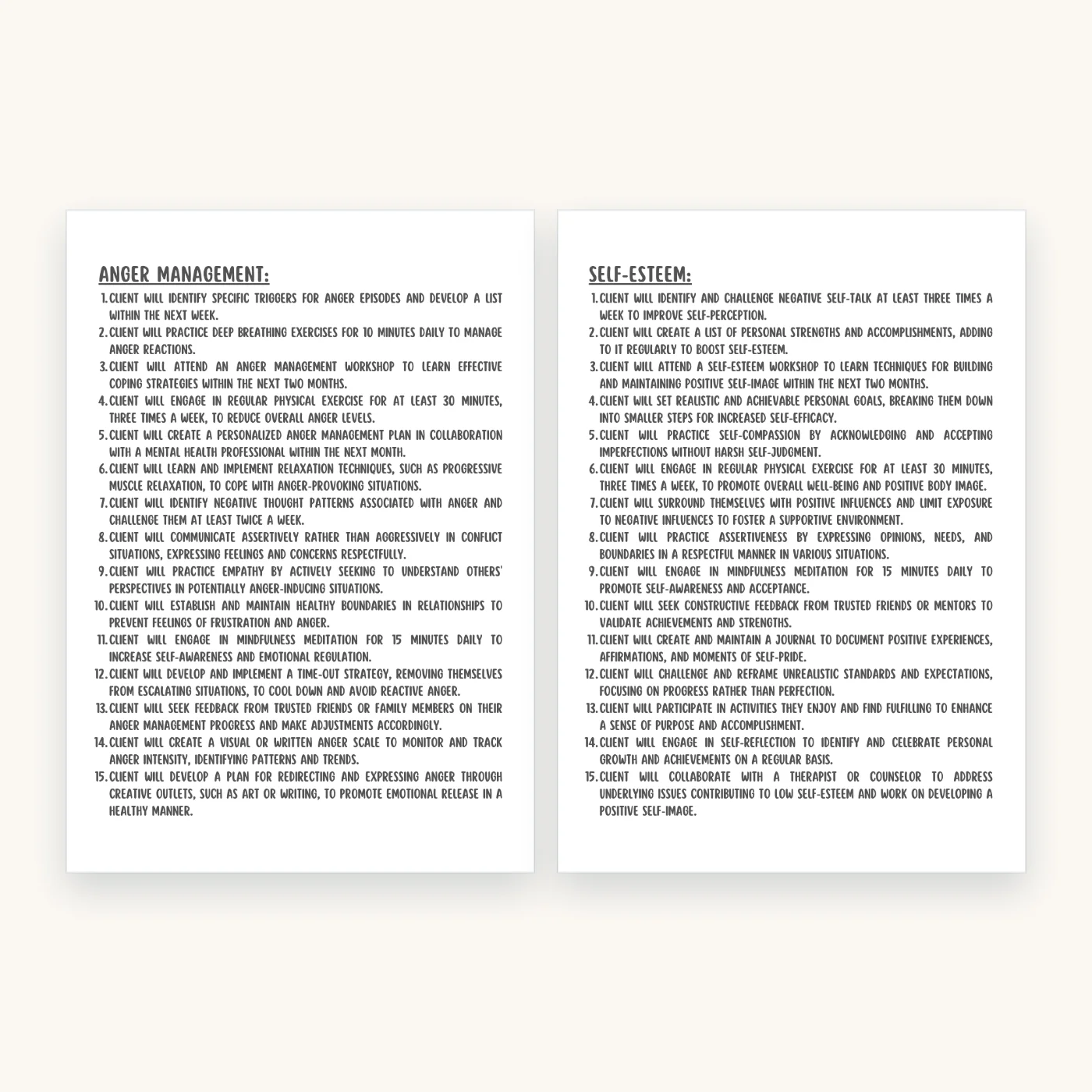
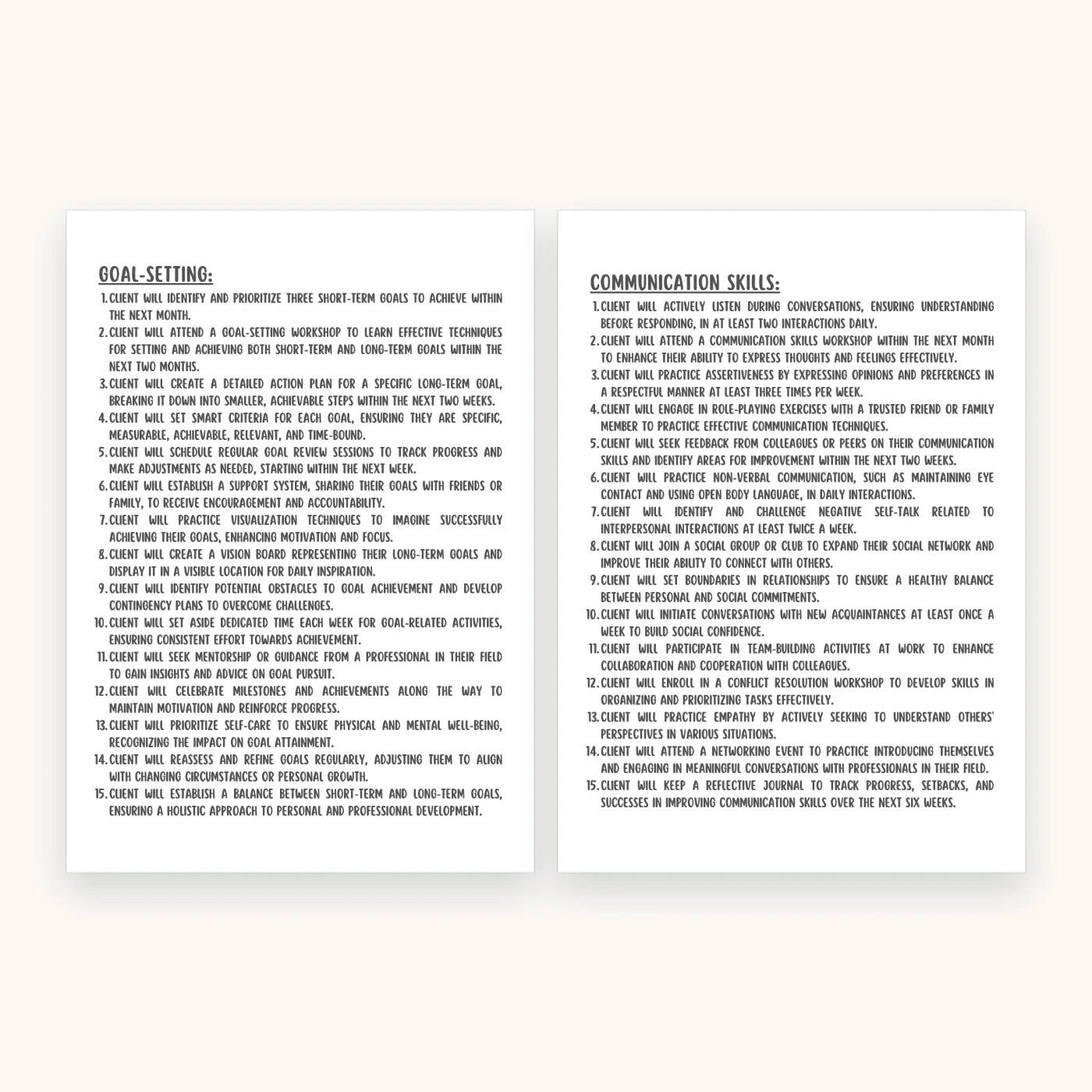
SMART stands for specific, measurable, achievable, relevant and time-bound. Goals written this way give supervisors and funders the evidence they look for. They give your client a clear task between sessions as well.
Who needs ready-made treatment plan goals
- Counsellors writing treatment plans for EAP, agency or insurance work
- Trainees who want examples before their first plan goes to a supervisor
- Private practice therapists reviewing goals with long-term clients
- Clinicians working with anxiety, depression, anger or poor sleep
How to adapt a goal for your client
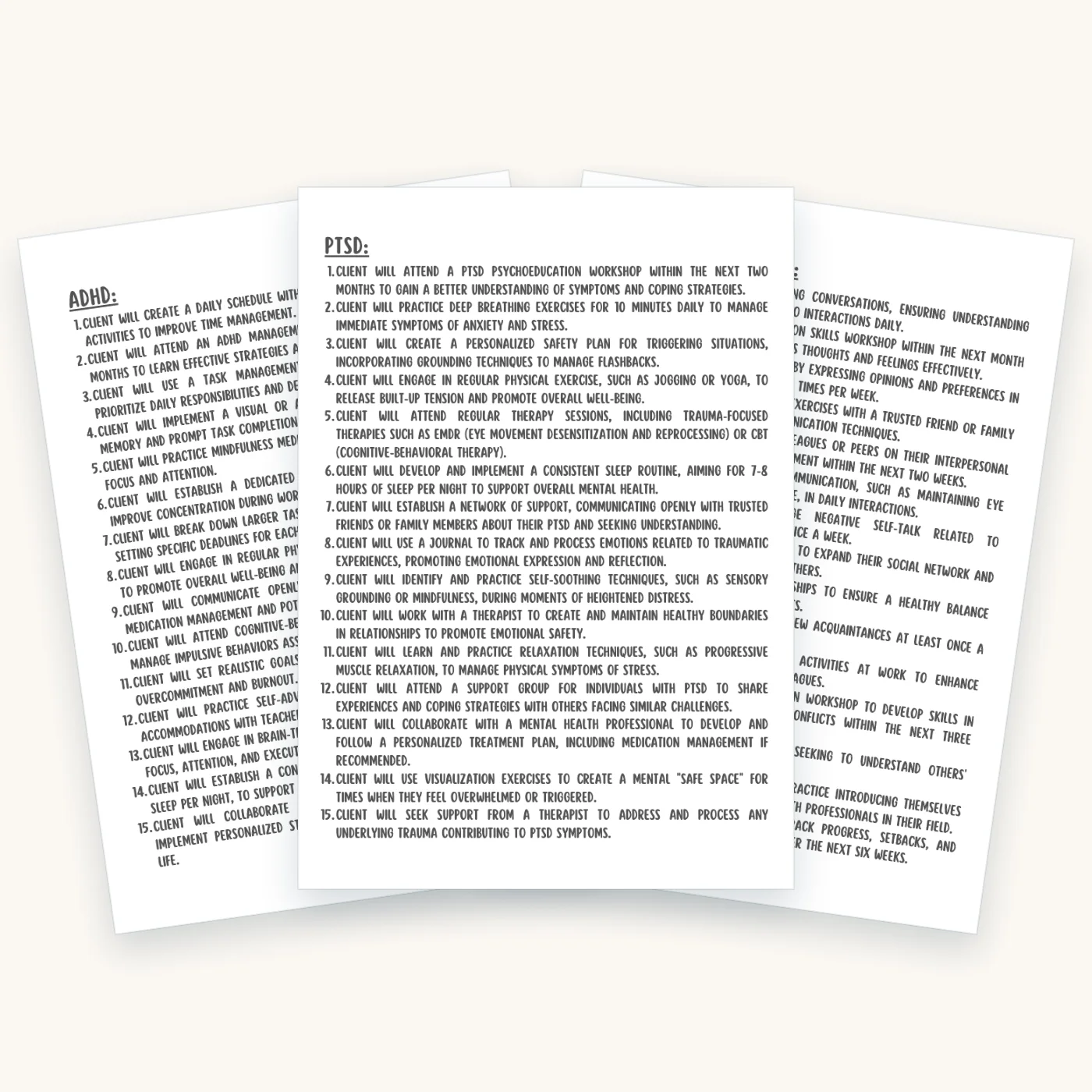
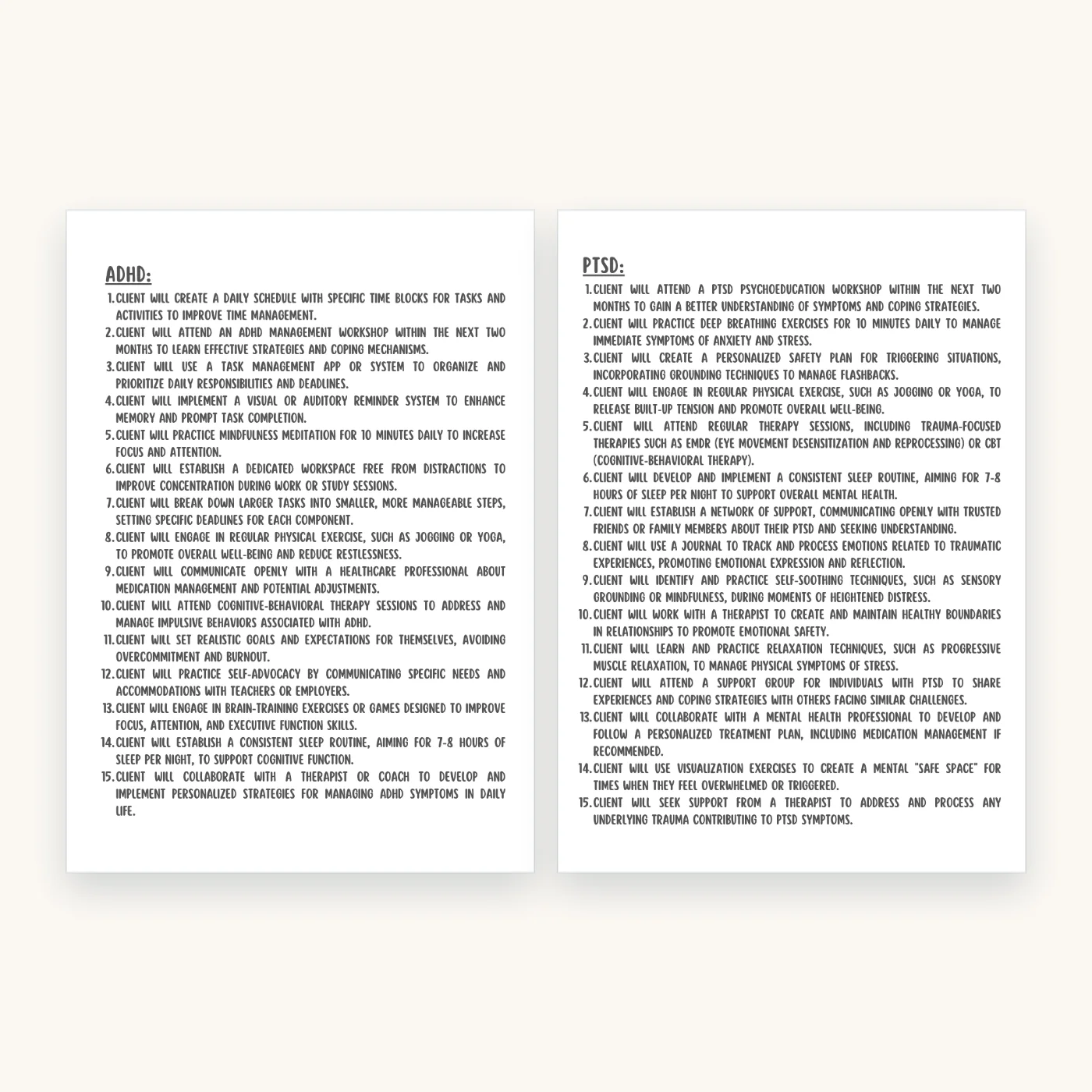
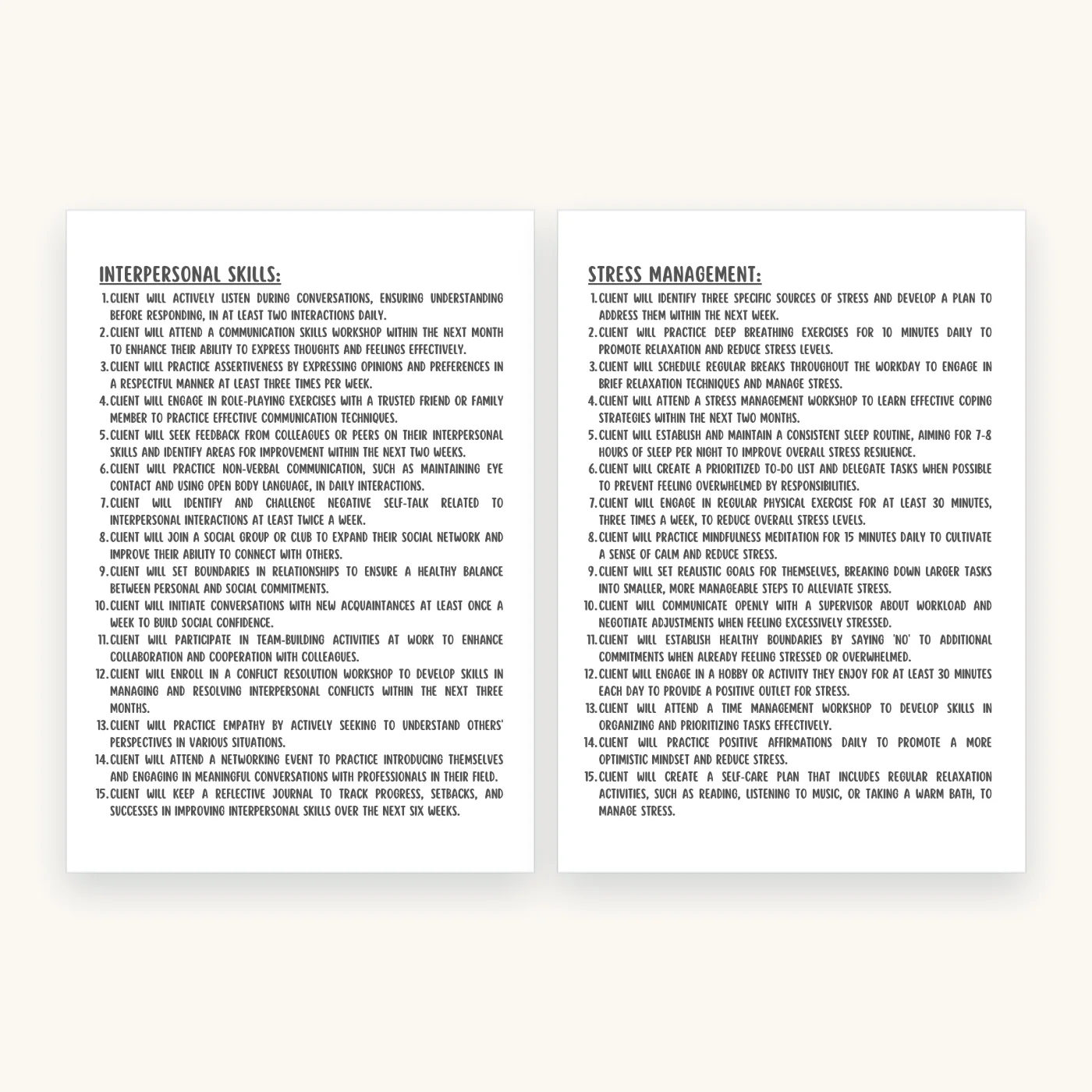
Find the presentation closest to your client’s. The guide covers anxiety, depression, ADHD, PTSD, boundaries, sleep hygiene and 14 more. Read the 15 goals under it and pick the one your client recognises. Replace the numbers and dates with your client’s own, then agree the wording in session so the goal belongs to them.
Add the goal to your plan and refer to it in each progress note. The therapy interventions and progress note examples show how to link an intervention back to a written goal.
Questions about the SMART goals guide
What are examples of treatment plan goals for anxiety?
The anxiety section starts with a goal for the client to identify three specific triggers for anxiety. Fourteen more anxiety goals follow it, each in the same client-will form.
Does it include treatment plan goals for depression?
Yes. The depression section opens with a goal to identify three enjoyable activities and schedule them weekly. It holds 15 goals, like every other section.
What format is it?
A 20-page PDF. Print it at home or fill it in on screen. It downloads straight after payment.
Are the goals suitable for use with clients?
Yes. The guide is written or reviewed by a BACP registered therapist for use in sessions and for self-help at home.
PDF, 20 pages. Print or keep on screen. Instant download after payment. One purchase covers your own practice.
These materials support your clinical judgement. They do not replace training, supervision or the record-keeping rules of your own professional body.