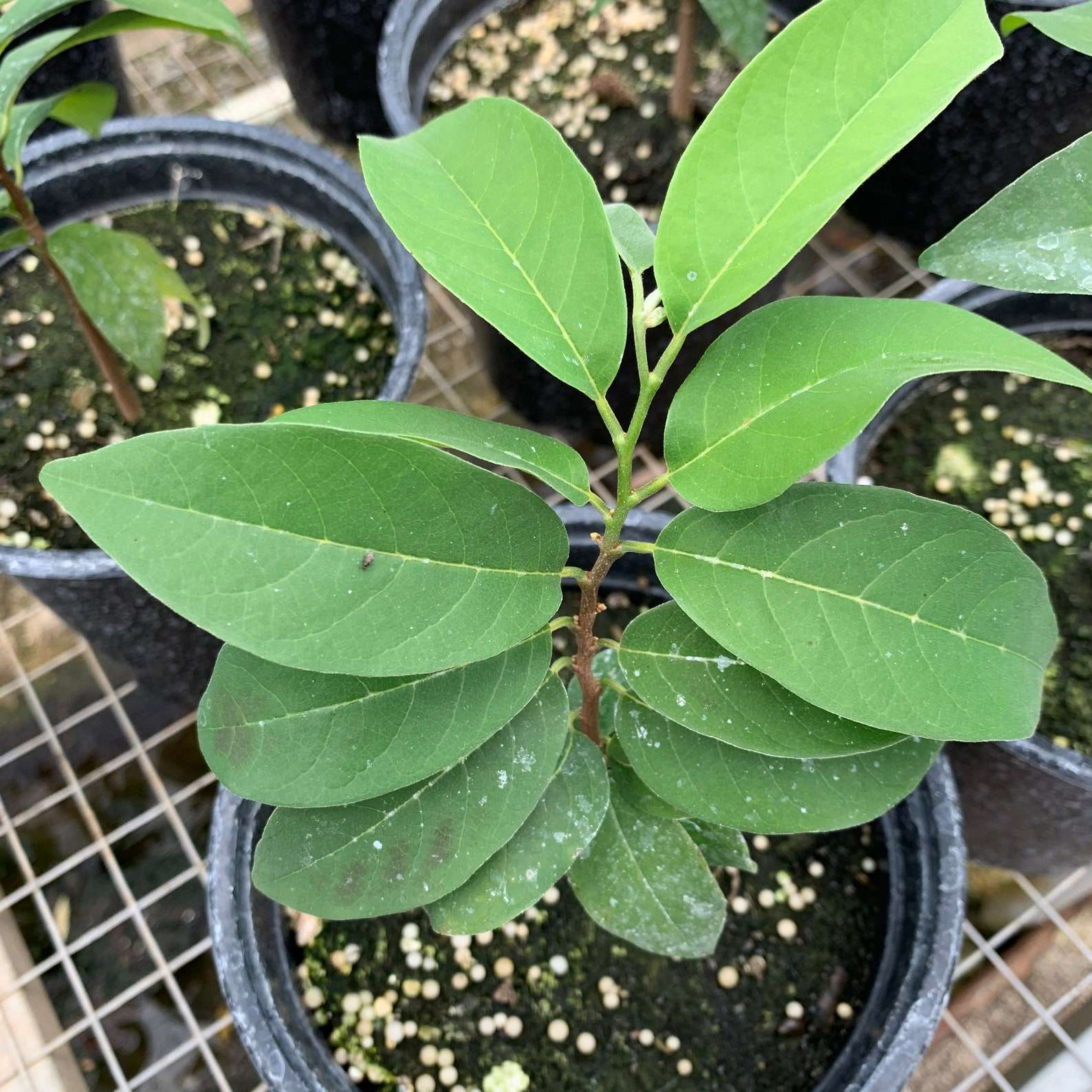
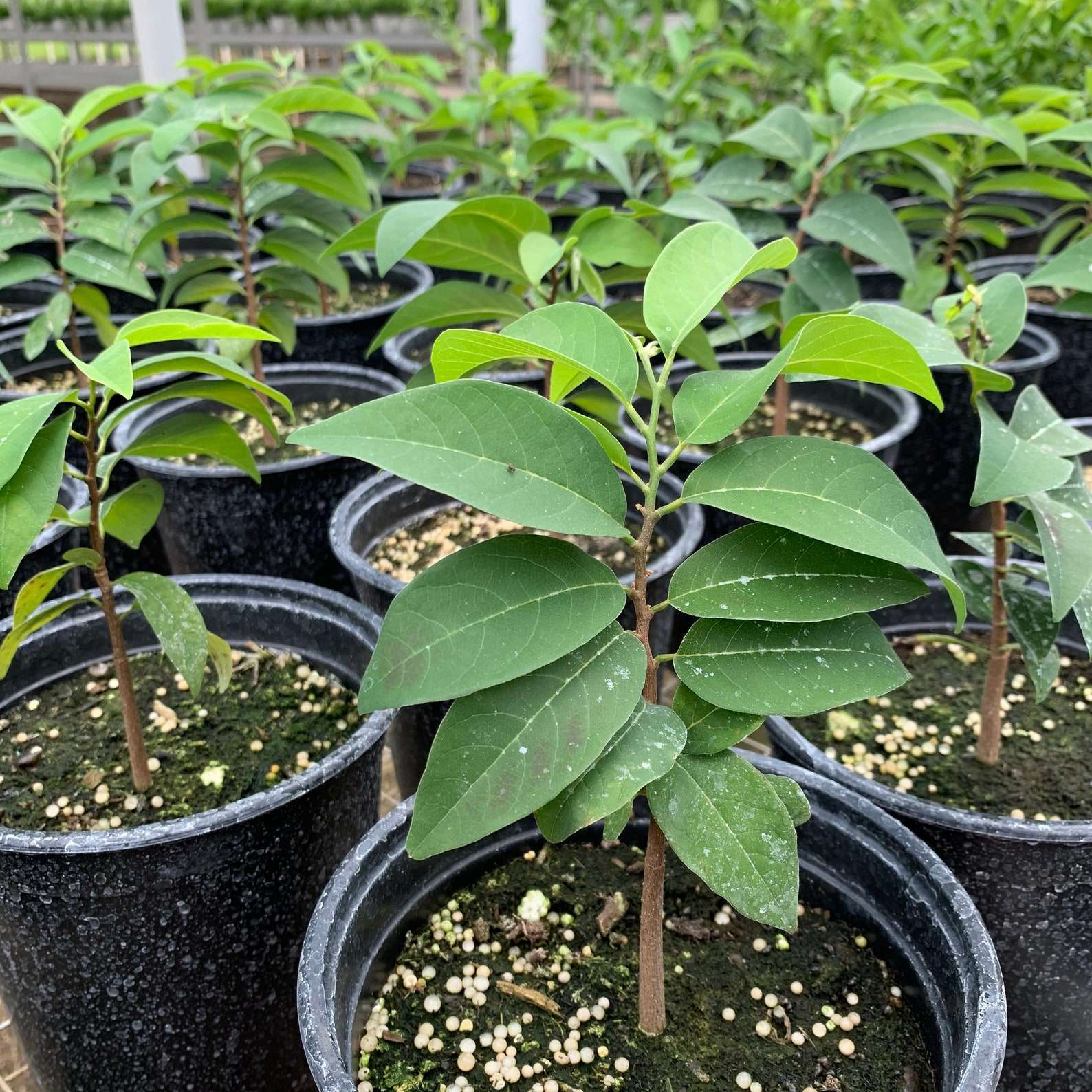
In cooler climates, the tree may drop its leaves during winter, but in warmer tropical climates, it can remain evergreen. The flowers, which are small, fragrant, and greenish-yellow, appear in the warmer months and attract pollinators such as bees. The Sugar Apple is typically self-pollinating, but better fruit set can be achieved with hand-pollination, especially in regions where natural pollinators are less abundant.
**Fruit Development:**
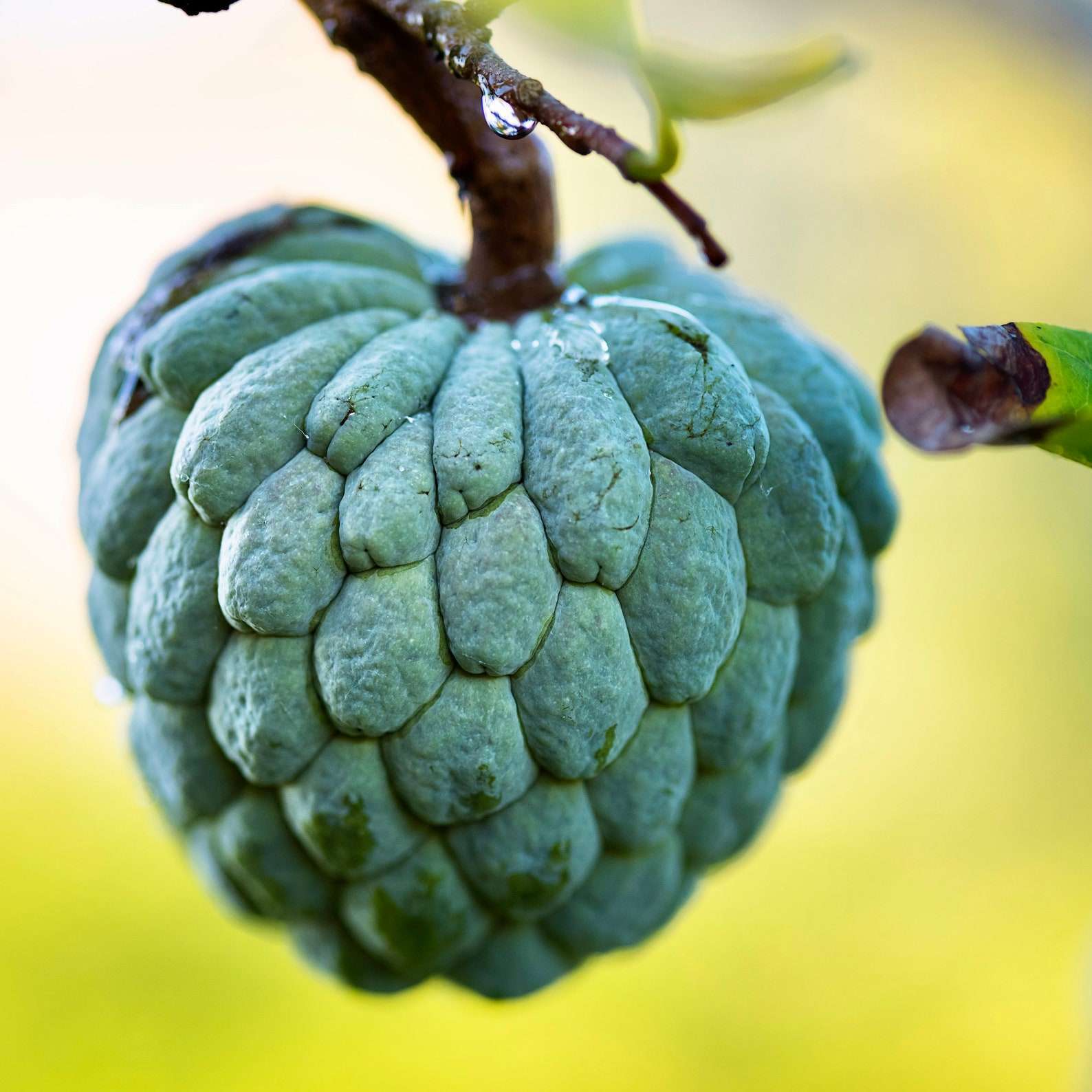
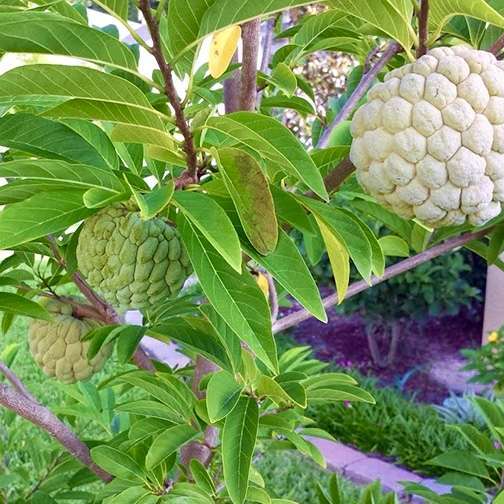
After pollination, the Sugar Apple tree produces its distinctive knobby fruits, which take several months to mature. The fruit typically ripens from late summer to fall, depending on the growing conditions and location. As the fruit matures, it softens, and the skin may change color slightly, depending on the variety—some turn a paler green, while others may develop a yellowish hue.
Harvesting is best done when the fruit is fully mature but still firm. Overripe fruit can split open on the tree, so it’s important to monitor ripening closely. Once picked, Sugar Apples do not store well for long periods, so they are best enjoyed fresh or used shortly after harvest. The fruit is highly perishable and should be consumed within a few days of ripening.
**Culinary Uses:**
The Sugar Apple is most commonly eaten fresh, as its naturally sweet and custard-like texture makes it a favorite treat on its own. To eat, the fruit is typically cut open, and the creamy white segments of flesh are scooped out, while the seeds are discarded. The flesh can also be blended into smoothies, shakes, and ice creams or used to make sweet sauces and desserts. In some regions, the fruit is pureed and strained to make beverages, sorbets, or fruit-based creams.
**Propagation:**
Sugar Apple trees can be propagated from seeds, which usually germinate within 2 to 4 weeks. However, seed-grown trees can take up to 4 to 5 years to bear fruit. For faster fruit production, many growers opt for grafted trees, which can bear fruit within 2 to 3 years. Grafting also ensures consistency in the fruit’s quality and characteristics, as seed-grown trees can exhibit some variability in fruit size and flavor.
**Interesting Facts:**
The Sugar Apple is closely related to other members of the Annona family, such as cherimoya, atemoya, and soursop. While the Sugar Apple is prized for its sweetness, other members of the family have a wide range of flavors, from tart to sweet, and are used in different culinary applications worldwide.
In regions where Sugar Apple is grown, the tree also has cultural significance and is sometimes used in traditional practices. The leaves, bark, and seeds of the tree have been used in some cultures for various non-culinary purposes.
**Conclusion:**
The Sugar Apple is a delightful and highly valued tropical fruit that offers both a unique, creamy flavor and the joy of easy cultivation. Its adaptability to warm climates and ability to grow in small spaces make it a favorite among home gardeners, while its sweet, aromatic fruit is enjoyed by many for both its taste and versatility. Whether eaten fresh or incorporated into tropical treats, the Sugar Apple is a rewarding addition to any garden in the right climate.