3. Andy Kaufman’s Inter-Gender Championship
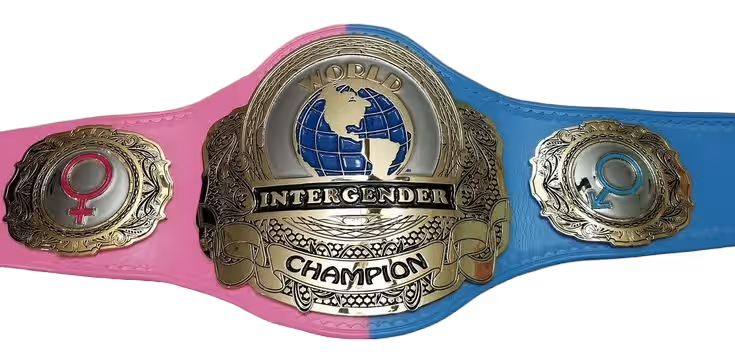
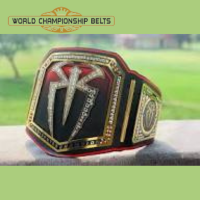
Andy Kaufman famously proclaimed himself the “Inter-Gender Champion of the World” during the 1980s. Although not an officially sanctioned wrestling title, replicas of his championship medal are considered valuable collectibles. Many fans choose to customize belts based on early concepts similar to intergender championship belts.
4. ROH Intergender Tag Team Championships
This short-lived championship was introduced in 2008. The belts featured a red, white, and blue strap design.
Notably, the titles were held by Chris Hero and Sara Del Rey, and today similar designs are often recreated as world championship belts inspired by intergender championship belts.
Physical Characteristics & Specifications
For collectors and fans, high-quality replica intergender championship belts typically include the following features:
- Materials 2mm to 4mm thick brass or alloy plates mounted on genuine cowhide leather straps
- Dimensions Approximately 50 inches in length, fitting waist sizes up to 46 inches
- Weight Around 3 lbs (1.36 kg) for a standard replica belt
These specifications are commonly used when manufacturers customize belts based on intergender championship belts’ standards.
Historical Significance
Chyna
Although she did not hold an official intergender championship, Chyna made history with her reigns as a major midcard champion. Her legacy helped pave the way for the acceptance of intergender championship belts and continues to influence modern world championship belt designs.
Tessa Blanchard
In 2020, she made history by defeating Sami Callihan to win a world heavyweight championship, becoming the first woman to hold such a title in a major wrestling promotion. This milestone strengthened the credibility of intergender championship belts within the industry.
Lucha Underground
This promotion was well known for regularly featuring intergender competition. Sexy Star won its top championship in 2016, further highlighting the acceptance of intergender championship belts. These innovations, along with influences from styles like Agassi martial arts, have inspired fans and creators to customize belts that represent equality and modern wrestling evolution.
Conclusion
Intergender championship belts represent an important and evolving aspect of professional wrestling. As part of the wider category of world championship belts, they highlight inclusivity, creativity, and progress within the industry. Whether for collectors or fans looking to customize belts, intergender championship belts continue to inspire new designs and storytelling possibilities in wrestling.
These championship belts symbolize equality in competition, allowing male and female wrestlers to compete for the same prestigious title. Over the years, many wrestling promotions have embraced intergender matches to showcase talent, athleticism, and entertainment without traditional limitations. This shift has helped create some of the most memorable rivalries and championship moments in modern wrestling history.