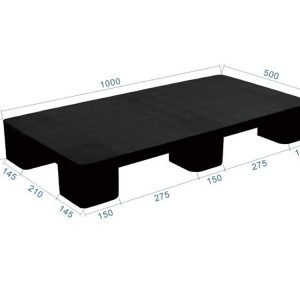
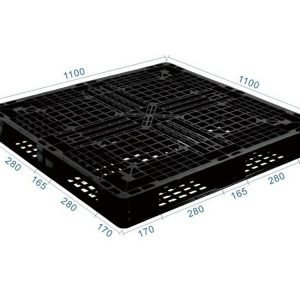
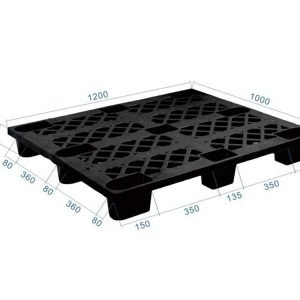
- Permanent ESD Protection Utilizing advanced conductive resins, our pallets maintain a surface resistance of 104−109Ω 1 0 4 − 1 0 9 Ω, ensuring that static is safely dissipated away from your components.
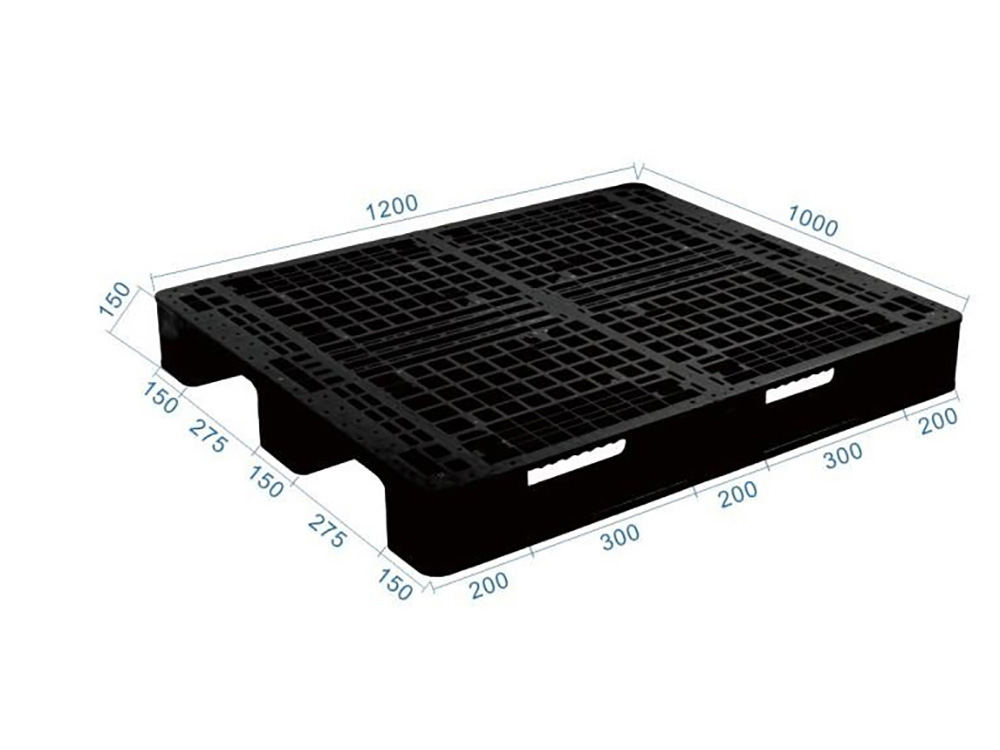
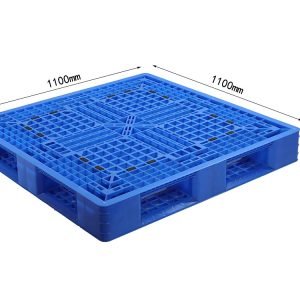
- Excellent Forklift Access Features a 4-way entry for forklifts and a 2-way entry for pallet jacks, making it highly versatile for both transport and storage.
- Hygienic & Durable The grid-top design allows for airflow and easy cleaning, while the HDPE material is resistant to moisture, chemicals, and extreme temperatures.
Application Scenarios
Built for Industrial-Scale Electronics Logistics
- High-Bay Racking Systems The primary choice for electronics distribution centers using vertical space.
- Heavy Equipment Transport Safe handling of large server racks, industrial power units, and heavy PCB testing machinery.
- Automated Production Lines Compatible with chain conveyors and automated palletizers used in smart factories.
- Long-Term Bulk Storage Providing a static-safe environment for high-value inventory in climate-controlled warehouses.
Frequently Asked Questions
Common Questions on 3-Runner ESD Pallets
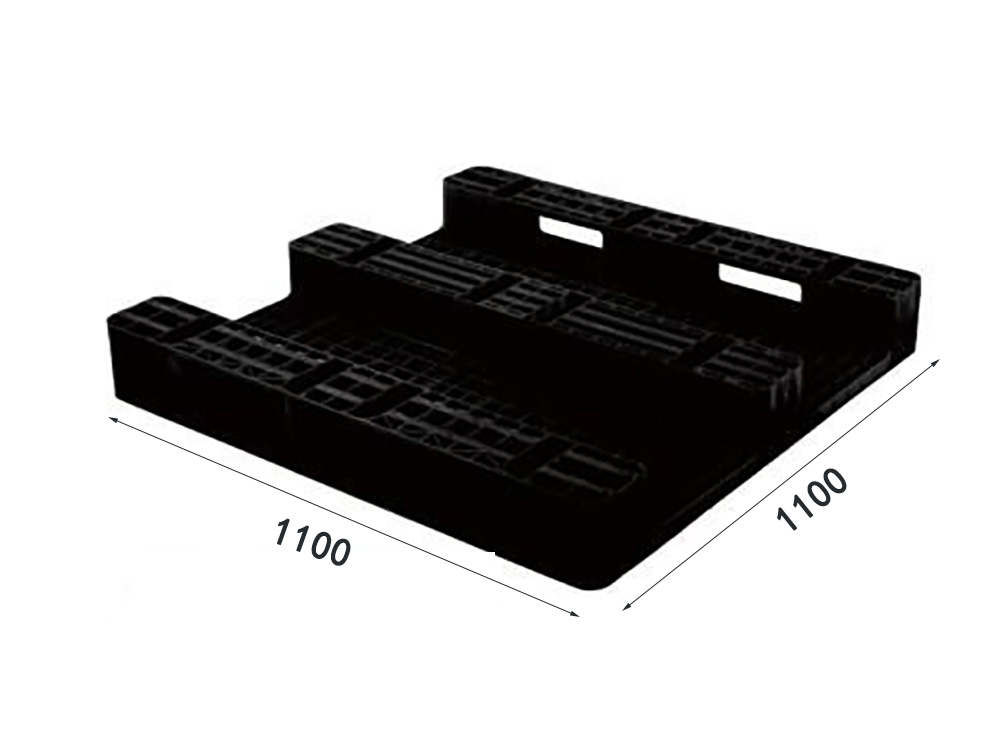
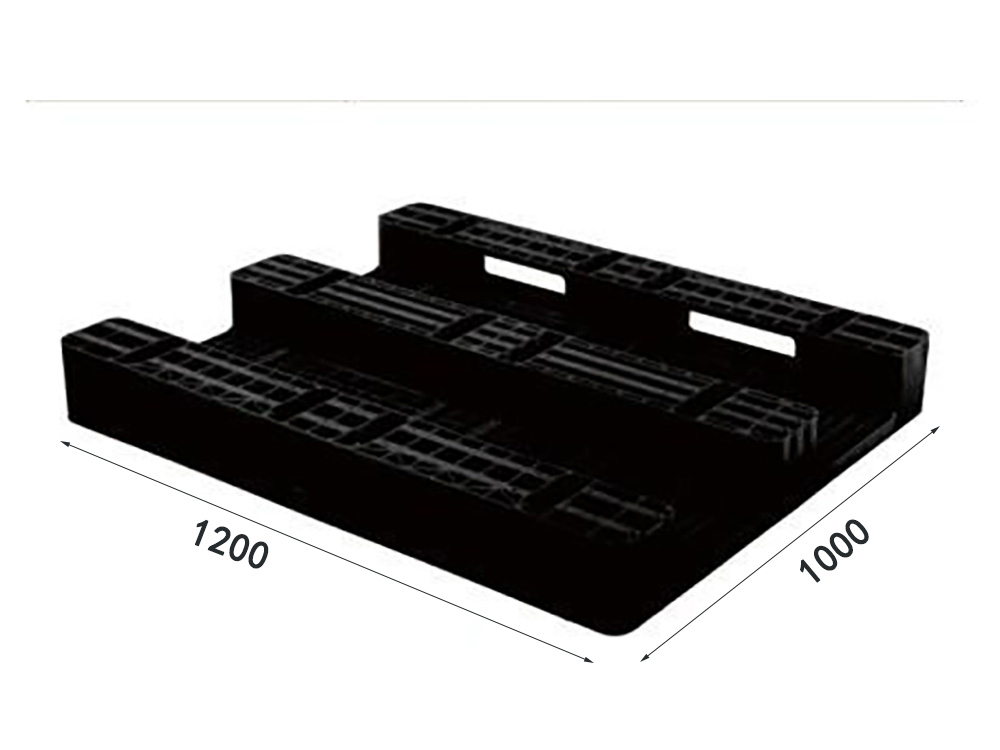
Q1: What makes the 3-runner design better for racking than other types? A: The three parallel runners provide a stable “bridge” across rack beams. This structure minimizes the risk of the pallet falling through the rack and allows for higher weight distribution compared to 9-leg designs.
Q2: How many steel tubes can be added to the 27# model? A: The 27# model can accommodate up to 10 internal steel tubes, which drastically enhances its load-bearing performance, especially for “on-the-rack” applications where the pallet is only supported at the edges.
Q3: Is the anti-static performance affected by humidity? A: No. Our ESD plastic pallets use carbon-based conductive additives rather than humidity-dependent chemical coatings. This ensures reliable anti-static performance in both dry and humid warehouse conditions.
Q4: Can these pallets be used with automated conveyor belts? A: Yes, the 3-runner design is highly compatible with chain and roller conveyors commonly found in automated logistics systems.
How these ESD pallets are moulded
Resistivity target first — tell us the band your ESD audit requires and we will confirm the compound before tooling.
Injection-moulded in one piece from virgin or recycled HDPE/PP on presses from 180 to 2,500 tons, a plastic pallet has no nails, no splinters and no loose boards to replace. Deck and runner geometry is cut by the mould itself, so every pallet in a shipment measures the same — the reason export buyers can stack, rack and automate with them.
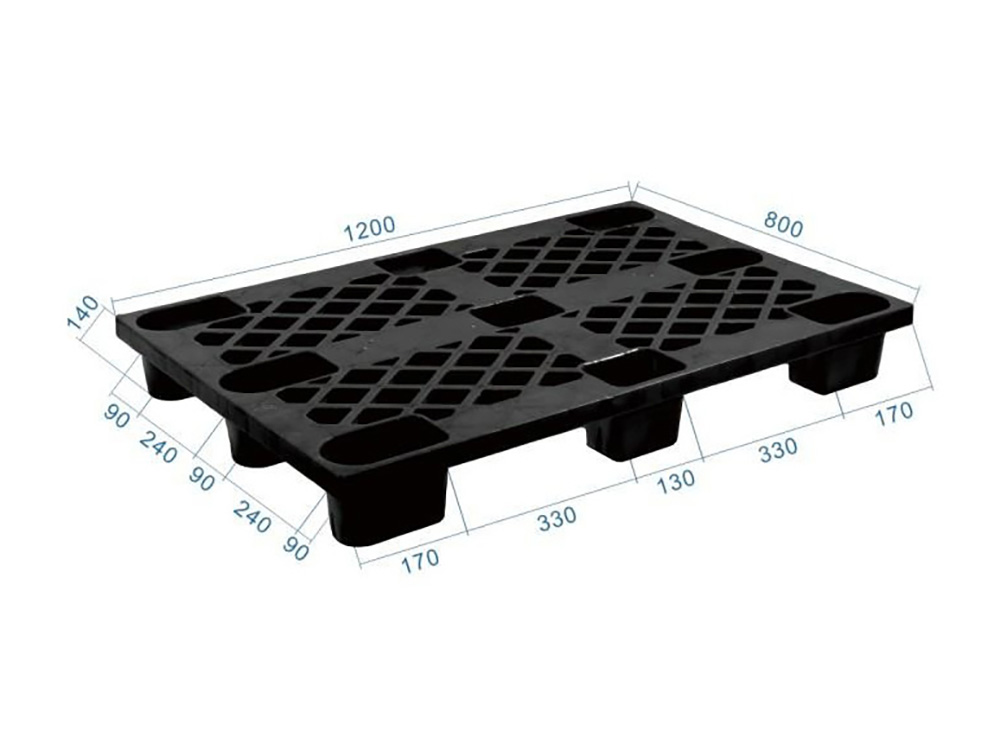
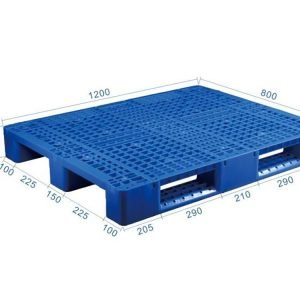
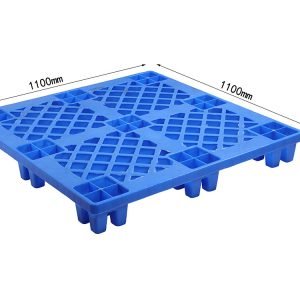
Nine-leg four-way entry plastic pallet base 1200×800 mm
Where buyers actually use these ESD pallets
Export buyers use plastic pallets where wood fails: containerised food and pharma freight that cannot risk ISPM-15 fumigation delays, closed-loop pooling between a plant and its distribution centre, and racked warehouse storage where a broken wooden board means an unplanned repack.
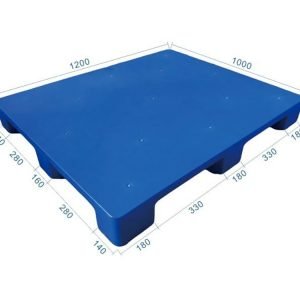
Blue plastic pallet 1200x800x140 mm grid deck Open deck versus closed deck plastic pallets comparison: surface, weight, drainage, hygiene and typical loads
Ordering, resistivity checks and shipping
ESD pallet samples are charged at cost, and this is the sample worth insisting on — surface resistivity has to be measured on your own floor, with your own footwear and humidity, before a full container is committed. Domestic orders have no minimum quantity; export orders move as full container loads (FCL).
Each production batch is spot-checked for surface resistivity, which must sit in the dissipative band (typically 10^6 to 10^9 ohms per square). The conductive additive is compounded into the resin rather than sprayed on, so the reading does not wash off with cleaning or wear.
Heavy Duty 3 — Confirm the resistivity band your ESD auditor requires, in writing, before the order is placed; the compound is chosen to that number.
For the full selection logic behind this product family, see our plastic pallet size and load guide.
FAQ
Are samples free?
Samples are charged at cost. A moulded pallet costs the same to produce as a production unit.
What is the minimum order for export?
Export orders ship as full container loads (FCL). Domestic orders have no minimum quantity.
Can you match an existing pallet footprint?
Send the drawing or a sample; tooling can be adapted in LSY’s own mould workshop.
Three-runner ESD pallets for racked handling
A rackable ESD pallet only works if the runner positions line up with the rack beams. Send the beam spacing and the load per pallet and we will confirm which runner configuration fits — a rackable pallet on the wrong beam spacing is effectively an unsupported pallet.
What the surface resistance number actually means
Anti-static products are sold by a resistance range, and the range decides which job the container can do. Conductive material sits at the low end and drains charge fast — it is used where a discharge has to happen quickly, such as around sensitive assemblies. Dissipative material sits in the middle and drains charge slowly and in a controlled way, which is what most electronics handling actually needs. Insulative material does not drain at all and is the wrong choice anywhere static is a problem.
When you compare suppliers, ask for the tested resistance range and the test method, not just the word “anti-static”. A surface resistance figure quoted without a standard is not comparable between suppliers, and the difference between a conductive and a dissipative part matters on the line even though both are sold as ESD-safe.
Carbon-loaded versus surface-coated
There are two ways to make a plastic container ESD-safe: load the compound with carbon through the whole wall, or apply a dissipative coating. Carbon-loaded parts hold their properties after abrasion and washing and last the life of the container. Coated parts are cheaper and perform well when new, but the coating wears at the contact points — exactly where the charge transfers — and the part drifts out of specification without any visible damage.
For a container that is handled and stacked daily, carbon-loaded is the specification that survives. For a one-way shipment or a short-life application, a coated part can be justified on cost.
Size systems and racking compatibility
Most ESD containers are built to a standard footprint so they drop into existing racking, conveyors and shelf systems. Confirm the footprint and the stacking height against what the line already uses — changing the container size usually means changing the rack, which is a far larger cost than the containers.
Frequently asked questions
What surface resistance should I specify?
It depends on the application: conductive for fast discharge around sensitive assemblies, dissipative for general electronics handling. Ask for the tested range and the test method so quotes are comparable.
Does the ESD property wear off?
On carbon-loaded parts, no — the property runs through the wall. On coated parts it does, particularly at contact points, and the part can fall out of specification without visible damage.
Can these containers be cleaned?
Yes. Carbon-loaded parts tolerate normal cleaning; abrasive cleaning on coated parts accelerates coating wear.
Ordering notes: resistivity target and packing
- Colour. Send a RAL or Pantone reference rather than a colour name. Stock colours ship faster; custom shades carry a minimum quantity per colour.
- Export packing. Overseas orders ship as full container loads (FCL). Loose cartons are not consolidated for export.
- Samples. Samples are supplied at cost price plus freight, not free of charge.
- Lead time. Stock colours from existing moulds run a few weeks from deposit and artwork confirmation. Custom colour or new tooling adds time and is confirmed in writing with the quotation.
- Documentation. Commercial invoice, packing list and bill of lading as standard; certificate of origin where the destination requires it.
Related reading: how to choose ESD-safe containers.
Where these ESD pallets ship
ESD pallet shipments from this line go mostly to Vietnam, Malaysia, India, Australia. Export orders move full container load; samples are charged at cost and credited against a confirmed order.