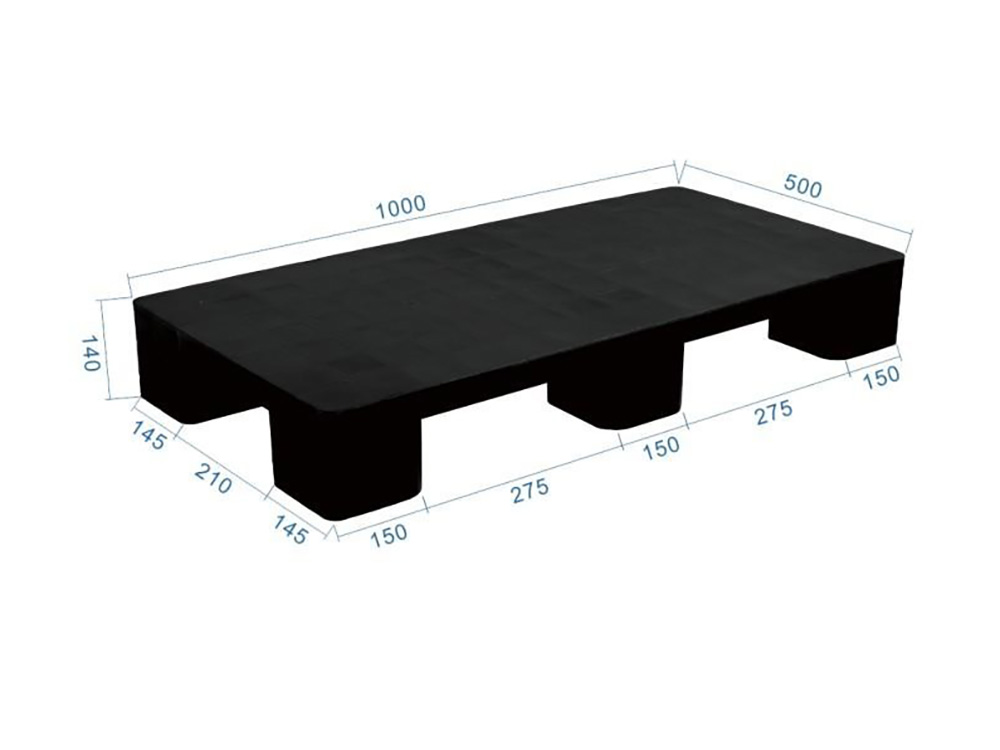
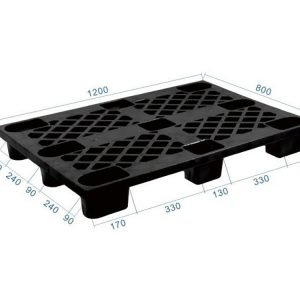
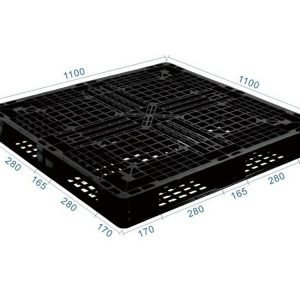
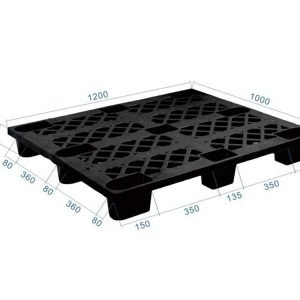
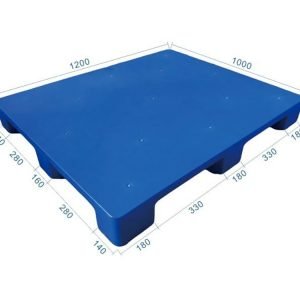
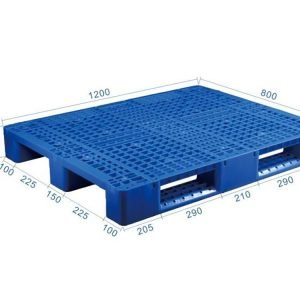
- Small Part Protection The flat surface prevents small components, screws, or delicate tools from falling through mesh holes, reducing product loss and damage.
- Superior Cleanability Can be easily wiped down or chemically sanitized without water trapping, ensuring compliance with strict cleanroom protocols.
- Uniform Static Dissipation The solid material ensures a continuous and consistent surface resistance of 104−109Ω 1 0 4 − 1 0 9 Ω, providing a reliable “ground” for everything placed on the pallet.
- Compact & Versatile The 1000x500mm footprint (Model 43#) is perfect for narrow aisles, laboratory workbenches, and specialized AGV (Automated Guided Vehicle) transport.
Application Scenarios
Optimized for Controlled Environments
- Semiconductor Cleanrooms Transporting wafer boxes and sensitive lithography equipment.
- Medical Device Manufacturing Handling static-sensitive diagnostic tools in sterile environments.
- Laboratory & Research Providing a stable, anti-static work surface for delicate calibration and testing.
- Small-Scale Electronics Assembly Ideal for compact SMT lines where space is at a premium and precision is paramount.
Frequently Asked Questions
Expert Insights on Solid Top ESD Pallets
Q1: Why use a solid top pallet instead of a grid/mesh pallet? A: Solid top ESD pallets are preferred when hygiene is a priority. Grid pallets can trap dust and are harder to clean. Additionally, solid tops provide better support for very small items that might tilt or fall through the gaps of a mesh deck.
Q2: Can the flat surface be used as a temporary ESD workbench? A: Yes. Due to its stable 6-leg design and permanent anti-static properties, many facilities use these pallets as mobile, static-safe workstations for assembly or inspection tasks.
Q3: Is the surface slippery for electronic boxes? A: Our pallets feature a subtle matte finish or optional anti-slip textures that provide enough friction to keep boxes secure while remaining easy to clean.
Q4: How do I clean these pallets without damaging the ESD properties? A: You can use standard cleanroom IPA (Isopropanol) wipes or mild detergents. Since the ESD additive is integrated into the plastic resin, cleaning will not “wash away” the anti-static protection.
Solid-top ESD pallets: where a closed deck matters
A solid deck stops debris and liquid passing between loads, and it gives small components a surface they cannot fall through. That makes solid-top the right choice for electronics handling where loose parts are involved, and the wrong choice where drainage or airflow matters.
What the surface resistance number actually means
Anti-static products are sold by a resistance range, and the range decides which job the container can do. Conductive material sits at the low end and drains charge fast — it is used where a discharge has to happen quickly, such as around sensitive assemblies. Dissipative material sits in the middle and drains charge slowly and in a controlled way, which is what most electronics handling actually needs. Insulative material does not drain at all and is the wrong choice anywhere static is a problem.
When you compare suppliers, ask for the tested resistance range and the test method, not just the word “anti-static”. A surface resistance figure quoted without a standard is not comparable between suppliers, and the difference between a conductive and a dissipative part matters on the line even though both are sold as ESD-safe.
Carbon-loaded versus surface-coated
There are two ways to make a plastic container ESD-safe: load the compound with carbon through the whole wall, or apply a dissipative coating. Carbon-loaded parts hold their properties after abrasion and washing and last the life of the container. Coated parts are cheaper and perform well when new, but the coating wears at the contact points — exactly where the charge transfers — and the part drifts out of specification without any visible damage.
For a container that is handled and stacked daily, carbon-loaded is the specification that survives. For a one-way shipment or a short-life application, a coated part can be justified on cost.
Size systems and racking compatibility
Most ESD containers are built to a standard footprint so they drop into existing racking, conveyors and shelf systems. Confirm the footprint and the stacking height against what the line already uses — changing the container size usually means changing the rack, which is a far larger cost than the containers.
Frequently asked questions
What surface resistance should I specify?
It depends on the application: conductive for fast discharge around sensitive assemblies, dissipative for general electronics handling. Ask for the tested range and the test method so quotes are comparable.
Does the ESD property wear off?
On carbon-loaded parts, no — the property runs through the wall. On coated parts it does, particularly at contact points, and the part can fall out of specification without visible damage.
Can these containers be cleaned?
Yes. Carbon-loaded parts tolerate normal cleaning; abrasive cleaning on coated parts accelerates coating wear.
Ordering notes: resistivity target and packing
Resistivity target first — tell us the band your ESD audit requires and we will confirm the compound before tooling.
- Colour. Send a RAL or Pantone reference rather than a colour name. Stock colours ship faster; custom shades carry a minimum quantity per colour.
- Export packing. Overseas orders ship as full container loads (FCL). Loose cartons are not consolidated for export.
- Samples. Samples are supplied at cost price plus freight, not free of charge.
- Lead time. Stock colours from existing moulds run a few weeks from deposit and artwork confirmation. Custom colour or new tooling adds time and is confirmed in writing with the quotation.
- Documentation. Commercial invoice, packing list and bill of lading as standard; certificate of origin where the destination requires it.
Related reading: how to choose ESD-safe containers.
Where these ESD pallets ship
ESD pallet shipments from this line go mostly to Vietnam, Malaysia, India, Australia. Export orders move full container load; samples are charged at cost and credited against a confirmed order.
Solid Top ESD — Confirm the resistivity band your ESD auditor requires, in writing, before the order is placed; the compound is chosen to that number.