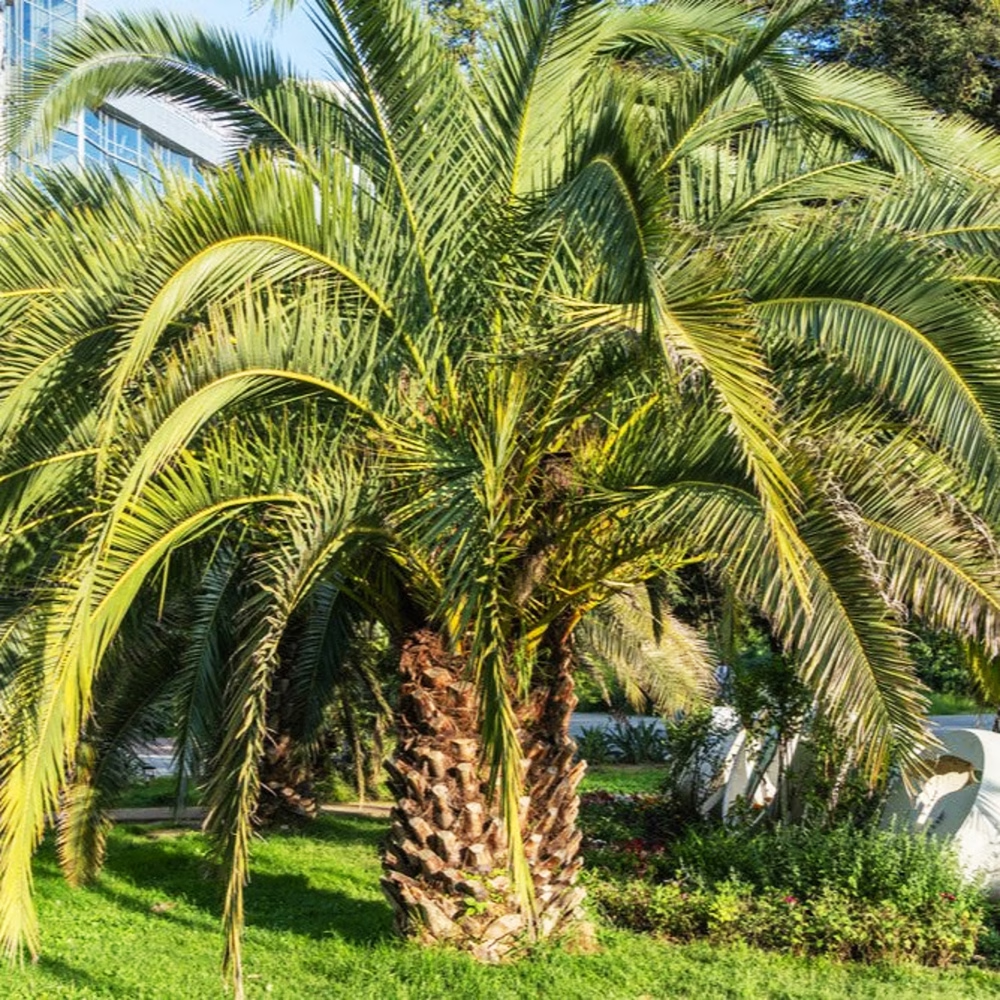
The Pindo Palm is one of the most beautiful and cold-hardy feather palms available, bringing a lush tropical appearance to landscapes far beyond the true tropics. Its long, gracefully arching fronds have a distinctive blue-green to silvery-gray coloration that immediately sets it apart from other palms, creating an elegant, almost sculptural look in the garden. Young plants form dense fountains of foliage close to the ground, while mature specimens develop thick, textured trunks topped with dramatic cascading leaves that can stretch 6 feet or more in length. Slow-growing and exceptionally long-lived, this palm eventually matures into a striking specimen tree that adds character and structure to the landscape year-round.
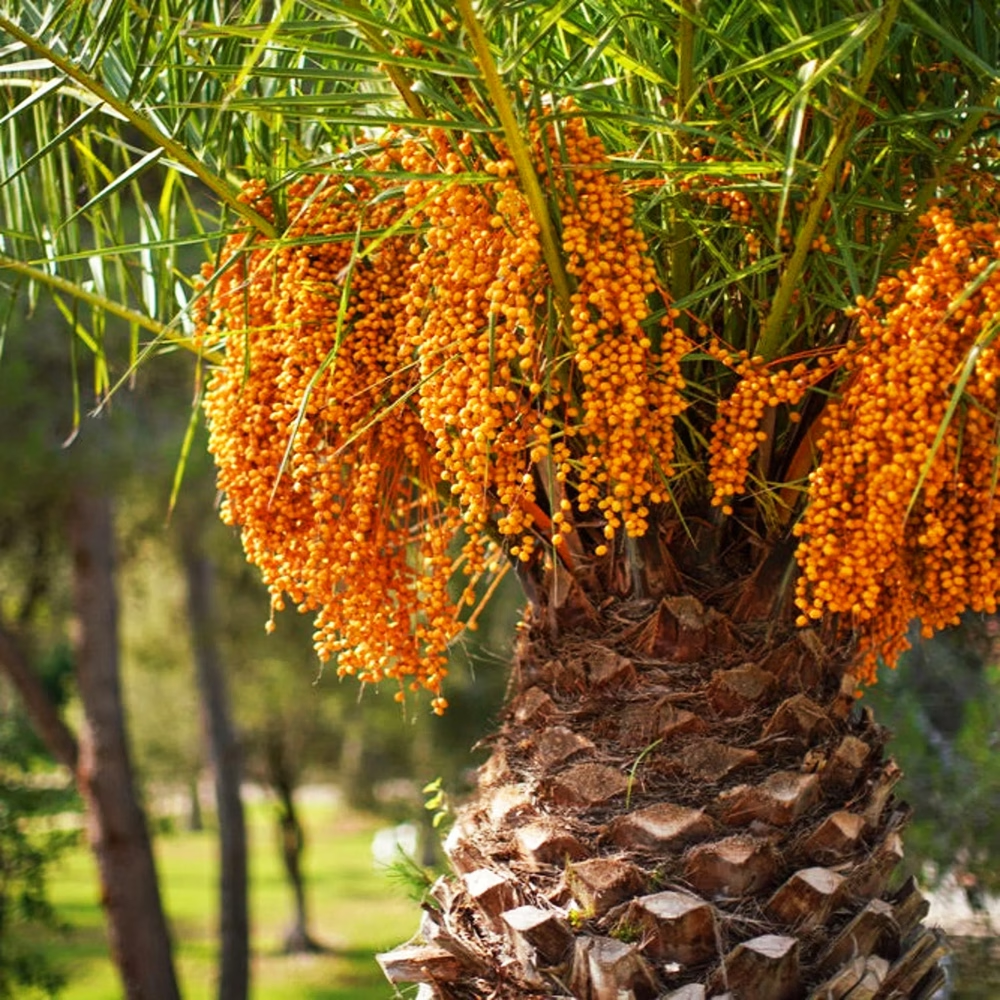
Beyond its ornamental beauty, the Pindo Palm is also prized for its edible fruit, which gives rise to its popular nickname, the “Jelly Palm.” In spring, mature trees produce showy sprays of yellow-orange flowers that develop into clusters of sweet aromatic fruits rich in vitamin A and carotenoids. The fruits have a tropical flavor often compared to pineapple, banana, and apricot, and can be eaten fresh or used for jellies, preserves, and even homemade wine. Tough, adaptable, drought tolerant, and highly resistant to pests, the Pindo Palm is equally at home in Mediterranean gardens, coastal landscapes, poolside plantings, and large decorative containers.
Using the Pindo Palm in Your Garden
The Pindo Palm makes an outstanding focal point wherever a bold tropical look is desired. Its elegant arching canopy softens hardscape areas beautifully, making it ideal for patios, courtyards, pool areas, entryways, and sunny foundation plantings. The striking blue-green foliage contrasts especially well with flowering tropicals, ornamental grasses, agaves, yuccas, and broadleaf evergreen shrubs.
Because it grows more slowly and stays more compact than many tropical palms, the Pindo Palm is especially useful in residential landscapes where space may be limited. It works beautifully as a specimen tree in smaller lawns, coastal gardens, ranch-style landscapes, and Mediterranean-inspired plantings. Young trees are also excellent in large containers, where they create an instant resort-style atmosphere for patios, balconies, and terraces. In warm climates, mature palms can even be planted in groups to create dramatic tropical screens and layered landscape effects.
Growing the Pindo Palm
Size and Appearance
The Pindo Palm develops into a medium-sized evergreen palm with a broad crown of gracefully arching fronds. In most gardens it matures around 10 to 20 feet tall, although older specimens in warm climates may eventually become larger. Mature trunks can grow impressively thick, often reaching nearly 2 feet across, with a rugged, knobby texture created by old leaf bases.
Its long feather-like fronds emerge in elegant curves from the crown, creating a soft weeping effect that gives the tree tremendous visual appeal. The foliage color ranges from soft green to striking blue-gray or silver-blue tones depending on growing conditions and genetics. Mature trees also produce large clusters of yellow-orange fruits beneath the canopy, adding additional ornamental and edible interest.
Hardiness
The Pindo Palm is widely regarded as one of the most cold-hardy feather palms in cultivation. It grows reliably outdoors in USDA zones 8 through 10 and can tolerate temperatures down to about 20°F once established, with brief dips near 10°F possible for mature specimens.
This cold tolerance allows gardeners far beyond tropical regions to enjoy a true feather-leaf palm in the landscape. In colder climates, younger plants benefit from temporary winter protection during severe freezes. Container-grown specimens can also be overwintered indoors in a sunny room or greenhouse, making this palm an excellent choice even for gardeners outside its normal hardiness range.
Sun Exposure and Soil Conditions
The Pindo Palm grows best in full sun, where it develops the strongest trunk structure and richest foliage color. It adapts to many different soil types, including sandy, acidic, and alkaline soils, as long as drainage is good. Once established, it becomes notably drought tolerant and handles heat, salt air, and dry conditions extremely well.
Although mature palms tolerate dry periods, regular watering during establishment encourages faster growth and healthier foliage. Container-grown plants should be watered thoroughly when the upper layer of soil begins to dry. Avoid planting directly beside paved surfaces if fruit drop may become an issue.
Maintenance and Pruning
This is a remarkably low-maintenance palm once established. Remove older fronds only after they have completely yellowed or browned, as the tree naturally reabsorbs nutrients from aging leaves. Minimal pruning helps maintain the palm’s healthy, graceful appearance.
Pindo Palms are highly resistant to pests and diseases and are generally ignored by deer. Fertilizing with a palm-specific fertilizer during the growing season encourages lush foliage and healthy fruit production. Young plants exposed to severe cold can be protected temporarily by wrapping the crown and fronds with burlap during freeze events.
History and Origin of the Pindo Palm
The Pindo Palm, botanically known as Butia capitata or Butia odorata, is native to southern Brazil, Uruguay, and parts of South America, where it grows naturally in grasslands and coastal regions. It has been cultivated for generations both as an ornamental landscape tree and for its edible fruits.
In its native range, the fruit has long been used to produce preserves, juices, wines, and fermented beverages. Its combination of tropical beauty and surprising cold tolerance eventually made it one of the most widely grown palms in subtropical and warm temperate gardens around the world. Today it remains one of the most popular hardy feather palms for residential landscapes.
Buying the Pindo Palm at The Tree Center
The Pindo Palm is the perfect choice for gardeners who want the classic tropical appearance of a feather palm combined with outstanding cold hardiness and easy-care performance. Its arching blue-green foliage, rugged trunk, edible fruit, and graceful form create year-round beauty in both landscape plantings and decorative containers.
Whether used as a dramatic specimen tree, a poolside accent, or a container palm for patios and terraces, this versatile palm brings lasting structure and tropical elegance to almost any sunny setting. Order your Pindo Palm today from The Tree Center and enjoy one of the hardiest and most beautiful tropical palms available for home gardens.