2. Application Scenarios
Our containers are essential tools for organization and food safety across various settings:
- Commercial Kitchens & Catering Perfect for HACCP compliance, ingredient preparation, portion control, and bulk storage of dry goods, liquids, and prepared foods.
- Meal Preparation (Meal Prep) The variety of sizes makes portioning and planning weekly meals simple and efficient.
- Pantry & Cabinet Organization Creating a unified, tidy, and easily accessible storage system for cereals, pasta, baking supplies, and snacks.
- Freezing & Refrigeration Safely storing leftovers and preserving perishable items, preventing freezer burn and odor transfer.
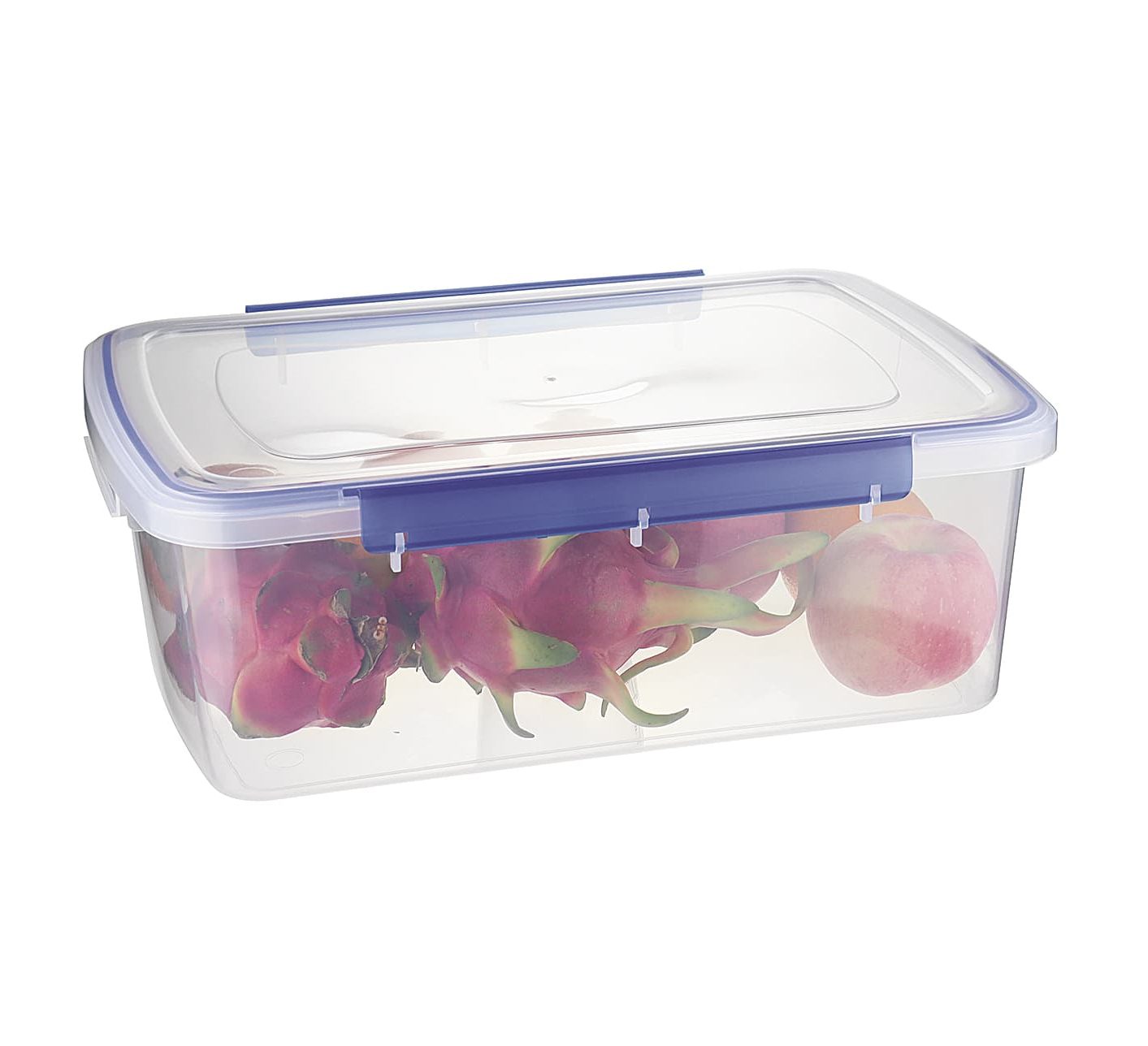
3. Regular Food Containers (Air-tight Food Boxes)
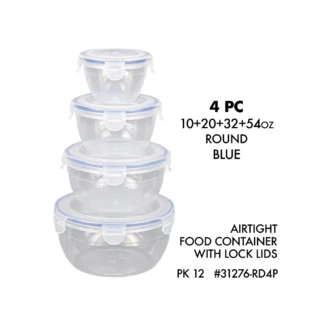
7.2 Double-Lock Food Containers (双扣保鲜盒)
4. FAQ – Food Containers
Q1: Are these containers food-grade and BPA-free?
A Yes. The food containers are made of food-grade plastic, suitable for direct contact with food. They are safe for cold storage and typical household use.
Q2: Can the containers be used in microwave or dishwasher?
A Regular containers are generally microwave and dishwasher safe (lid removed for microwave). For high-temperature or professional use, please confirm exact material and temperature range per model.
Q3: What is the difference between regular and double-lock containers?
A Double-lock boxes feature two-sided locking clips and often better sealing performance, making them ideal for liquid foods, soups, or transport scenarios where leakage prevention is important.
Q4: Are the Double-Buckle containers truly airtight and leak-proof?
A Yes. The Double-Buckle series features a secure locking mechanism on the lid, typically combined with a silicone seal, which provides a strong, airtight, and leak-proof barrier. This makes them ideal for storing liquids, sauces, and highly perishable items.
Q5: Can these containers be used in the freezer and microwave?
A While the specific material (PP or PC) determines exact temperature resistance, these commercial-grade containers are generally designed to be freezer-safe. The lids should typically be removed or vented when microwaving to prevent pressure buildup. Always check the specific material code on the product for detailed temperature guidelines.
Q6: How do the different series (A, B, 800, 500, 300) relate to each other? A: The different series numbers usually denote variations in shape, depth, or locking mechanism:
- A/AA/AAA/B Series Standard lids, often used for stacking and general dry/refrigerated storage.
- 800 Series Tends to be deeper or have unique dimensions.
- 500 & 300 Series (Double-Buckle) Feature the secure locking clips for superior airtight performance. The 300 series generally indicates deeper containers than the 500 series.
More from LSY Plastic
Browse the full Food Service & Bussing Carts range, or read our guide: Stainless Steel Utility Cart for Busy Service: How to Choose the Right LSY Model. Factory-direct MOQ and FOB quotes within 24 hours.
How these crates are moulded
Footprint first — crates are sized to the pallet they sit on, so confirm the pallet before the crate.
Storage boxes and totes are judged on lid fit and stack stability. The mould tolerance at the rim decides whether a stack stays put on a shelf or walks itself apart over a season.
ESD turnover box versus ESD tray comparison: role, depth, load type, handling interface and empty volume
Where buyers actually use these crates
Warehouses, stockrooms, homes and workshops use lidded totes where open shelving loses things: seasonal stock, spare parts, documents, components, personal issue items.
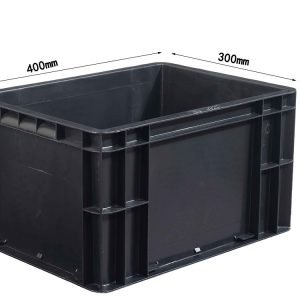
ESD turnover box versus ESD tray comparison: role, depth, load type, handling interface and empty volume Anti-static ESD A10 Anti Static Black Box by LSY Plastic
Ordering, wall gauge and container cube
Samples are charged at cost, because crate tooling runs the same cycle as production. A sample lets you check the wall gauge, the handle feel, and whether the box nests or stacks the way your line expects. Domestic orders have no minimum quantity; export crate orders ship as full container loads (FCL).
Vented and solid-wall crates are drop-tested and stack-tested at elevated temperature before release. A stack of loaded crates sitting in a hot warehouse is the hardest thing the moulding ever has to survive, and it is where thin-wall boxes fail first.
Fresh Keeping Box — Confirm the external footprint against the pallet or shelf it sits on; crates are bought to a footprint, not to a litre figure.
For the full selection logic behind this product family, see our storage container guide.
FAQ
Are samples free?
Samples are charged at cost, not given away.
What is the minimum order quantity?
Domestic orders have no minimum. Export orders ship as full container loads (FCL).
Can you produce to our drawing?
Yes — LSY runs its own mould workshop and adapts tooling to customer drawings or samples.
A buckle-lid fresh-keeping box for food storage
This is a food storage container rather than a general-purpose tub, and the distinction matters. Everything about how it performs comes from the seal: how much pressure the buckles put on the lid, how much air remains above the contents, and how well both survive repeated washing cycles.
What actually keeps food fresh in a container
Freshness in a plastic container is mostly a seal question, not a material question. Four things decide it: how tightly the lid closes, how much air sits above the food, how often the container is opened, and how well it survives repeated washing. A container that seals well on day one and warps after fifty dishwasher cycles has no useful seal at all.
The buckle or clip does two jobs. It holds the lid down so the gasket stays compressed, and it signals to the user that the box is actually closed — a pressed-on lid that looks sealed but is not is the usual cause of surprise spoilage. Check that the buckle still latches firmly after repeated flexing, because that is where fatigue shows first.
Material, temperature and washing
Food-grade polypropylene handles freezer storage and normal dishwashing well. It is not suitable for microwave use at high power with fatty or sugary foods, which reach temperatures well above the water in the rest of the dish and can deform the base. If the use case includes reheating, say so up front — different grades and wall thicknesses are specified for that.
Stacking matters more than it appears. A container that stacks securely when full but jams when nested empty wastes the space it was bought to save.
Frequently asked questions
Is it freezer-safe?
Yes, food-grade polypropylene handles freezer storage. Leave headroom for expansion in anything with high water content.
Can it go in the dishwasher and microwave?
Dishwasher, yes. Microwave is not recommended at high power, particularly with fatty or sugary contents — specify reheating at quotation stage if it is part of the use case.
Does the buckle wear out?
It is the first part to fatigue. Check that it still latches firmly after repeated flexing; a loose buckle means a compromised seal.
Ordering notes: wall gauge, venting and packing
- Colour. Send a RAL or Pantone reference rather than a colour name. Stock colours ship faster; custom shades carry a minimum quantity per colour.
- Export packing. Overseas orders ship as full container loads (FCL). Loose cartons are not consolidated for export.
- Samples. Samples are supplied at cost price plus freight, not free of charge.
- Lead time. Stock colours from existing moulds run a few weeks from deposit and artwork confirmation. Custom colour or new tooling adds time and is confirmed in writing with the quotation.
- Documentation. Commercial invoice, packing list and bill of lading as standard; certificate of origin where the destination requires it.
Related reading: how to choose plastic containers.
Where these crates ship
Container loads of crates from this range go mostly to Vietnam, Bangladesh, Kenya, South Africa. Crates are bulky and light, so freight is quoted on container cube rather than weight — export orders move full container load, and samples are charged at cost.