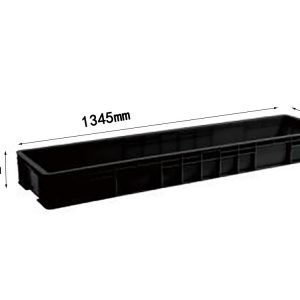
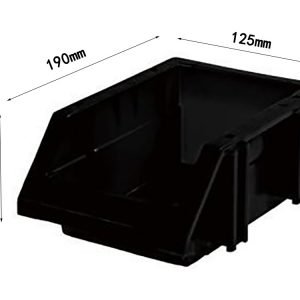
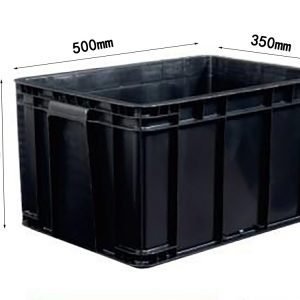
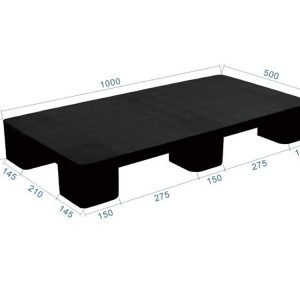
3.3 Turnover Boxes, Nesting Boxes & Folding Boxes
3.4 Small & Medium Turnover Boxes (Color-Coded)
3.5 A5 / A8 / A9 / A10 / A11 Series Boxes
3.6 Hardware, Catering, Large Turnover & Bread Crates
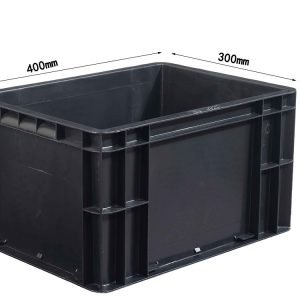
4. ESD Logistics Boxes
— ESD plastic crates / ESD turnover boxes
Logistics / Turnover Boxes – FAQ
Q1: What is the advantage of EU crates compared to common turnover boxes?
A EU crates follow European standard dimensions (e.g. 600×400, 400×300, 800×600 mm), so they:
- Fit seamlessly on Euro pallets and EU racking systems
- Stack safely up to high layers
- Work well in cross-border logistics and automated warehouses
Common turnover boxes are more flexible in dimensions and usually cheaper, ideal for domestic logistics and customized storage.
Q2: How effective are folding crates in saving storage space?
A Folding crates can reduce height from around 210 mm to about 30 mm when folded, saving up to 80% of volume for empty crate storage and return transport.
Q3: Are there food-grade logistics crates available?
A Yes. Selected models use food-grade PP and are suitable for food raw materials, packaged food, bread, bakery items and catering dish disinfection (e.g. Super A15# box).
Q4: What is the benefit of ESD logistics crates?
A ESD crates protect electronic components, circuit boards and precision parts from static discharge. Surface resistance typically falls within 10^6–10^11 Ω, meeting electronics ESD standards.
Q5: Can lids be used on these crates?
A Many models have matching lids (including EU crates, 4#A, 25#, 26#, 27#, 28#, 30#, 31#, 32#, A special, EU43, EU46, etc.). Lids improve dust, moisture and theft protection during storage and transport.
More from LSY Plastic
Browse the full Turnover Box Series range, or read our guide: The Power of Euro Stacking Containers for Warehouse Optimization. Factory-direct MOQ and FOB quotes within 24 hours.
How these crates are moulded
Vented or solid wall is the first fork in the road. Vented for airflow and washing, solid where contents are small or bagged.
Crates and turnover boxes are stack-tested as a system: the rim of one box carries the load of the one above it, and the base geometry is what keeps a full stack square on a moving pallet.
Reinforced plastic crate 590x490x350 mm with side handles
Where buyers actually use these crates
Produce packers, bakeries, beverage bottlers, electronics plants and third-party logistics providers run crates on closed loops: pack, stack, palletise, ship, return, wash, repeat. The crate is specified by what it carries and how it stacks.
Blue stackable plastic crate 595x480x350 mm made by LSY Plastic Checklist infographic for choosing industrial plastic crates: material, Euro sizing, vents, ribs and stacking
Ordering, wall gauge and container cube
Samples are charged at cost, because crate tooling runs the same cycle as production. A sample lets you check the wall gauge, the handle feel, and whether the box nests or stacks the way your line expects. Domestic orders have no minimum quantity; export crate orders ship as full container loads (FCL).
Vented and solid-wall crates are drop-tested and stack-tested at elevated temperature before release. A stack of loaded crates sitting in a hot warehouse is the hardest thing the moulding ever has to survive, and it is where thin-wall boxes fail first.
General Turnover Boxes — Confirm the external footprint against the pallet or shelf it sits on; crates are bought to a footprint, not to a litre figure.
For the full selection logic behind this product family, see our plastic crate guide.
FAQ
Are samples free?
Samples are charged at cost, not given away.
What is the minimum order quantity?
Domestic orders have no minimum. Export orders ship as full container loads (FCL).
Can you produce to our drawing?
Yes — LSY runs its own mould workshop and adapts tooling to customer drawings or samples.
General turnover boxes: the workhorse range
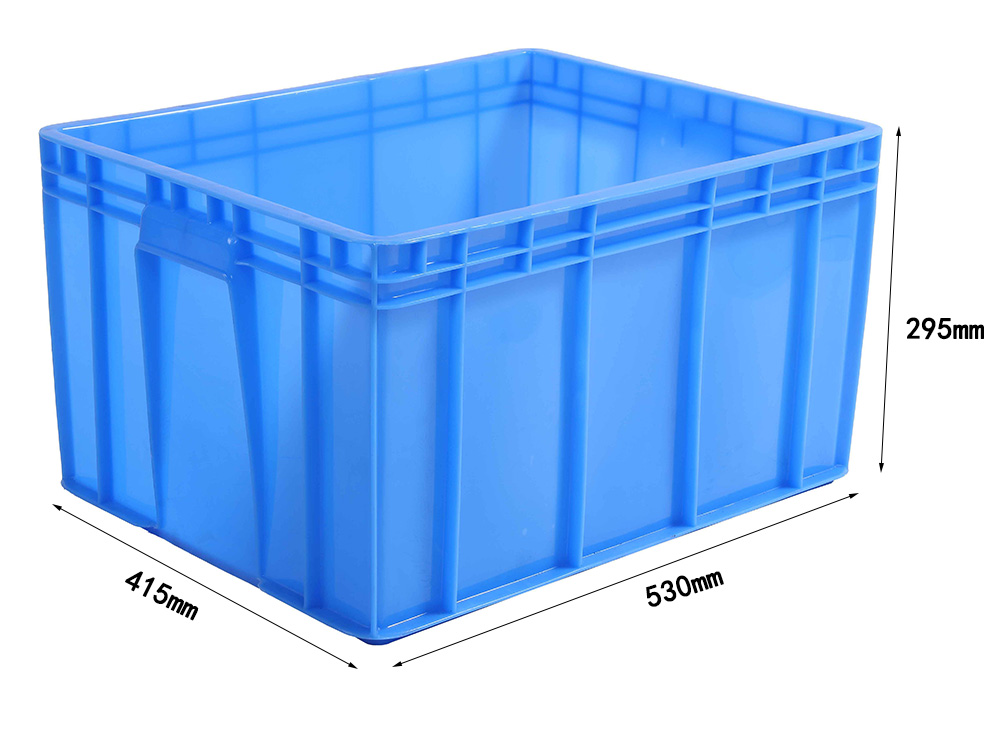
This is the range most warehouses start with, because it covers the common footprints and depths without custom tooling. The practical decision is the footprint the racking already uses and the depth that matches the part height — a box that is too deep wastes vertical space on every shelf position in the building.
Footprint, stacking and the number that matters
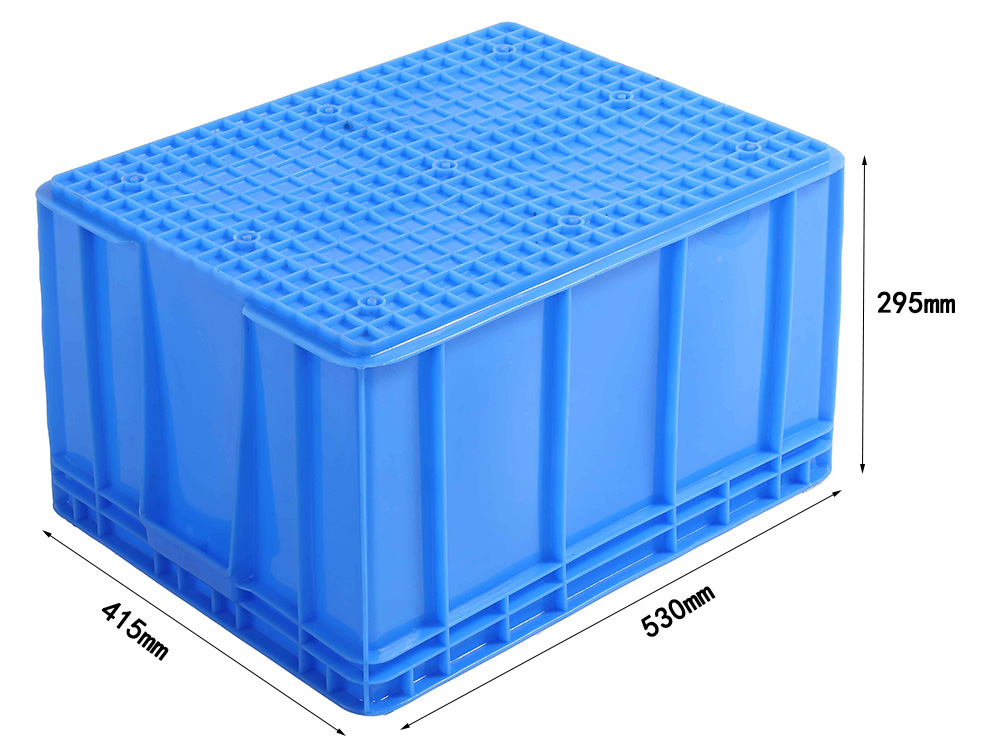
For a turnover box the deciding numbers are the external footprint, the internal usable volume and the loaded stack height. A box that is stiff at the rim but flexible at the base bows under load, and a bowed base is what makes a stack lean. Ask for the stack height rating rather than the individual box rating.
Standard footprints exist so boxes drop into existing racking and pallet systems without re-planning the warehouse. If the operation already runs a standard footprint, staying inside it is worth more than a marginal gain in volume per box, because changing the footprint changes the racking.
Ventilated or solid, and why it decides the application
Ventilated walls let air move and let water drain. That is essential for produce, for anything washed between uses, and for applications where condensation forms. Solid walls are for small parts and for anything that must not leak or lose fine contents. If the box will be washed, check that the base drains and that the corners do not trap water — a box that holds a puddle after washing will grow mould between uses.
Lids, nesting and freight volume
Lids add carton height and they add cost, so decide whether they are actually needed before quoting. Boxes that nest when empty cut return-trip freight dramatically; boxes that stack when loaded protect the contents but consume the same floor space empty. Most operations end up with both types for different legs of the loop.
Frequently asked questions
What is the difference between the external and internal dimensions?
The external footprint determines racking and pallet fit; the internal volume determines what actually fits inside. Specify both — a box that fits the rack but loses usable volume to thick walls is a common disappointment.
Should I choose ventilated or solid walls?
Ventilated for produce, washed items or anything where condensation forms. Solid for small parts and anything that must not leak.
Are the boxes food-safe?
Food-grade material is available on request. Confirm the grade if the box is in direct contact with food.
Ordering notes: wall gauge, venting and packing
- Colour. Send a RAL or Pantone reference rather than a colour name. Stock colours ship faster; custom shades carry a minimum quantity per colour.
- Export packing. Overseas orders ship as full container loads (FCL). Loose cartons are not consolidated for export.
- Samples. Samples are supplied at cost price plus freight, not free of charge.
- Lead time. Stock colours from existing moulds run a few weeks from deposit and artwork confirmation. Custom colour or new tooling adds time and is confirmed in writing with the quotation.
- Documentation. Commercial invoice, packing list and bill of lading as standard; certificate of origin where the destination requires it.
Related reading: stackable vs nestable containers, industrial crates guide.
Where these crates ship
Turnover crate orders from this line typically land in Vietnam, Bangladesh, Kenya, South Africa. Crates are bulky and light, so freight is quoted on container cube rather than weight — export orders move full container load, and samples are charged at cost.